
Checking a motorcycle ignition coil with a multimeter is essential. It helps you diagnose ignition problems quickly.
A faulty ignition coil can lead to engine misfires, poor performance, or even a bike that won’t start. Knowing how to test your ignition coil with a multimeter can save you time and money. This guide will walk you through the steps, making it easy for anyone to follow.
Whether you’re a beginner or experienced rider, understanding this process is valuable. It ensures your motorcycle runs smoothly and efficiently. Ready to get started? Let’s dive into the details of checking your motorcycle ignition coil with a multimeter.
Introduction To Ignition Coils
The ignition coil helps start the engine. It converts low voltage to high voltage. This high voltage ignites the fuel. Without it, the engine won’t start. The coil is a key part of the engine system. It ensures smooth running of the motorcycle.
Sometimes the ignition coil can fail. Common issues include weak sparks. The engine might misfire. Another issue is no spark at all. This means the bike won’t start. Overheating can also damage the coil. Regular checks can prevent these problems.

Credit: m.youtube.com
Tools Required
A multimeter is a key tool for this task. It can measure voltage, resistance, and current. Set your multimeter to the right setting. Use the resistance (ohms) setting for the ignition coil test. Make sure the multimeter is working well.
Have a few other tools ready. You need a screwdriver to remove the coil. A wrench is helpful to loosen bolts. Keep a clean cloth to wipe parts. Ensure you have a working space with good light.
Safety Precautions
Ensure your safety by wearing gloves and goggles. Keep the multimeter and motorcycle ignition coil connections dry and secure.
Personal Safety Gear
Always wear gloves. They protect your hands from electric shocks. Use safety goggles to shield your eyes. Wear long sleeves to guard your arms. Sturdy shoes are a must. They keep your feet safe. Ensure your gear is in good condition. Broken gear can be dangerous. Stay safe, always.
Safe Work Environment
Work in a clean area. Remove any clutter. A tidy space prevents accidents. Ensure the floor is dry. Water and electricity are a bad mix. Use good lighting. You need to see clearly. Keep a fire extinguisher nearby. Safety first, always.
Locating The Ignition Coil
Locate the ignition coil near the engine, usually attached to the frame or the engine itself. It connects to the spark plug via a wire.
Motorcycle Manual Reference
The motorcycle manual is your friend here. It has detailed information. Find the section on the ignition system. Look for diagrams and descriptions. These will help you locate the coil. Manuals are usually easy to follow. Keep it handy for this task.
Visual Identification
Visually identifying the ignition coil is also helpful. It’s usually a small box. It has wires coming out of it. It’s often near the spark plugs. Some bikes have it under the seat. Others have it near the engine. Look for a cylindrical or rectangular shape. It will be connected to the battery.
Preparing The Multimeter
First, ensure the multimeter is set to the correct mode. Set it to measure resistance, usually marked as Ω. This will help check the coil’s continuity and resistance. Select the lowest range if the multimeter has multiple ranges. This allows for precise measurement. Make sure the multimeter probes are in good condition. Damaged probes can give inaccurate readings.
Before testing the ignition coil, verify the multimeter’s accuracy. Touch the two probes together. The display should read zero or near zero. This confirms the multimeter is working correctly. If it shows a different reading, recalibrate or replace the multimeter. Always test the multimeter first to avoid false results.
Testing Primary Coil Resistance
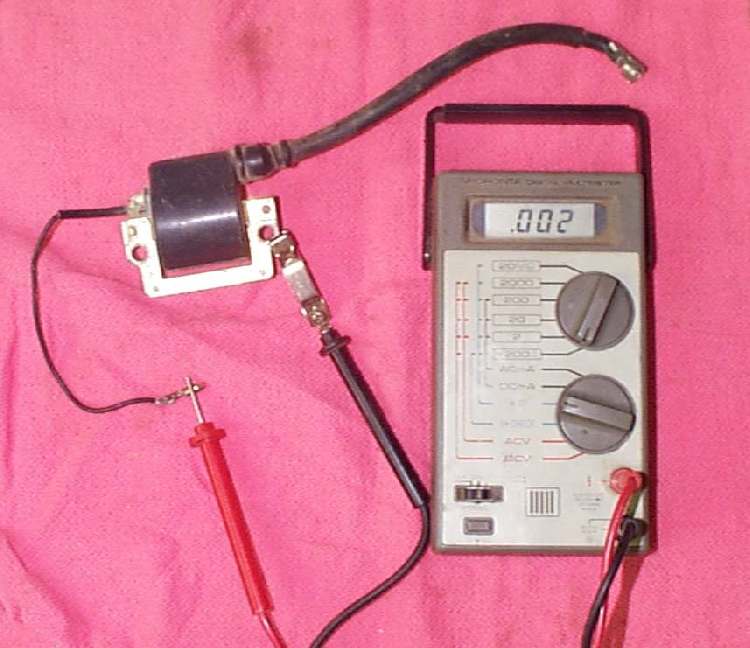
To check motorcycle ignition coil resistance, set a multimeter to the ohms setting. Measure the primary coil resistance by touching the probes to the coil terminals.
Accessing Primary Terminals
First, locate the ignition coil on your motorcycle. Look for two small terminals on the coil. These are the primary terminals. Make sure the ignition is off before you start. Disconnect the wires from the primary terminals. This will ensure an accurate reading. Use a clean cloth to wipe any dirt off the terminals.
Measuring Resistance
Set your multimeter to measure resistance (ohms). Place the multimeter probes on the primary terminals. Note the reading on the multimeter display. A typical reading should be between 0.2 and 5 ohms. If the reading is outside this range, the coil might be faulty. Always double-check to confirm your findings.
Testing Secondary Coil Resistance
Measure the secondary coil resistance using a multimeter set to ohms. Connect probes to the coil terminals. Compare the reading to the manufacturer’s specifications for accuracy.
Accessing Secondary Terminals
First, turn off the motorcycle. Find the ignition coil under the fuel tank. Remove the seat and fuel tank if needed. Look for the secondary terminals. These are usually the two small connectors on the coil. Make sure to identify them correctly.
Set the multimeter to ohms. Connect the probes to the secondary terminals. The meter will show a resistance value. Compare this value to the manufacturer’s specs. If the resistance is too low or too high, the coil may be bad. Replace it if needed.
Interpreting Results
Using a multimeter, you can check your motorcycle’s ignition coil by measuring the resistance. Accurate readings help identify faults and ensure proper function.
Normal Resistance Range
The ignition coil should show a specific resistance. Using a multimeter, measure the resistance across the coil. The normal resistance range depends on the coil type. Most coils should read between 0.5 to 3 ohms for the primary winding. The secondary winding should read between 5,000 to 15,000 ohms. These values can vary. Always check the manufacturer’s specifications.
Diagnosing Faults
A bad coil can show no resistance or infinite resistance. This means the coil is open or shorted. A coil with incorrect resistance can cause engine misfires or failure to start. If the readings are off, it is best to replace the ignition coil. Always ensure the multimeter is set to the correct ohm setting. Double-check connections to avoid false readings.
Troubleshooting And Repairs
Easily test your motorcycle ignition coil with a multimeter. Follow these steps to ensure your coil works properly. Accurate readings help identify any faults.
Common Fixes
Check the ignition coil wires. Make sure they are not damaged. Look for loose connections. Tighten them if needed. Measure the resistance using a multimeter. Compare the reading with the manufacturer’s specifications. Replace the coil if the reading is out of range. Clean the spark plugs. Dirty plugs can cause misfires. Check the spark plug gap. Adjust if needed. Ensure the battery is fully charged. A weak battery can cause ignition problems.
When To Seek Professional Help
Seek help if the engine still misfires. Also, get help if there is no spark. Contact a mechanic if you smell burnt wires. Get help if the multimeter shows inconsistent readings. A professional can diagnose complex problems. They have the right tools and experience. Your safety is important.
Credit: www.dansmc.com
Maintaining Ignition Coils
Regular inspection of ignition coils can save you from problems. Check for any visible damage or wear. Use a multimeter to test the coil’s resistance. Set the multimeter to the ohms setting. Place one probe on the primary terminal and the other on the secondary terminal. The reading should match the manufacturer’s specifications. If not, the coil may need replacement.
Keep ignition coils clean and dry. Dirt and moisture can cause them to fail. Store your motorcycle in a covered area. Avoid exposure to extreme weather. Replace ignition coils as per the maintenance schedule. Use high-quality parts to ensure longevity. Proper maintenance extends the life of your ignition coils.

Credit: www.motorcyclepowersportsnews.com
Frequently Asked Questions
How Do You Test A Motorcycle Ignition Coil?
To test a motorcycle ignition coil, use a multimeter to measure resistance. Check the primary and secondary windings. Compare the readings with the manufacturer’s specifications.
What Should The Resistance Of An Ignition Coil Be?
The resistance of an ignition coil varies by model. Typically, primary winding resistance is 0. 2-3 ohms, and secondary winding is 5,000-15,000 ohms.
Can A Multimeter Check Ignition Coil?
Yes, a multimeter can check an ignition coil. It measures resistance in the coil’s windings to identify issues.
How Do You Know If A Coil Is Bad?
A bad coil shows irregular resistance readings. Symptoms include engine misfires, poor performance, and difficulty starting.
Conclusion: How to Check Motorcycle Ignition Coil With Multimeter
Testing your motorcycle’s ignition coil with a multimeter isn’t complicated. Follow the steps carefully. Ensure you have the correct tools. Safety first; disconnect the battery. Check the primary and secondary resistance. Compare readings with the manufacturer’s specifications. Replace the coil if readings are off.
Regular checks can prevent future issues. Happy riding!
{ “@context”: “https://schema.org”, “@type”: “FAQPage”, “mainEntity”: [ { “@type”: “Question”, “name”: “How do you test a motorcycle ignition coil?”, “acceptedAnswer”: { “@type”: “Answer”, “text”: “To test a motorcycle ignition coil, use a multimeter to measure resistance. Check the primary and secondary windings. Compare the readings with the manufacturer’s specifications.” } } , { “@type”: “Question”, “name”: “What should the resistance of an ignition coil be?”, “acceptedAnswer”: { “@type”: “Answer”, “text”: “The resistance of an ignition coil varies by model. Typically, primary winding resistance is 0.2-3 ohms, and secondary winding is 5,000-15,000 ohms.” } } , { “@type”: “Question”, “name”: “Can a multimeter check ignition coil?”, “acceptedAnswer”: { “@type”: “Answer”, “text”: “Yes, a multimeter can check an ignition coil. It measures resistance in the coil’s windings to identify issues.” } } , { “@type”: “Question”, “name”: “How do you know if a coil is bad?”, “acceptedAnswer”: { “@type”: “Answer”, “text”: “A bad coil shows irregular resistance readings. Symptoms include engine misfires, poor performance, and difficulty starting.” } } ] }