
Nothing makes a Harley rider tense up faster than feeling the heat rise from the engine or seeing that temp light blink. It’s more than just uncomfortable — overheating can lead to engine damage, poor performance, and pricey repairs.
This guide covers everything you need to know about Harley Davidson overheating problems — what causes it, how to spot the signs early, and what to do when your bike runs too hot. You’ll also get simple maintenance tips and smart upgrades to keep your Harley cooler and running strong.
Understanding Harley Davidson Overheating Issues
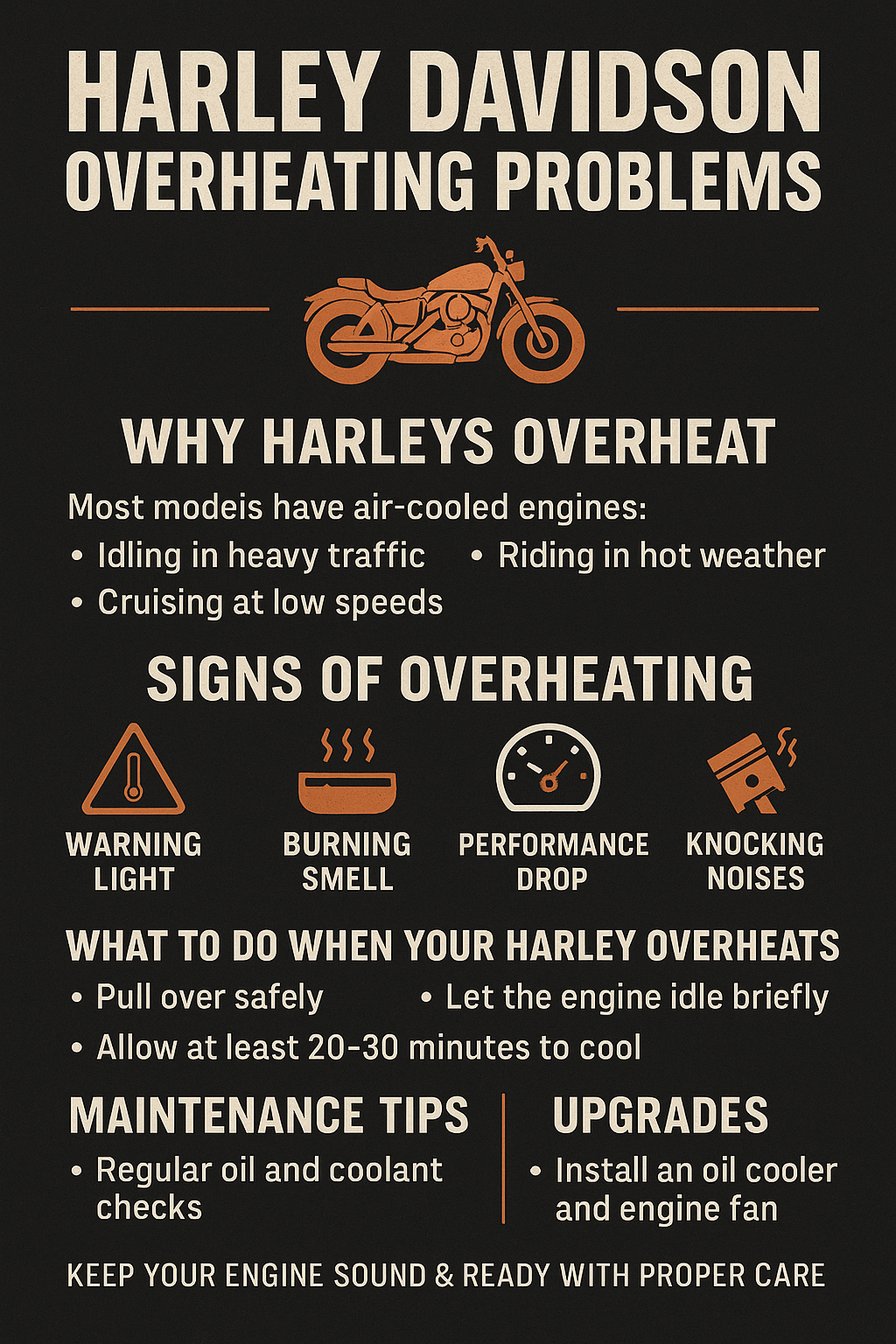
Why Harleys Overheat
Most Harley Davidson motorcycles are equipped with air-cooled engines, which rely on airflow to keep the engine temperature in check. Unlike liquid-cooled engines that use coolant and radiators, air-cooled models depend on movement—when you stop, so does the cooling.
When you’re idling in heavy traffic, riding in hot weather, or cruising at low speeds, there’s not enough airflow to dissipate heat. The result? Gradual overheating that strains your engine and oil system.
Air-Cooled vs. Liquid-Cooled Engines
| Feature | Air-Cooled Engine | Liquid-Cooled Engine |
|---|---|---|
| Cooling Method | Uses airflow around fins | Uses coolant circulated through radiator |
| Maintenance | Simple but less efficient in traffic | More complex but maintains stable temperature |
| Performance in Heat | Struggles in stop-and-go riding | Performs better under high heat |
| Common on | Classic Harleys | Touring and newer Harley models |
Air-cooled engines deliver that signature Harley rumble and simplicity riders love, but they do have limits. When pushed hard in extreme conditions, even tough Milwaukee-Eight engines can get hot enough to cause performance issues.
How Overheating Affects Performance
When your engine overheats, several things can go wrong:
- Oil thins out, reducing its ability to lubricate components.
- Friction increases, causing premature wear.
- Power drops, and you may feel sluggish acceleration.
- In extreme cases, engine seizure or warped components can occur.
Riders often report knocking sounds, burning smells, or engine pinging—all early signs of heat stress.
Common Misconceptions About Harley Overheating
Many riders believe overheating only happens in hot weather, but even a cool day in traffic can cause excessive heat buildup. Another myth?
Turning the engine off immediately helps—it doesn’t. In fact, it can trap heat inside the cylinders, worsening the problem.
Instead, it’s smarter to let the engine idle briefly before shutting it down, allowing some air to circulate naturally.
Signs Your Harley Is Overheating
Knowing the symptoms early can save your engine. Look for these warning signs:
1. Warning Lights or Gauges
Modern Harleys feature temperature warning lights or gauges. If the light comes on or you notice unusually high readings, pull over safely.
2. Burning Smell
A distinct burning oil or metal odor means your engine or oil is overheating. Stop and inspect immediately.
3. Performance Drop
You may notice the bike losing power or feeling “heavy” during acceleration. That’s the engine protecting itself.
4. Knocking or Pinging Noises
Knocking sounds are a classic sign of excessive heat damaging internal components.
Common Causes of Harley Overheating
1. Faulty Cooling System Components
For liquid-cooled models, issues like clogged radiators, leaking coolant hoses, or non-functional fans can lead to overheating.
Regular inspections are essential—especially before long rides.
2. Poor Engine Lubrication
Using the wrong oil or skipping oil changes leads to low lubrication and higher friction. Always use Harley-approved oil and replace it on schedule.
3. Environmental Factors
High temperatures, stop-and-go traffic, and long idling sessions can all raise engine heat. Urban riders should be especially cautious during summer months.
What to Do When Your Harley Overheats
Step 1: Pull Over Safely
Find a safe spot to stop—preferably in shade. Don’t shut the engine off immediately. Let it idle for 30–60 seconds to circulate air.
Step 2: Allow Cooling Time
Turn off the bike and let it cool for at least 20–30 minutes. Avoid spraying water or coolant directly on a hot engine; it can cause metal warping.
Step 3: Inspect After Cooling
Once cool, check for:
- Oil or coolant leaks
- Low coolant levels (for liquid-cooled models)
- Clogged vents or debris around the engine fins
If the problem repeats, it’s time to see a Harley technician.
Preventative Maintenance Tips
Regular Oil and Coolant Checks
- Change oil at recommended intervals.
- Check coolant levels (if applicable) every few rides.
- Always use oil designed for air-cooled Harley engines.
Keep the Radiator and Fans Clean
Dust or debris on the radiator can restrict airflow. Clean regularly and test the fan function before long trips.
Stick to Service Intervals
Routine inspections help catch small issues—like fan motor failure or clogged filters—before they cause major damage.
Upgrades to Prevent Overheating
Riders who often face city traffic or long summer rides can benefit from these upgrades:
- Oil Coolers – Improve temperature control by increasing cooling surface area.
- Performance Tuners – Optimize fuel-air ratio, improving combustion efficiency and reducing heat buildup.
- Aftermarket Engine Fans – Provide constant airflow during idle.
- Exhaust Upgrades – Reduce heat retention and improve engine breathing.
Pro Tip: Adding a high-quality oil cooler and tune-up can lower engine temperatures by 10–20°F on average.
Troubleshooting Specific Problems
| Issue | Possible Cause | Quick Fix |
|---|---|---|
| Cooling fan not working | Blown fuse or bad motor | Check wiring and replace fuse or fan |
| Oil leaks | Worn gasket or seal | Replace seal, check oil pressure |
| Power loss in heat | Lean fuel mixture | Re-tune engine or use performance tuner |
Insights from the Harley Community
The Harley community is an incredible resource. Many riders share how simple tweaks—like installing Love Jugs cooling fans or upgrading synthetic oils—dramatically reduced overheating.
Forums like Harley Tech Talk or HD Forums are goldmines for real-world solutions and mod ideas.
FAQs About Harley Davidson Overheating Problems
What are the main signs of overheating?
Warning lights, burning smells, knocking sounds, and sluggish acceleration all indicate your Harley is overheating.
Can Harley overheating cause permanent damage?
Yes. Prolonged overheating can warp engine parts, thin oil, and even cause engine seizure if ignored.
How can I prevent my Harley from overheating on long rides?
Keep up with oil changes, avoid long idling, and consider installing an oil cooler or engine fan for better airflow.
Do air-cooled Harleys always overheat in traffic?
Not always—but extended idle periods reduce airflow, which raises heat. Use synthetic oil and ride at consistent speeds when possible.
Which Harley models are most prone to overheating?
Air-cooled models like Softail or Sportster lines tend to heat up more than liquid-cooled touring models.
Final Thoughts
Overheating is a common challenge for Harley riders, but it’s manageable with the right care and upgrades.
By understanding the causes—poor airflow, friction, or oil issues—and acting early, you can extend your bike’s lifespan and enjoy smoother, safer rides.
A well-maintained Harley isn’t just about power—it’s about reliability.
Keep it cool, stay on schedule with maintenance, and enjoy every mile of the open road.