
The braking system is one of the most critical components of a motorcycle, ensuring rider safety and control. Among the various braking systems, drum and disc brakes are the most common.
This article aims to provide a comprehensive comparison Motorcycle Drum Brake vs Disc Brakes, shedding light on their functionalities, advantages, disadvantages, and ideal applications. We will delve into how each system operates, their performance in different conditions, maintenance requirements, and costs.
By the end of this article, motorcyclists will have a clearer understanding of which braking system may best suit their needs and riding styles.
Understanding Drum Brakes
Drum brakes have been around for over a century and were among the first braking systems used in vehicles. Their design consists of a rotating drum connected to the wheel, which houses a set of brake shoes.
When the rider applies the brakes, hydraulic pressure pushes the brake shoes outward against the inner surface of the drum, creating friction that slows down the motorcycle. This system is often favored for smaller bikes due to its simplicity and cost-effectiveness.
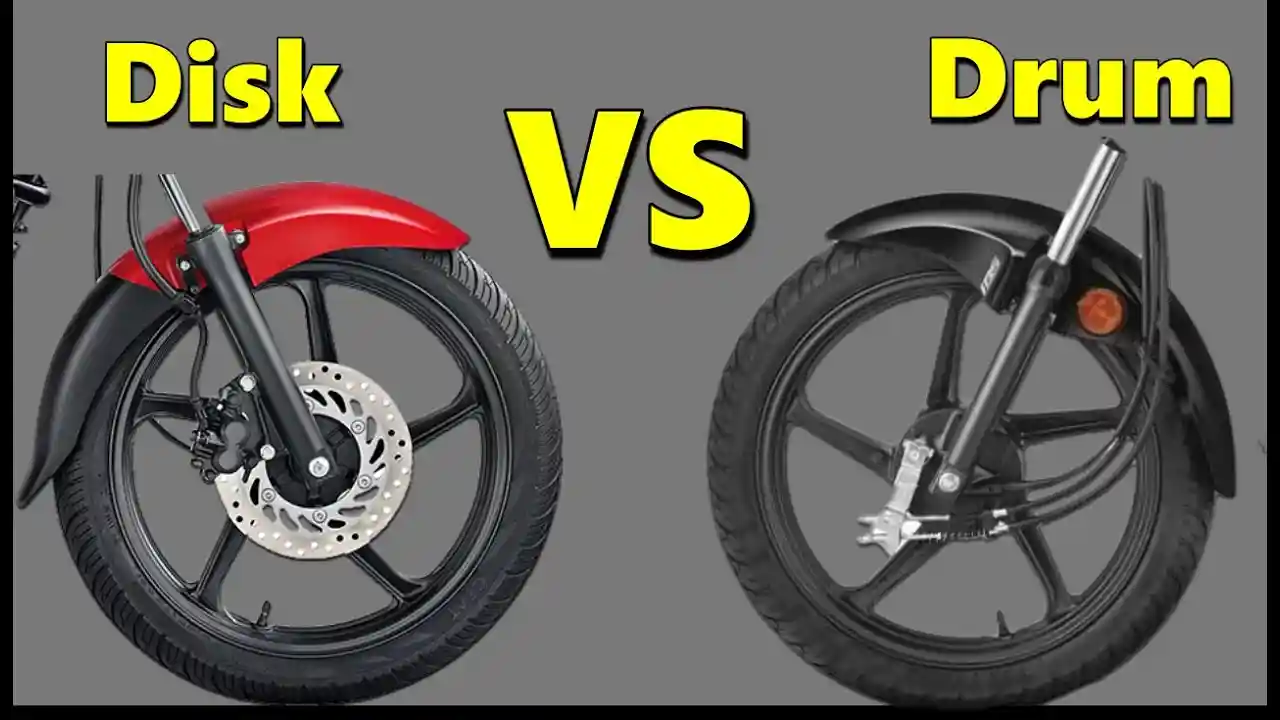
Components of Drum Brakes
- Brake Drum: The cylindrical component that rotates with the wheel.
- Brake Shoes: These are the friction components that press against the drum.
- Wheel Cylinder: Contains hydraulic fluid that actuates the brake shoes.
- Backing Plate: Supports the brake assembly and houses the wheel cylinder.
How Drum Brakes Work
When the brake lever is pulled, it activates the wheel cylinder, which in turn pushes the brake shoes against the drum. This creates the necessary friction to slow the motorcycle down.
The design of drum brakes allows for a self-energizing effect, where the rotation of the drum assists in applying the brakes, increasing their effectiveness.
Common Applications
Drum brakes are commonly found in smaller motorcycles, scooters, and some budget-friendly models. They are particularly prevalent in the rear braking systems of many motorcycles, where less stopping power is required compared to the front brakes.
Despite being considered outdated by some, they still serve well in specific applications.
Include a diagram of a drum brake system here.
Understanding Disc Brakes
Disc brakes represent a more modern approach to motorcycle braking systems. They consist of a rotor, which is a flat, circular disc, and a caliper that houses the brake pads.
When the rider applies the brakes, hydraulic pressure forces the caliper pistons to squeeze the brake pads against the rotor, creating friction that slows down the motorcycle. This design is known for its efficiency and responsiveness.
Components of Disc Brakes
- Brake Rotor: The disc that rotates with the wheel.
- Caliper: Houses the brake pads and contains pistons that apply pressure.
- Brake Pads: The friction material that presses against the rotor.
How Disc Brakes Work
Upon pressing the brake lever, hydraulic fluid is transmitted to the caliper, which pushes the brake pads against the rotor. The open design of disc brakes allows for better heat dissipation, which prevents brake fade and ensures consistent performance even under heavy use.
Common Applications
Disc brakes have become the standard in modern motorcycles, especially in performance and higher-end models. They are typically found on the front wheels of most motorcycles, where the majority of stopping power is required.
Many contemporary motorcycles utilize a combination of disc brakes in the front and drum brakes in the rear.
Include a diagram of a disc brake system here.
Performance Comparison: Drum vs. Disc Brakes
When evaluating the performance of drum and disc brakes, several key factors come into play, including stopping power, heat management, and performance in wet conditions.
Stopping Power
Disc brakes generally provide superior stopping power compared to drum brakes. The open design allows for greater clamping force and more effective friction generation, resulting in shorter stopping distances.
In contrast, drum brakes can experience brake fade due to heat buildup, particularly under heavy use.
Heat Management
Heat dissipation is a critical performance metric. Disc brakes excel in this area due to their exposure to the air, which facilitates quicker cooling.
Drum brakes, however, tend to retain heat, leading to a potential decrease in braking efficiency during extended use. This can be especially concerning in steep or mountainous terrain where frequent braking is necessary.
Performance in Wet Conditions
In wet conditions, disc brakes outperform drum brakes significantly. The open design of disc brakes allows water to escape quickly, maintaining their effectiveness.
Conversely, drum brakes can trap water inside, leading to reduced friction and performance until the moisture evaporates.
| Performance Metric | Drum Brakes | Disc Brakes |
|---|---|---|
| Stopping Power | Moderate | High |
| Heat Dissipation | Poor | Excellent |
| Performance in Wet Conditions | Poor | Good |
The table above clearly indicates that disc brakes provide not only higher stopping power but also better heat management and performance in adverse conditions. This makes them the preferred choice for most modern motorcycles.
Advantages of Drum Brakes
Drum brakes, while often viewed as outdated, still offer several advantages, particularly for specific motorcycle types and contexts.
Cost and Maintenance
One of the primary benefits of drum brakes is their cost-effectiveness. They are generally cheaper to produce and replace than disc brakes, making them a popular choice for smaller, budget-friendly motorcycles.
Additionally, drum brakes often require less frequent maintenance, although when service is needed, it can be more labor-intensive.
Durability in Harsh Conditions
The enclosed design of drum brakes offers protection from dirt, debris, and moisture, which can lead to longer lifespan and reliability in rough conditions. This makes them suitable for commuting and situations where exposure to the elements is high.
Self-Adjusting Mechanisms
Many modern drum brakes come equipped with self-adjusting mechanisms that help maintain optimal performance without requiring frequent manual adjustment. This feature can enhance the user experience for riders who prefer low-maintenance systems.
| Brake System | Typical Cost | Maintenance Frequency |
|---|---|---|
| Drum Brakes | Low | Infrequent |
| Disc Brakes | High | Regular |
This table illustrates the cost and maintenance frequency differences between drum and disc brakes. As noted, drum brakes are significantly less expensive, making them appealing for entry-level bikes and budget-conscious riders.
Disadvantages of Drum Brakes
Despite their benefits, drum brakes also present certain drawbacks that can impact performance and rider safety.
Heat Dissipation Issues
The enclosed design of drum brakes inherently limits their ability to dissipate heat, leading to potential brake fade under repeated hard braking situations. This can be a critical concern for riders in hilly terrains or during aggressive riding.
Maintenance Challenges
While they may require less frequent maintenance, when service is needed, it can be more complex and labor-intensive compared to disc brakes. Accessing the internal components of drum brakes for inspection or repair often requires disassembly, which can deter some riders.
Brake Fade
Drum brakes are more susceptible to brake fade, particularly during extended use or high-stress riding conditions. This reduction in effectiveness can lead to longer stopping distances, which poses a safety risk, especially in emergency situations.
| Brake System | Failure Rate | Maintenance Cost |
|---|---|---|
| Drum Brakes | Higher | Moderate |
| Disc Brakes | Lower | Higher |
This table outlines the failure rates and maintenance costs associated with drum and disc brakes. The higher failure rate of drum brakes underlines the importance of understanding their limitations, especially for riders who prioritize performance and safety.
Advantages of Disc Brakes
Disc brakes offer numerous advantages, making them the preferred choice for modern motorcycles and performance applications.
Stopping Power and Control
Disc brakes provide superior stopping power compared to drum brakes, thanks to their efficient design and ability to dissipate heat. This translates into shorter stopping distances and more responsive braking, crucial for performance riding.
Maintenance and Longevity
Disc brakes typically require less maintenance than drum brakes. They do not have the same self-adjustment needs, and brake pads are easier to inspect and replace.
Additionally, many components are designed for longevity, leading to fewer replacements over time.
Performance in Adverse Conditions
The open design of disc brakes allows for better performance in wet or muddy conditions. They shed water and debris more effectively, ensuring consistent braking performance regardless of environmental factors.
| Performance Metric | Disc Brakes |
|---|---|
| Stopping Power | Very High |
| Heat Dissipation | Excellent |
| Performance in Wet Conditions | Very Good |
The performance metrics for disc brakes highlight their advantages in critical areas such as stopping power, heat dissipation, and wet condition performance. This data reinforces the notion that disc brakes are superior in most riding scenarios.
Disadvantages of Disc Brakes
While disc brakes have many strengths, they are not without their drawbacks.
Cost of Ownership
Disc brakes are typically more expensive to manufacture and replace, which can lead to higher costs over the lifespan of the motorcycle. This factor may deter budget-conscious riders from opting for disc brakes on lower-end models.
Maintenance Requirements
Though they require less frequent maintenance, when servicing is needed, it can be more involved. Disc brakes may require more specialized knowledge and tools for proper maintenance, particularly for hydraulic systems.
Noise Levels
Disc brakes can produce more noise during operation, particularly when the brake pads wear down or if they are not properly installed. This may be a concern for riders who prioritize a quiet ride.
| Issue | Impact on Performance |
|---|---|
| Corrosion | Can reduce lifespan and effectiveness |
| Noise | Can affect riding comfort |
| Pad Wear | Increases maintenance frequency |
This table illustrates some common issues faced by disc brake systems. Riders should be aware of these factors, particularly in environments prone to corrosion or where maintenance might be more challenging.
Ideal Applications for Each Brake Type
Understanding the ideal applications for drum and disc brakes can guide riders in selecting the best system for their needs.
Best for Urban Riding
For city commuting, drum brakes may be suitable, especially on smaller motorcycles or scooters. Their cost-effectiveness and sufficient stopping power for lower-speed riding make them a practical choice for urban environments.
Best for Off-Road and Performance Riding
For off-road and high-performance riding, disc brakes are the clear preference. Their superior stopping power, heat management, and wet performance make them ideal for challenging terrains and high-speed scenarios.
Budget Considerations
Budget-conscious riders might lean towards drum brakes for entry-level or smaller motorcycles. However, those looking for enhanced performance and safety should consider investing in disc brakes, particularly if they plan to ride in varied conditions.
FAQs on Motorcycle Drum Brake vs Disc Brakes
What are the main differences between drum and disc brakes?
The main differences between drum and disc brakes lie in their design and performance. Drum brakes consist of a rotating drum with brake shoes that press against the inner surface to create friction, whereas disc brakes use a rotor with brake pads that clamp down to slow the wheel.
Disc brakes generally provide better stopping power, heat dissipation, and performance in wet conditions compared to drum brakes.
Are drum brakes outdated for modern motorcycles?
While drum brakes are considered outdated for high-performance and modern motorcycles, they are still widely used in smaller bikes and scooters. Their cost-effectiveness and reliability make them suitable for specific applications, particularly in urban commuting.
However, for performance-oriented riding, disc brakes are generally preferred.
How do I maintain drum and disc brakes?
Maintaining drum brakes involves regularly checking and adjusting the brake shoes and ensuring that the internal components are clean and functioning properly. For disc brakes, maintenance includes inspecting the brake pads for wear, replacing them as needed, and ensuring that the hydraulic system is functioning correctly.
Both systems require periodic checks to ensure optimal performance and safety.
What is brake fade and why does it occur?
Brake fade refers to the reduction in braking effectiveness due to overheating of the braking components. In drum brakes, this occurs when the enclosed design traps heat, leading to diminished friction.
In disc brakes, while they are less prone to fade, excessive heat can still result in temporary loss of performance. It is vital for riders to be aware of their braking systems’ limitations to avoid dangerous situations.
Which brake type offers better performance in rainy conditions?
Disc brakes generally offer better performance in rainy conditions due to their open design, which allows water to escape easily and prevents the buildup of moisture that can hinder braking power. In contrast, drum brakes can trap water inside, reducing their effectiveness until the moisture evaporates or heats up sufficiently.
Conclusion
In conclusion, both drum and disc brakes have their unique strengths and weaknesses, making them suitable for different types of motorcycles and riding conditions. Understanding the differences helps riders make informed decisions based on their needs and preferences.
Ultimately, the choice between drum and disc brakes will depend on various factors, including budget, maintenance capabilities, and riding style. By prioritizing safety and performance, motorcyclists can enjoy a more reliable riding experience.