
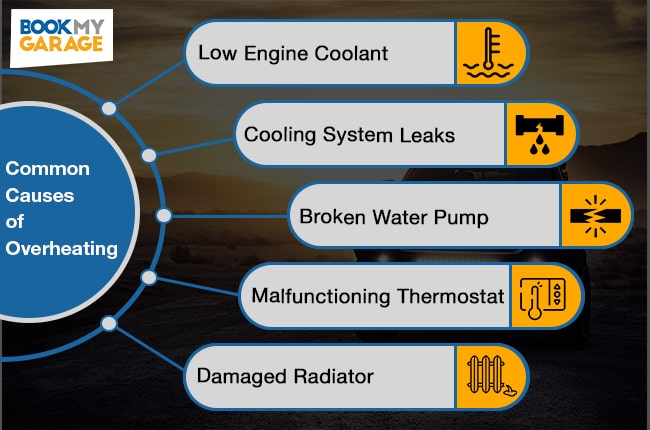
What are 10 common causes of overheating? Ten common causes of overheating include low coolant levels, a faulty thermostat, a blocked radiator, water pump failure, and cooling fan issues. Other causes are a leaking head gasket, a broken radiator cap, a clogged coolant hose, air trapped in the cooling system, and excessive engine load.
Overheating in a vehicle can lead to serious mechanical damage and costly repairs. It’s essential to identify the root cause promptly to prevent long-term issues. Low coolant levels often result from leaks or insufficient maintenance. A faulty thermostat can impede coolant flow, causing the engine to overheat.
Blocked radiators and cooling fan malfunctions hinder heat dissipation. Water pump failures disrupt coolant circulation, while a leaking head gasket introduces air into the system. A broken radiator cap or clogged coolant hose also restricts proper coolant flow. Lastly, excessive engine load can strain the cooling system beyond its capacity.
Environmental Factors
Overheating can be a significant issue for both machinery and living beings. One of the primary contributors to overheating is environmental factors. These factors include various elements in the environment that can drive temperatures up and cause systems to overheat. This section explores how high ambient temperatures and humidity levels can lead to overheating.
High Ambient Temperature
High ambient temperature is a leading cause of overheating. When the air around you is hot, it makes it harder for machines, electronics, and even your body to cool down. Here are some key points:
- Reduced Cooling Efficiency: High temperatures make cooling systems work harder. Air conditioners and fans may not cool effectively.
- Increased Heat Generation: Many devices produce more heat when the surrounding temperature is high. This can lead to a vicious cycle of heating.
- Thermal Expansion: Materials expand when they get hot. This can cause parts to fit poorly, leading to overheating.
Consider this table showing the impact of ambient temperature on cooling systems:
| Ambient Temperature (°C) | Cooling Efficiency (%) |
|---|---|
| 25 | 100 |
| 30 | 90 |
| 35 | 80 |
| 40 | 70 |
As shown, the efficiency of cooling systems drops as the temperature rises. This makes it essential to monitor and manage ambient temperatures to prevent overheating.
Humidity Levels
Humidity levels also play a significant role in overheating. High humidity can affect cooling processes in several ways:
- Reduced Evaporation: Sweat and other cooling methods rely on evaporation. High humidity slows down this process, making it hard to cool down.
- Increased Thermal Load: Humid air holds more heat. This can increase the overall thermal load on systems and devices.
-
Condensation Risks: High humidity can lead to condensation. This moisture can damage electronic components and lead to overheating.
The following table illustrates the impact of humidity on evaporation rates:
| Humidity Level (%) | Evaporation Rate (%) |
|---|---|
| 30 | 100 |
| 50 | 80 |
| 70 | 60 |
| 90 | 40 |
As humidity levels rise, the rate of evaporation decreases. This makes it crucial to manage humidity to prevent overheating.

Credit: a-ztechautomotive.com
Mechanical Issues
Overheating can cause serious problems for any vehicle. Understanding the common causes of overheating helps in preventing it. One significant category of causes involves mechanical issues. Mechanical issues often lead to engine overheating and can be easily overlooked. Let’s dive into some common mechanical problems that can cause your engine to overheat.
Worn-out Parts
Worn-out parts are a major cause of engine overheating. Over time, various components of the engine wear out and lose their efficiency. These worn parts can lead to increased friction, generating more heat than the cooling system can handle.
Some of the most common worn-out parts that contribute to overheating include:
- Water Pump: The water pump circulates coolant through the engine. A worn-out water pump can fail to move coolant effectively, causing the engine to overheat.
- Thermostat: The thermostat regulates the flow of coolant. A faulty thermostat can stick in a closed position, preventing coolant from reaching the engine and causing overheating.
- Fan Belts: Fan belts drive the cooling fan and other components. A worn fan belt can slip or break, reducing the efficiency of the cooling system.
To avoid these issues, regular maintenance and timely replacement of worn-out parts are essential. A table below summarizes some key parts and their common signs of wear:
| Part | Signs of Wear |
|---|---|
| Water Pump | Leaking coolant, noisy operation |
| Thermostat | Erratic temperature readings, overheating |
| Fan Belts | Cracks, fraying, slipping |
Blocked Radiators
A blocked radiator is another common cause of engine overheating. The radiator plays a crucial role in dissipating heat from the engine. If the radiator is blocked, the coolant cannot flow freely, leading to insufficient cooling.
There are several reasons why a radiator might get blocked:
- Debris: Dirt, leaves, and other debris can accumulate in the radiator fins, blocking airflow and reducing cooling efficiency.
- Corrosion: Over time, the radiator can corrode from the inside, leading to blockages and restricted coolant flow.
- Sludge: Old or contaminated coolant can form sludge, which can clog the radiator and impede the cooling process.
Keeping the radiator clean and free from blockages is crucial. Regular inspections and coolant flushes help maintain the radiator’s efficiency. Here is a quick checklist to ensure your radiator stays unblocked:
- Inspect the radiator for visible debris and clean it regularly.
- Check coolant levels and condition periodically.
- Flush the cooling system as recommended by the manufacturer.
Maintaining a clean and efficient radiator is key to preventing engine overheating and ensuring optimal performance.
Fluid Problems
Overheating can be a significant issue for vehicles, leading to serious engine damage. One of the main causes of overheating is fluid problems. Fluids play a crucial role in keeping the engine cool and running smoothly. Below, we will explore two common fluid-related issues: low coolant levels and contaminated fluids.
Low Coolant Levels
Low coolant levels can cause your engine to overheat quickly. The coolant, also known as antifreeze, is vital for regulating your engine’s temperature. When the coolant level is too low, the engine cannot maintain a stable temperature. This results in overheating.
Several factors can lead to low coolant levels:
- Leaks: Cracks in the radiator, hoses, or the engine block can cause coolant to leak.
- Evaporation: Over time, coolant can evaporate, especially in older vehicles.
- Improper Maintenance: Not checking or refilling the coolant as part of routine maintenance.
To prevent low coolant levels, follow these tips:
- Regularly check the coolant reservoir and top it off if necessary.
- Inspect the radiator, hoses, and engine for any signs of leaks.
- Schedule regular maintenance checks with a qualified mechanic.
| Cause | Prevention |
|---|---|
| Leaks | Inspect and repair any cracked parts. |
| Evaporation | Regularly check and refill coolant. |
| Improper Maintenance | Follow a routine maintenance schedule. |
Contaminated Fluids

Credit: www.mainstreetmechanic.com
Contaminated fluids can also lead to engine overheating. When fluids like coolant or oil become dirty, their efficiency decreases. Dirty fluids can’t absorb heat properly, causing the engine to overheat.
Common causes of fluid contamination include:
- Old Fluid: Over time, fluids can degrade and become contaminated with debris.
- External Contaminants: Dirt and debris can enter the fluid system through faulty seals or caps.
- Internal Contaminants: Metal shavings from engine wear can contaminate fluids.
To avoid fluid contamination, consider these preventive measures:
-
Regularly change the fluids as recommended by the manufacturer.
-
Ensure seals and caps are in good condition to prevent external contaminants.
-
Use high-quality fluids to reduce the risk of contamination.
| Contaminant | Prevention |
|---|---|
| Old Fluid | Regularly change fluids as per recommendations. |
| External Contaminants | Check and replace faulty seals and caps. |
| Internal Contaminants | Use high-quality fluids to minimize risk. |
Electrical Malfunctions
Overheating is a common issue that affects many devices and systems. Understanding the causes can help you prevent damage and maintain efficiency. One major cause of overheating is electrical malfunctions. Electrical components are sensitive and play a crucial role in the proper functioning of devices. This section will explore two key electrical malfunctions: faulty sensors and overloaded circuits.
Faulty Sensors
Faulty sensors can lead to significant overheating problems. Sensors monitor temperature and ensure devices operate within safe limits. When sensors fail, they might give incorrect readings or stop working entirely, causing the system to overheat.
Here are some common reasons for sensor malfunction:
- Wiring Issues: Damaged or frayed wires can disrupt the sensor’s ability to relay accurate information.
- Corrosion: Moisture and environmental factors can corrode sensors, leading to faulty readings.
- Wear and Tear: Over time, sensors can degrade and lose their effectiveness.
Regular maintenance and checks can help identify these issues early. Using high-quality sensors designed for your specific environment can also reduce the risk of overheating.
| Symptom | Possible Cause |
|---|---|
| Inaccurate Temperature Reading | Corrosion or Wiring Issues |
| Intermittent Sensor Failure | Wear and Tear |
| Complete Sensor Failure | Severe Damage or Manufacturing Defects |
Overloaded Circuits
Overloaded circuits are another common cause of overheating. When circuits carry more current than they are designed to handle, the excess current generates heat. This can lead to serious damage and potential fire hazards.
Several factors contribute to overloaded circuits:
- Excessive Load: Plugging too many devices into a single outlet can overload the circuit.
- Faulty Wiring: Incorrect or poor-quality wiring can cause circuits to overheat.
- Old Electrical Systems: Older systems may not handle modern electrical demands well.
To prevent overloaded circuits, ensure your electrical system is up-to-date and capable of handling your power needs. Distribute electrical loads evenly across multiple outlets and circuits.
| Symptom | Possible Cause |
|---|---|
| Frequent Tripping of Circuit Breaker | Excessive Load |
| Burning Smell from Outlets | Faulty Wiring |
| Dim or Flickering Lights | Old Electrical Systems |
Regular inspections by a qualified electrician can help identify and fix overloaded circuits before they become a severe problem.
Engine Problems
Overheating is a common issue that can plague any vehicle. Among the various causes, engine problems are particularly troublesome. Understanding these problems can help you prevent severe damage. This section will delve into two critical engine-related issues: Inefficient Combustion and Timing Issues.
Inefficient Combustion
Inefficient combustion is a significant cause of engine overheating. This problem occurs when the fuel-air mixture in the engine fails to burn completely. Several factors contribute to inefficient combustion:
- Dirty Fuel Injectors: Clogged injectors can’t deliver fuel properly, leading to incomplete combustion.
- Poor-Quality Fuel: Low-quality fuel doesn’t burn efficiently, causing overheating.
- Faulty Spark Plugs: Worn-out spark plugs don’t ignite the fuel-air mixture effectively.
To illustrate, here’s a table summarizing these factors:
| Factor | Description | Impact |
|---|---|---|
| Dirty Fuel Injectors | Clogs prevent proper fuel delivery | Leads to incomplete combustion |
| Poor-Quality Fuel | Low-grade fuel burns poorly | Causes overheating |
| Faulty Spark Plugs | Worn plugs fail to ignite fuel properly | Results in inefficient combustion |
Addressing these issues can prevent overheating. Regular maintenance, using high-quality fuel, and replacing worn-out components are essential steps.
Timing Issues
Credit: bookmygarage.com
Timing issues also contribute to engine overheating. If the engine’s timing is off, the fuel-air mixture may ignite too early or too late. This improper timing causes excess heat. Key timing issues include:
- Advanced Timing: The fuel-air mixture ignites too early, leading to pre-ignition and overheating.
- Retarded Timing: The mixture ignites too late, causing unburnt fuel to heat the engine.
- Faulty Timing Belt: A worn or misaligned belt disrupts engine timing.
Here’s a table to summarize these timing issues:
| Timing Issue | Description | Impact |
|---|---|---|
| Advanced Timing | Ignition occurs too early | Leads to pre-ignition and overheating |
| Retarded Timing | Ignition occurs too late | Causes unburnt fuel to heat the engine |
| Faulty Timing Belt | Misaligned or worn belt | Disrupts engine timing |
Regular checks and timely replacements of the timing belt can prevent these issues. Ensuring proper timing adjustment keeps the engine running smoothly and avoids overheating.
Operating Conditions
Overheating can turn a smooth drive into a stressful experience. Understanding the common causes can help prevent such issues. One major factor is the operating conditions under which the vehicle runs. Let’s explore how different operating conditions like heavy loads and aggressive driving contribute to overheating.
Heavy Loads
Carrying heavy loads can strain your vehicle’s engine, leading to overheating. When your car is overloaded, the engine has to work harder, generating more heat. This extra stress can push the cooling system beyond its limits.
Here are some common scenarios where heavy loads can cause overheating:
- Moving Furniture: Carrying large, heavy items can strain your car.
- Long Road Trips: Packing the car with passengers and luggage adds weight.
- Towing Trailers: Pulling a trailer or caravan increases load significantly.
To manage heavy loads and avoid overheating, consider the following tips:
- Use a vehicle designed for heavy loads, like a truck or SUV.
- Distribute weight evenly to prevent strain on the engine.
- Regularly check the cooling system to ensure it can handle extra stress.
Aggressive Driving
Aggressive driving behaviors, such as rapid acceleration and hard braking, put extra pressure on the engine. This increased demand can cause the engine to overheat.
Here are some aggressive driving habits that lead to overheating:
- Speeding: Driving at high speeds increases engine workload.
- Frequent Braking: Hard braking generates excess heat.
- Rapid Acceleration: Quick starts force the engine to work harder.
To avoid overheating from aggressive driving, follow these tips:
- Maintain a steady speed to reduce engine stress.
- Accelerate gradually to prevent sudden surges of heat.
- Use cruise control on highways to maintain consistent speed.
By understanding the impact of heavy loads and aggressive driving, you can take steps to protect your vehicle from overheating.
Poor Maintenance
Overheating can cause serious damage to your vehicle. One of the top reasons for overheating is poor maintenance. Regular maintenance helps keep your car in good shape. Neglecting it can lead to many problems.
Neglected Inspections
Regular inspections are crucial for your car’s health. Many drivers skip these inspections, leading to issues. Here are some common problems caused by neglected inspections:
- Low coolant levels: Without inspections, you might miss low coolant levels. Coolant helps keep the engine cool.
- Worn-out hoses: Old hoses can crack and leak. This can cause the engine to overheat.
- Clogged radiators: Dirt and debris can clog the radiator. This makes it hard for the engine to stay cool.
Regular inspections help catch these issues early. This can prevent overheating. Here’s a simple inspection checklist:
| Inspection Task | Frequency |
|---|---|
| Check coolant levels | Monthly |
| Inspect hoses and belts | Every 3 months |
| Clean radiator | Every 6 months |
Infrequent Oil Changes
Oil changes are vital for your engine. Old oil can cause the engine to overheat. Here are the dangers of infrequent oil changes:
- Thick oil: Over time, oil gets thick. Thick oil doesn’t flow well, making the engine work harder.
- Dirty oil: Oil collects dirt and debris. Dirty oil can clog parts of the engine.
- Low oil levels: Skipping oil changes can lead to low oil levels. Oil helps keep the engine cool.
Regular oil changes help avoid these issues. Here’s a quick guide:
| Oil Change Frequency | Type of Oil |
|---|---|
| Every 3,000 miles | Conventional oil |
| Every 5,000 miles | Synthetic blend |
| Every 7,500 miles | Full synthetic |
Follow these guidelines to keep your engine cool and prevent overheating.
External Interference
Overheating can happen for many reasons, and one key factor is external interference. External interference refers to anything outside the device that can cause it to heat up. This includes things like debris, lack of airflow, and more. Understanding these factors can help in preventing overheating and maintaining the longevity of your devices.
Debris Accumulation
Debris accumulation is a common cause of overheating. Dust, dirt, and other particles can clog vents and fans. This prevents proper airflow. Devices like computers and smartphones need clean vents for cooling. Here are some key points:
- Dust Buildup: Dust can settle on components, making them overheat.
- Dirt Particles: Dirt can block fans, stopping them from working well.
- Pet Hair: Pet hair can get sucked into vents, creating blockages.
Regular cleaning can help prevent debris from building up. Use compressed air to blow out dust. Keep devices away from areas with a lot of dirt. A simple cleaning routine can make a big difference.
| Debris Type | Effect on Device | Cleaning Method |
|---|---|---|
| Dust | Blocks airflow | Compressed air |
| Dirt | Clogs fans | Soft brush |
| Pet Hair | Blocks vents | Vacuum cleaner |
Improper Ventilation
Improper ventilation is another major cause of overheating. Devices need space to breathe. Without enough ventilation, heat builds up inside. Here are some key factors:
- Blocked Vents: Vents can get blocked by walls or furniture.
- Poor Placement: Placing devices in enclosed spaces restricts airflow.
- Overcrowded Areas: Multiple devices in one spot can overheat each other.
Ensure your devices have enough space around them. Avoid placing them in tight spaces. Keep vents clear of obstructions. Following these steps can help maintain proper ventilation.
Here’s a quick checklist to improve ventilation:
- Check Vents: Make sure all vents are clear.
- Relocate Devices: Move devices to open areas.
- Reduce Clutter: Keep the area around your devices clean.
Proper ventilation helps in keeping your devices cool. It also extends their lifespan. Simple changes can make a big difference in preventing overheating.
Frequently Asked Questions About What are 10 Common Causes of Overheating
What Causes A Car To Overheat?
A car can overheat due to a faulty radiator, low coolant levels, or a malfunctioning thermostat. Other causes include a broken water pump or clogged coolant hoses.
How Can I Prevent Engine Overheating?
To prevent engine overheating, regularly check coolant levels and inspect the radiator and hoses. Ensure the thermostat and water pump are functioning properly.
Why Does My Car Overheat When Idling?
Your car may overheat when idling due to a malfunctioning fan, a clogged radiator, or low coolant levels.
Can Low Oil Cause Overheating?
Yes, low oil levels can cause overheating. Oil helps lubricate and cool engine components. Always maintain proper oil levels.
Conclusion
Understanding what are 10 common causes of overheating can help you prevent serious engine damage. Regular maintenance is key. Keep an eye on coolant levels and ensure the radiator is clean. Address issues promptly to avoid costly repairs. By staying vigilant, you can keep your engine running smoothly and efficiently.