
Securing your motorcycle for transport is essential. Properly tying it down prevents damage and ensures safety.
Choosing The Right Equipment
Secure your motorcycle with quality ratchet straps and soft loops. Ensure even tension to prevent movement during transport.
Choosing the right equipment is crucial for safely tying down your motorcycle. The correct straps and anchor points ensure your bike stays secure during transport. Let’s explore the essential components needed for this task.
Types Of Straps
First, consider the types of straps available. Ratchet straps are popular. They offer a firm grip and are easy to tighten. Cam buckle straps are another option. They are simpler to use and less likely to damage your bike. Soft loops can protect your motorcycle’s finish. They help avoid scratches and provide a secure hold.
Anchor Points
Next, think about anchor points. These are the locations where straps attach. Ensure they are strong and stable. Many trailers have built-in anchor points. If not, install them yourself. Choose points that distribute weight evenly. This helps avoid shifting during transport. Front and rear parts of the bike are ideal spots. Use handlebars, forks, and frames for secure attachment.
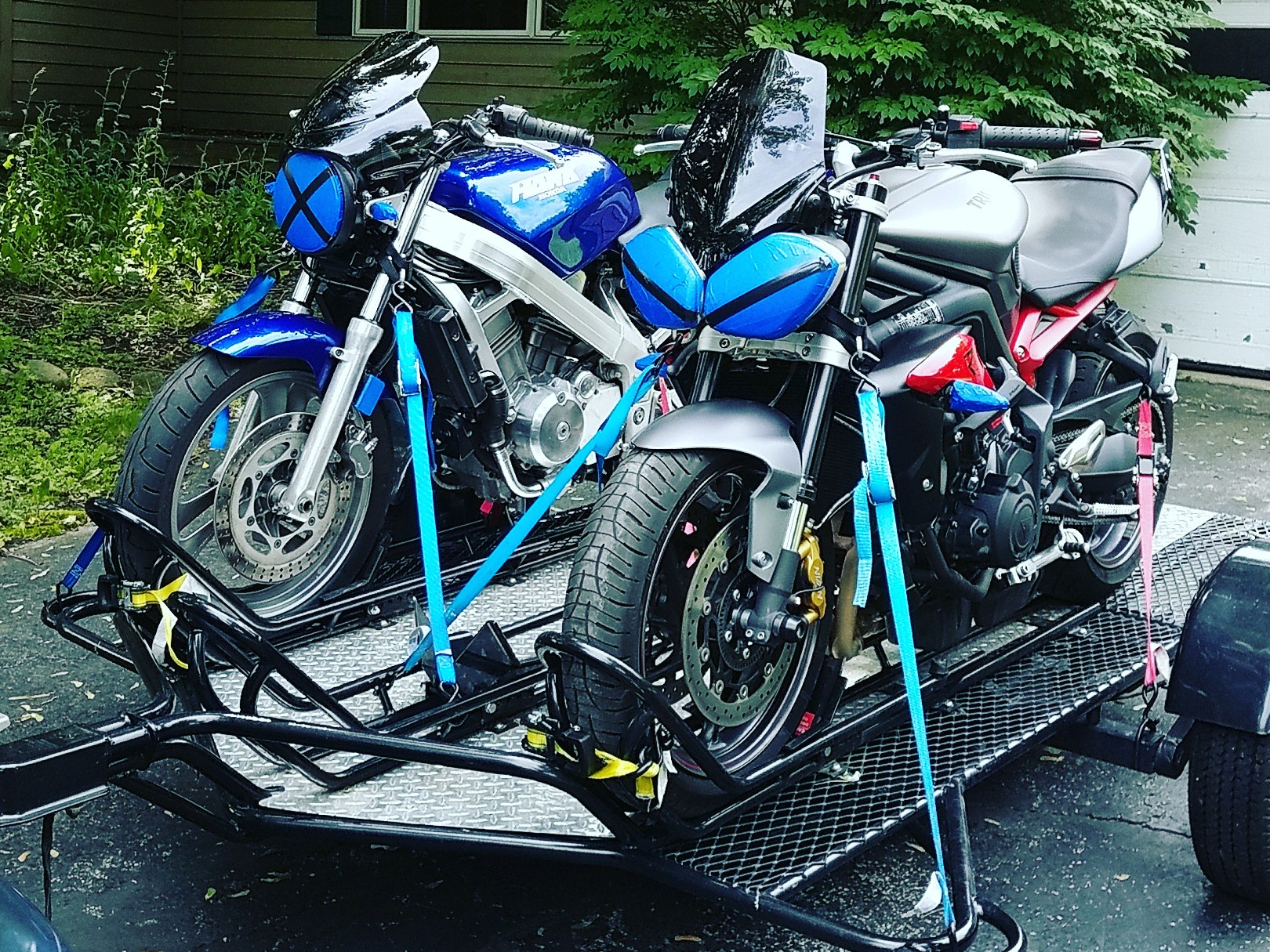
Credit: tro.bike
Preparing Your Motorcycle
Before tying down your motorcycle, you must prepare it properly. This ensures safety and prevents damage during transport. Follow these steps for a smooth process.
Inspecting The Bike
First, check your motorcycle for any damage or issues. Look for cracks, loose bolts, or worn-out parts. Fix these issues before securing the bike. This helps avoid problems during transport.
Pay close attention to the tires. Ensure they are properly inflated. Check the brakes to make sure they are in good condition. A well-maintained bike is safer to transport.
Securing Loose Parts
Next, secure any loose parts on your motorcycle. Remove or tighten items like mirrors, saddlebags, and detachable windshields. This prevents them from coming loose during transport.
Use tape or straps to secure smaller parts. This keeps everything in place and avoids damage. Pay attention to cables and wires. Ensure they are not hanging loose. Tuck them away securely.
By preparing your motorcycle well, you ensure a safe and smooth transport. Follow these steps carefully to protect your bike.
Positioning The Motorcycle
Secure your motorcycle by positioning it properly before tying down. Make sure it stands upright, centered on the trailer.
Positioning the motorcycle correctly is crucial for a safe transport. If not done properly, it might tip over, causing damage or even injury. To ensure safety, focus on centering the bike and balancing its weight.
Centering The Bike
Place the motorcycle in the middle of the trailer or truck bed. This helps distribute the weight evenly. Ensure that the bike is straight. Use a wheel chock or a front tire stop. This keeps the front wheel in place. A properly centered bike is more stable.
Balancing Weight
Balancing the weight is just as important as centering. Make sure both sides of the bike have equal weight. Use tie-down straps on both sides. Tighten the straps evenly. This prevents the bike from leaning to one side. Check the bike’s balance before driving. Adjust the straps if needed. A well-balanced bike reduces the risk of tipping. This ensures a safer journey. “`
Tying Down The Front
Properly tying down your motorcycle ensures it stays secure during transport. Focusing on the front of your bike is critical. It prevents unwanted movement and potential damage. This section explains how to tie down the front of your motorcycle effectively.
Handlebar Straps
First, secure the handlebars with strong straps. Loop the straps around the handlebars, ensuring they are tight and secure. The straps should be even to maintain balance. Avoid putting too much pressure on the grips. This can cause damage.
Fork Securing
Next, secure the motorcycle forks. Use a fork brace if available. This keeps the forks stable and prevents movement. Attach straps to the lower part of the forks. Tighten the straps firmly, but not too tight. Over-tightening can damage the suspension.
Securing The Rear
Securing the rear of a motorcycle is essential for safe transportation. Properly anchoring the rear ensures stability and prevents movement during transit. This section guides you through the key steps to properly secure the rear of your motorcycle.
Rear Wheel Straps
To begin, use rear wheel straps to secure the back of the motorcycle. These straps keep the rear wheel in place and prevent it from shifting.
- Position the motorcycle on the trailer or truck bed.
- Pass the strap through the rear wheel.
- Tighten the strap until the wheel is firmly held.
- Ensure the strap is straight and not twisted.
Double-check the tension. The wheel should not move if the strap is tight enough.
Frame Anchoring
Next, focus on frame anchoring. This step provides additional stability to the motorcycle.
- Identify strong points on the frame for anchoring.
- Attach the straps to the frame points.
- Ensure the straps are not touching any delicate parts.
- Tighten the straps evenly to distribute the load.
The frame straps should be secure but not overly tight. Check for any movement and adjust if needed.
Properly securing the rear of a motorcycle prevents damage and ensures a safe journey. Follow these steps to secure both the rear wheel and the frame effectively.

Credit: www.youtube.com
Double-checking The Tie-downs
Ensuring your motorcycle is properly tied down is crucial for safe transport. After securing your bike, double-checking the tie-downs can prevent accidents. This step is often overlooked but can save you from potential damage. Here are some key areas to focus on during your double-check.
Tension Check
Make sure the straps are tight enough to hold the motorcycle securely. Press on the bike to see if it moves. If it does, adjust the tension of the straps. Your motorcycle should be stable with minimal movement. Always check the tension of each strap individually. A single loose strap can compromise the entire setup.
Strap Condition
Inspect each strap for any signs of wear and tear. Look for fraying, cuts, or weakened areas. Even a small defect can lead to a strap breaking under tension. Replace any damaged straps immediately. Using damaged straps can risk the safety of your motorcycle and other road users. Always carry spare straps to avoid unexpected issues.
| Check | Action |
|---|---|
| Strap Tension | Adjust until bike is stable |
| Strap Condition | Replace if frayed or damaged |
Following these steps ensures your motorcycle remains secure during transport. Double-checking the tie-downs is a simple task that can prevent serious issues. Always prioritize safety to protect your bike and yourself.
Transport Considerations
Transporting a motorcycle safely requires careful planning and attention to detail. Ensuring your bike is secure during transit helps prevent damage and keeps it safe. Understanding key transport considerations is essential for a smooth and secure journey.
Trailer Types
Choosing the right trailer is crucial for safe motorcycle transport. There are several types to consider. Open trailers are common and affordable. They offer easy loading and unloading. Enclosed trailers provide more protection from weather and road debris. They often come with built-in tie-down points. Flatbed trailers are versatile. They can carry multiple bikes and other cargo.
Loading Ramps
Loading ramps make it easier to get your motorcycle onto the trailer. They come in different materials and designs. Aluminum ramps are lightweight and durable. Folding ramps save space and are convenient to store. Ensure the ramp is wide enough for your bike. It should also have a non-slip surface for safety. Secure the ramp properly to avoid accidents during loading.

Credit: www.youtube.com
Safety Tips
Tying down a motorcycle properly is essential for safety. It ensures the bike remains secure during transport. Following safety tips can prevent accidents and damage. Here are some crucial safety tips to consider.
Emergency Kit
Always keep an emergency kit with you. It should include essential tools and first aid supplies. A tire repair kit, a flashlight, and extra straps are useful. Ensure the kit is easily accessible. This can make a big difference in an emergency.
Regular Inspections
Conduct regular inspections of your motorcycle and tie-down equipment. Check the straps for wear and tear. Ensure the anchor points are secure and undamaged. Inspect the bike for any loose parts. Regular checks can prevent unexpected issues.
Here’s a quick checklist for inspections:
- Check the straps for fraying
- Ensure buckles and hooks are functional
- Verify anchor points are solid
- Inspect the motorcycle for loose parts
- Test the stability of the tied-down bike
Frequently Asked Questions
How Do You Secure A Motorcycle On A Trailer?
To secure a motorcycle on a trailer, use ratchet straps. Attach the straps to solid points on the bike and trailer. Tighten the straps to ensure the motorcycle is stable and won’t move during transit.
What Type Of Straps Are Best For Motorcycles?
Ratchet straps are best for motorcycles. They provide strong, adjustable tension. Soft ties can prevent damage to the bike’s finish. Always choose straps with a high weight rating for safety.
Can You Tie Down A Motorcycle Without A Wheel Chock?
Yes, you can tie down a motorcycle without a wheel chock. Use additional straps for stability. Secure both the front and rear of the motorcycle. Ensure the bike is balanced and cannot tip over.
Where Do You Attach Straps On A Motorcycle?
Attach straps to solid parts like the frame or handlebars. Avoid attaching to parts that can bend or break. Secure both the front and rear of the motorcycle. Ensure the straps are tight and the bike is balanced.
Conclusion
Securing your motorcycle properly ensures its safety during transit. Use quality straps and check them twice. Tighten each strap firmly to avoid shifting. Keep your bike upright and stable. Practice these steps for peace of mind on the road. Your motorcycle deserves the best care.
Happy and safe travels!