
Curious about the monthly cost of owning a motorcycle? Owning a bike can be exciting, but it’s essential to understand the expenses involved.

Credit: www.youtube.com
Initial Purchase Price
The initial purchase price of a motorcycle can vary widely. This depends on whether you buy a new or used motorcycle, as well as the model and brand you choose. Let’s break down the costs associated with new and used motorcycles.
New Vs. Used
Choosing between a new or used motorcycle greatly affects the initial purchase price. Here’s a comparison:
| Condition | Price Range | Pros | Cons |
|---|---|---|---|
| New | $3,000 – $30,000 |
|
|
| Used | $1,000 – $15,000 |
|
|
Financing Options
Many people choose financing to spread the cost of their motorcycle over several months or years. Here are common financing options:
- Dealer Financing: Many motorcycle dealers offer in-house financing options. They may have competitive interest rates and flexible terms.
- Bank Loans: Traditional bank loans can be used to finance a motorcycle. Interest rates and terms will depend on your credit score.
- Credit Unions: Credit unions often offer lower interest rates compared to banks. This can be a more affordable option for financing.
When financing a motorcycle, consider the following:
- Interest Rates: The interest rate affects your monthly payment. Lower rates mean lower payments.
- Loan Term: The length of the loan affects the monthly cost. Shorter terms have higher payments but less interest paid overall.
- Down Payment: A larger down payment reduces the loan amount. This lowers your monthly payments.
Understanding the initial purchase price and financing options helps you budget effectively for your motorcycle. Make sure to compare different options to find the best deal.
Insurance Costs
Owning a motorcycle comes with various monthly expenses, with insurance being a major one. Insurance protects you from financial losses in case of accidents, theft, or damage. This section will cover the factors that affect insurance rates and the average monthly premiums you can expect to pay.
Factors Affecting Rates
Several factors influence your motorcycle insurance rates. Understanding these can help you manage your costs better.
- Type of Motorcycle: Sports bikes usually have higher premiums.
- Rider’s Age: Younger riders often face higher rates.
- Location: Urban areas may have higher premiums due to traffic and theft risks.
- Riding Experience: More experienced riders may get lower rates.
- Driving Record: A clean record can lower your premiums.
- Coverage Level: Comprehensive plans cost more than basic ones.
Average Monthly Premiums
The cost of motorcycle insurance varies, but here are some average figures to give you an idea:
| Type of Motorcycle | Average Monthly Premium |
|---|---|
| Sports Bike | $60 – $100 |
| Cruiser | $40 – $70 |
| Touring Bike | $50 – $80 |
| Standard Bike | $30 – $50 |
These figures are averages and can vary based on the factors mentioned earlier.
Fuel Expenses
Fuel expenses are a significant part of owning a motorcycle. It’s important to understand these costs to manage your budget effectively. In this section, we will discuss the fuel efficiency of motorcycles and the average monthly fuel cost.
Fuel Efficiency
Motorcycles generally offer better fuel efficiency than cars. Most motorcycles can achieve between 40 to 70 miles per gallon (mpg). Smaller bikes often get even better mileage. Fuel efficiency depends on the bike’s engine size, type, and riding style. Regular maintenance also plays a role in keeping fuel efficiency high.
Average Monthly Fuel Cost
The average monthly fuel cost for a motorcycle varies. It depends on how often and how far you ride. For example, if you ride 500 miles per month and your bike gets 50 mpg, you will need 10 gallons of fuel. With the average gas price at $3 per gallon, you will spend around $30 per month on fuel.
Long-distance riders may have higher fuel costs. Urban riders might spend less due to shorter trips. Always consider your riding habits to estimate your monthly fuel expenses accurately.
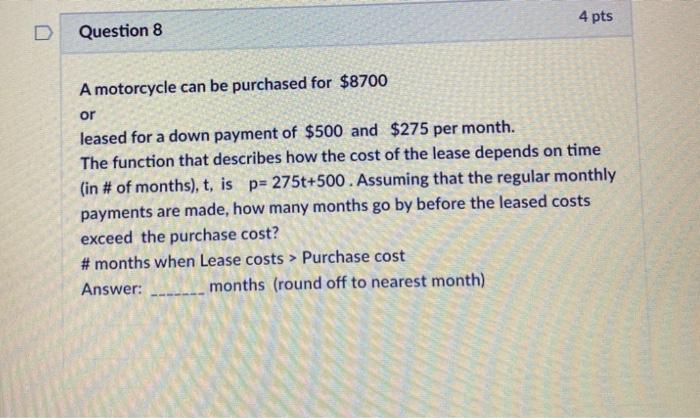
Credit: www.chegg.com
Maintenance And Repairs
Monthly motorcycle costs depend on maintenance and repairs. Regular upkeep, like oil changes and tire replacements, adds to expenses. Unexpected repairs can also increase overall costs.
Maintaining and repairing your motorcycle can add up each month. Costs will vary based on the bike’s age, model, and usage. Regular upkeep is crucial to keep your ride safe and reliable. Let’s break down the expenses for routine maintenance and unexpected repairs.
Routine Maintenance
Routine maintenance includes oil changes, tire checks, and brake adjustments. These tasks are essential for smooth operation. Oil changes should be done every 3,000 to 5,000 miles. This can cost around $20 to $50, depending on the oil type. Tires need checking for wear and tear every month. Replacing a tire can cost $100 to $300. Brake pads and fluid should also be inspected regularly. Replacing brake pads can cost $30 to $100 per set. Regular chain maintenance is also necessary. This can cost around $20 for cleaning and lubing products.
Unexpected Repairs
Unexpected repairs can be more costly. These include fixing a broken clutch or replacing a damaged part. Repairing a clutch can cost $200 to $500. Engine issues can be even more expensive. For example, repairing an engine can cost $500 to $2,000. Electrical issues can also arise, needing professional help. Electrical repairs can cost between $50 and $300. Having a savings fund for these unexpected costs is wise. It helps manage the financial burden without stress. “`
Registration And Taxes
When estimating the monthly cost of owning a motorcycle, registration and taxes play a crucial role. These expenses are essential and vary based on your location. Understanding these costs will help you budget effectively for your motorcycle expenses.
Annual Registration Fees
Each year, you need to pay annual registration fees for your motorcycle. These fees can vary significantly from state to state. Typically, the cost ranges between $10 to $100. Factors influencing the fee include the motorcycle’s weight, model, and age.
Sales Tax
When purchasing a motorcycle, you’ll need to pay sales tax. This tax is a percentage of the motorcycle’s purchase price. The rate varies by state, generally ranging from 2% to 10%. For example, if you buy a motorcycle for $5,000, you might pay between $100 and $500 in sales tax.
| State | Annual Registration Fee | Sales Tax Rate |
|---|---|---|
| California | $50 | 7.25% |
| Texas | $30 | 6.25% |
| Florida | $20 | 6% |
- Verify your state’s fees and tax rates.
- Plan for these expenses in your budget.
Understanding registration and taxes will help you manage your motorcycle costs better. Budgeting for these expenses ensures you avoid surprises.
Gear And Accessories
Owning a motorcycle involves not just the bike itself but also the gear and accessories that ensure safety and enhance the riding experience. These items can add to the monthly cost of owning a motorcycle. Let’s break down what you might need.
Essential Gear
Riding a motorcycle requires essential gear for safety and comfort. These items are not optional. They are a must for every rider.
- Helmet: A good quality helmet is crucial. Prices range from $100 to $500.
- Jacket: Protective jackets with armor cost between $150 and $400.
- Gloves: Motorcycle gloves, usually costing $20 to $100, protect hands.
- Pants: Riding pants with padding cost around $100 to $300.
- Boots: Sturdy, protective boots range from $100 to $300.
Here is a table summarizing the essential gear costs:
| Item | Cost Range (USD) |
|---|---|
| Helmet | $100 – $500 |
| Jacket | $150 – $400 |
| Gloves | $20 – $100 |
| Pants | $100 – $300 |
| Boots | $100 – $300 |
Optional Accessories
Many riders choose to enhance their experience with optional accessories. These items are not necessary but can add comfort and convenience.
- Saddlebags: Useful for carrying items. Prices range from $50 to $300.
- GPS: Helps in navigation. Costs between $100 and $400.
- Bluetooth Headset: Allows for hands-free communication. Prices range from $50 to $200.
- Custom Seats: Adds comfort for long rides. Costs around $100 to $500.
- Crash Guards: Protects the bike in case of a fall. Prices range from $50 to $200.
Optional accessories vary in cost but can significantly add to the monthly expenses of owning a motorcycle. Choose wisely based on your needs and budget.
Storage Costs
When budgeting for your motorcycle, storage costs play a vital role. Proper storage protects your motorcycle from weather, theft, and damage. This section covers both home storage and paid storage options.
Home Storage
Storing your motorcycle at home can save money. A garage or shed provides good protection. Covering your bike with a motorcycle cover adds extra protection. Ensure the area is dry and secure. Using a lock or alarm increases safety. Home storage costs include a cover and security device.
Paid Storage Options
If you lack home storage, consider paid storage options. Storage units offer security and protection. Choose a unit with climate control to prevent damage. Storage facilities often have video surveillance and access control. The cost depends on size and location. Monthly fees can range from $50 to $150. Some facilities offer motorcycle-specific storage spaces.
Depreciation
Depreciation is an important factor in calculating the monthly cost of owning a motorcycle. Depreciation refers to the loss of value a motorcycle experiences over time. This can significantly impact your overall expenses.
Depreciation Rate
The depreciation rate of a motorcycle varies based on several factors. New motorcycles tend to depreciate faster than used ones. Brand, model, and market demand also play a role. On average, a new motorcycle loses 20% of its value in the first year. The rate decreases in subsequent years.
Understanding the depreciation rate helps in budgeting for your motorcycle expenses. Tracking this rate can help you plan your finances better. It also aids in making informed decisions about buying and selling.
Impact On Resale Value
Depreciation directly affects the resale value of your motorcycle. As the bike loses value, you get less money when selling it. This is crucial if you plan to upgrade or switch bikes. Knowing the impact of depreciation can help you estimate future resale values.
Maintaining your motorcycle well can slow down depreciation. Regular servicing and proper care preserve its condition. A well-maintained bike holds its value better than a neglected one.
Considering depreciation helps in understanding the true cost of motorcycle ownership. It’s a key factor to keep in mind for long-term financial planning.
Total Monthly Cost
Understanding the total monthly cost of owning a motorcycle is essential. It helps you plan your budget. Monthly costs include various expenses. These add up quickly. Let’s break them down.
| Expense | Average Monthly Cost |
|---|---|
| Insurance | $50 |
| Fuel | $30 |
| Maintenance | $20 |
| Loan Payment (if any) | $100 |
| Registration | $10 |
Budgeting Tips
Effective budgeting can help manage these costs. Here are some tips:
- Track your expenses: Keep a record of all your motorcycle-related spending.
- Set a monthly budget: Allocate a specific amount each month for your motorcycle.
- Save for emergencies: Set aside a small amount each month for unexpected repairs.
Cost-saving Strategies
There are ways to reduce these monthly costs. Consider these strategies:
- Shop for insurance: Compare rates from different providers to get the best deal.
- Perform regular maintenance: Regular check-ups can prevent costly repairs.
- Use fuel efficiently: Avoid rapid acceleration and braking to save on fuel.
- Refinance your loan: Look for better loan rates to reduce monthly payments.

Credit: explore.rumbleon.com
Frequently Asked Questions
How Much Does A Motorcycle Cost Per Month?
The monthly cost of a motorcycle varies. On average, it can range from $100 to $300. This includes insurance, maintenance, and fuel expenses.
What Are The Main Costs Of Owning A Motorcycle?
The main costs include insurance, fuel, maintenance, and loan payments. These costs can vary based on the motorcycle model and usage.
How Much Is Motorcycle Insurance Monthly?
Motorcycle insurance typically costs between $25 and $100 per month. Rates depend on factors like age, bike type, and coverage level.
How Much Should I Budget For Motorcycle Maintenance?
Budget around $50 to $100 monthly for maintenance. This covers regular services, tire replacements, and unexpected repairs.
Conclusion
Budgeting for a motorcycle involves many factors. Monthly costs vary widely. Fuel, maintenance, and insurance are key expenses. Owning a motorcycle can be affordable. Careful planning helps manage these costs. Regular maintenance saves money long-term. Remember, every rider’s situation is different.
Research and plan to find your best deal. Enjoy the ride!