
There’s nothing quite like the freedom of the open road on two wheels — the wind in your face, the engine’s rumble beneath you, and the pure connection between man and machine. But with that freedom comes risk. Motorcycle riding demands awareness, skill, and respect for safety.
Every rider, from weekend cruisers to daily commuters, should make safety their top priority. These top ten motorcycle safety tips aren’t just for beginners — even seasoned riders can benefit from refreshing the basics.
The top ten motorcycle safety tips include wearing a helmet and proper riding gear, performing pre-ride checks, maintaining a safe distance, and staying visible on the road. Always obey traffic laws, practice braking and cornering, ride within your skill level, and avoid distractions or alcohol. Adjust your speed to weather and road conditions for a safe, enjoyable ride.

Top Ten Motorcycle Safety Tips
Top 10 Motorcycle Safety Tips
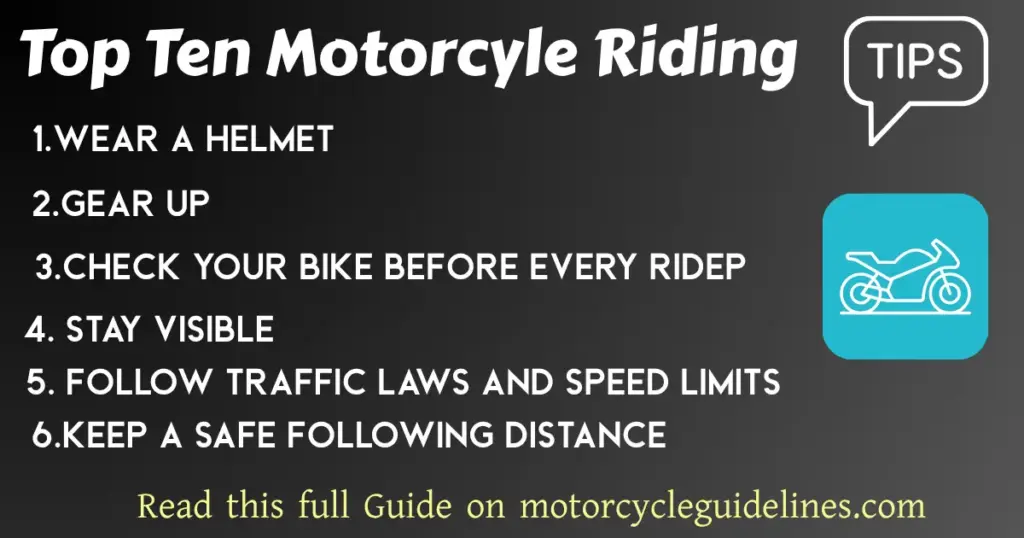
1. Always Wear a Helmet — Your First Line of Defense
A helmet isn’t just a legal requirement in most places — it’s your most important piece of gear. A DOT or ECE-certified helmet can literally mean the difference between walking away from a crash or not.
Choose a helmet that fits snugly, covers your full face, and has proper ventilation. Avoid cheap knockoffs or novelty helmets — they might look cool, but they won’t protect you when it matters.
Pro tip: Replace your helmet every five years or immediately after any impact. The inner foam lining compresses over time, reducing protection even if it looks fine from the outside.
2. Gear Up — Protective Clothing Matters
Your gear is your armor. Never hit the road without a jacket, gloves, pants, and boots made for riding. Motorcycle clothing isn’t just about style — it’s designed to protect you from road rash, impact, and weather.
Look for CE-certified armor in your jacket and pants. Go for abrasion-resistant materials like leather or Kevlar. Gloves protect your hands from debris and provide better grip, while boots shield your ankles and keep your footing secure at stops.
Choosing Weather-Appropriate Gear
In summer, go for ventilated mesh gear to stay cool without losing protection. In winter, choose insulated and waterproof gear that keeps you warm and dry while maintaining flexibility.
Riding comfortably helps you focus — and focus keeps you safe.
3. Check Your Bike Before Every Ride
Even the best riders can get into trouble if their motorcycle isn’t road-ready. A quick pre-ride inspection can save you from breakdowns or worse.
Before you ride, check:
- Tire pressure and tread depth
- Oil and fluid levels
- Brakes (front and rear)
- Lights, indicators, and horn
- Chain tension and lubrication
It only takes five minutes, but it could prevent a serious accident. If something feels off, don’t ignore it — fix it before you ride.
( Want a full guide? Check out our [How to ride a motorcycle with a passenger safely]
4. Stay Visible — Be Seen to Stay Safe
Motorcycles are small, fast, and often invisible to distracted drivers. That’s why visibility is your lifeline.
Use reflective tape on your gear and bike, keep your headlights on (even during the day), and wear bright-colored clothing if possible. Position yourself in the lane where you’re most visible — typically where a driver can see you in their mirror.
Notes: Flash your brake light gently when slowing down to alert drivers behind you — especially in traffic.
5. Follow Traffic Laws and Speed Limits
Speeding might feel thrilling, but it’s also one of the top causes of motorcycle fatalities. Respect speed limits, road signs, and signals.
Riding responsibly doesn’t make you boring — it makes you a smart rider who stays alive. Plus, staying within limits helps you anticipate other vehicles’ movements better and handle sudden changes safely.
Understanding Local Riding Laws
Some areas have specific motorcycle regulations — such as helmet laws, lane filtering rules, or reflective gear requirements. Know them before you ride to avoid fines and stay compliant.
6. Keep a Safe Following Distance
Cars can stop faster and more unpredictably than motorcycles. That’s why every rider should follow the 4-second rule — always keep at least four seconds of space between you and the vehicle ahead.
This gives you enough time to react if they brake suddenly or swerve.
If the road is wet or visibility is poor, extend that distance. Remember: you have no airbags — distance is your best protection.
7. Stay Alert and Scan for Hazards
Defensive riding is about anticipation. Keep your eyes moving — check your mirrors often, scan the road ahead, and watch for sudden lane changes, potholes, or animals.
Don’t fixate on obstacles; look where you want to go, not where you don’t.
Stay out of blind spots, avoid weaving between vehicles, and expect that other drivers might not see you. Your awareness keeps you one step ahead of danger.
8. Practice Braking and Cornering Techniques
Braking and cornering are two skills that separate good riders from great ones.
Use both brakes smoothly — applying too much front brake too quickly can cause a skid, while relying only on the rear can increase stopping distance.
When cornering, enter the turn at a safe speed, look through the curve, and lean naturally with the bike.
Notes: Take a motorcycle safety or advanced riding course — it’s the best way to build real-world confidence and control.
9. Avoid Riding Under the Influence or When Tired
This one’s non-negotiable. Riding while tired or under the influence of alcohol or drugs drastically reduces reaction time and judgment.
More than 25% of motorcycle crashes involve impairment — don’t be part of that statistic.
If you’ve had a drink, take a cab. If you’re exhausted, rest up. Your bike will still be there tomorrow — but you might not be if you push your limits today.
10. Adjust Speed to Weather and Road Conditions
Rain, fog, or gravel-covered roads are a rider’s worst enemy. These conditions reduce traction and increase stopping distance.
Slow down and ride smoothly. Avoid sudden braking, harsh acceleration, or leaning too deep into corners.
Top Ten Motorcycle Safety Tips
Smart Riding Tip:
Always adjust before the curve, not during it. Sudden braking mid-turn can throw you off balance and send you sliding.
If visibility is poor, use your low beam and increase following distance.
Bonus Tip: Ride Within Your Skill Level
Just because your bike can do 150 mph doesn’t mean you should. Ride within your comfort zone — not your ego’s.
If you want to improve your skills, consider a professional riding course. Controlled environments are the safest place to push your limits and learn advanced handling techniques.
Common Questions About Motorcycle Safety
Q1. What’s the most important motorcycle safety gear?
Your helmet — it’s your number one lifesaver.
Q2. How do I stay visible on the road?
Wear bright or reflective clothing, use your lights, and ride where drivers can see you in their mirrors.
Q3. Should I take a motorcycle safety course?
Yes. It sharpens your braking, cornering, and hazard-awareness skills — even experienced riders benefit.
Q4. What’s the 4-second rule?
It’s the safe following distance you should keep from the vehicle ahead — four seconds of reaction time.
Conclusion — Ride Smart, Stay Safe, and Enjoy the Journey
Motorcycling isn’t just transportation — it’s a lifestyle. But every ride should start and end safely.
By following these top ten motorcycle safety tips, you’re not just protecting yourself — you’re also protecting everyone who shares the road with you.
So before you roll the throttle, gear up, check your bike, stay alert, and ride smart.
Because every safe mile is another chance to enjoy the freedom that only motorcycling can give.
Bookmark this guide, share it with your riding buddies, and make safety your strongest habit.