
Struggling with a motorcycle battery drains while starting? You’re not alone.
This common issue can be frustrating for riders, leaving them stranded and annoyed. A motorcycle battery that drains quickly during startup can result from various causes. From faulty wiring to old batteries, the reasons can be many. Understanding these causes is key to preventing future problems.
In this blog, we’ll explore the common reasons behind this issue. We’ll also provide tips to keep your battery in top shape. So, if you’re tired of dealing with this problem, read on to find out how you can ensure a smooth ride every time you start your bike.
Common Causes
Experiencing a motorcycle battery drain while starting can be frustrating. Understanding the common causes can help you address the issue efficiently. Let’s explore some of the most frequent culprits:
Faulty Battery
A faulty battery is one of the most common reasons for a drain. Over time, batteries can lose their ability to hold a charge. Signs of a faulty battery include:
- Battery age over 3 years
- Visible damage or leaks
- Difficulty starting the motorcycle
Regular maintenance and timely replacement can prevent unexpected issues. Always check the battery’s health before long trips.
Corroded Connections
Corroded connections can hinder the flow of electricity. This makes it harder for your motorcycle to start. Corrosion usually appears as a white, powdery substance on the terminals. Common causes include:
- Exposure to moisture
- Lack of regular cleaning
- Battery acid leaks
To fix corroded connections:
- Disconnect the battery
- Clean the terminals with a mixture of baking soda and water
- Dry thoroughly and reconnect
Regular inspection and cleaning can keep your battery connections in good shape. This ensures a steady flow of electricity and a reliable start every time.
Credit: www.amazon.com
Identifying Symptoms
When your motorcycle battery drains while starting, it’s crucial to identify the symptoms early. Recognizing these signs can save you time, money, and hassle. Below, we discuss some common symptoms that indicate your motorcycle battery might be draining during startup.
Slow Crank
One of the most obvious symptoms is a slow crank. If your motorcycle cranks slower than usual, it could be a sign of a weak battery. This can happen due to reduced power being sent to the starter motor. Check if the engine turns over slower than normal.
To help you identify a slow crank, here are some key points:
- The engine takes longer to start.
- The starter motor sounds weak.
- You might hear a clicking noise.
Dim Lights
Another common symptom is dim lights. If the headlights or dashboard lights appear dim, your battery could be draining. This happens because a weak battery cannot supply enough power to the electrical systems.
Here are some indicators of dim lights:
- Headlights are not as bright as usual.
- Dashboard lights flicker or are dim.
- Turn signals may blink slower or not at all.
Observing these symptoms can help you diagnose a draining battery early. Regular checks and maintenance can prevent further issues.
Battery Testing
A motorcycle that won’t start can be frustrating. Often, the battery is the culprit. Testing the battery is crucial to pinpoint the issue. Let’s explore two effective methods: using a multimeter and conducting a load test. Both methods help in determining the health of your motorcycle battery.
Multimeter Use
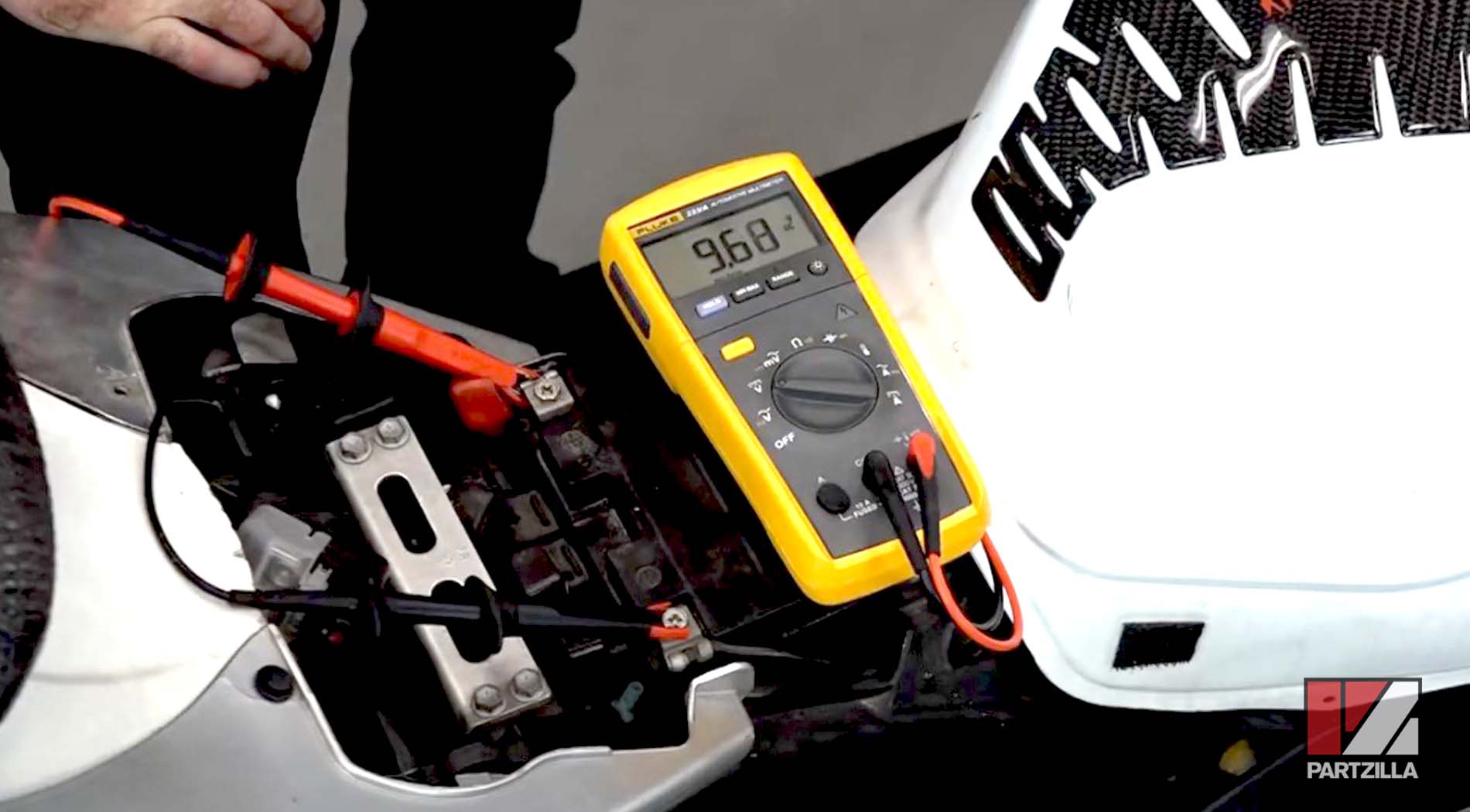
A multimeter measures the battery’s voltage. Follow these steps:
- Turn off the motorcycle.
- Set the multimeter to DC voltage (20V).
- Connect the red probe to the battery’s positive terminal.
- Connect the black probe to the negative terminal.
- Read the voltage displayed.
A healthy battery should read between 12.6V to 12.8V. If the voltage is below 12.4V, the battery may be weak. Regular checks ensure the battery’s reliability.
Load Testing
A load test is more rigorous. It simulates the battery’s performance under stress. Here’s how to perform a load test:
- Fully charge the battery.
- Connect the load tester to the battery terminals.
- Apply the load for 10-15 seconds.
- Observe the voltage drop.
A healthy battery should not drop below 9.6V during the test. If it does, the battery might need replacing. Load testing provides a clear picture of the battery’s condition.
Both multimeter use and load testing are essential for battery maintenance. Regular testing can prevent unexpected breakdowns. Keep your motorcycle running smoothly by ensuring the battery is always in top shape.

Credit: www.youtube.com
Charging System Check
A motorcycle battery draining while starting can be frustrating. Checking the charging system is crucial. This ensures your bike’s battery stays charged. The charging system includes the alternator and regulator/rectifier. Here’s how to inspect each component.
Alternator Inspection
The alternator generates electricity to power the bike and charge the battery. A faulty alternator can cause battery drains. Here’s how to inspect the alternator:
- Visual Inspection: Check for loose or damaged wires. Ensure the alternator belt is tight.
- Voltage Test: Use a multimeter. Set it to AC voltage. Connect it to the alternator terminals. Start the bike. The reading should be between 13.5 to 14.5 volts. If not, the alternator may be faulty.
Regulator/rectifier Testing
The regulator/rectifier converts AC to DC and regulates voltage. A malfunction can lead to battery issues. Here’s how to test it:
- Visual Inspection: Look for signs of burning or corrosion. Check for loose connections.
- Resistance Test: Set your multimeter to resistance. Disconnect the regulator/rectifier. Test each terminal. Compare the readings to the manufacturer’s specs. A significant difference indicates a problem.
- Voltage Output Test: Reconnect the regulator/rectifier. Measure the DC voltage at the battery terminals. The reading should be around 14 volts with the engine running. A lower or higher reading indicates an issue.
Regular checks of the charging system keep your motorcycle in top shape. Proper maintenance prevents unexpected battery drains. Ensure your rides are smooth and hassle-free.
Starter Motor Issues
The starter motor is essential for your motorcycle. It helps the engine start. If your motorcycle battery drains while starting, starter motor issues might be the cause. Let’s explore some common problems with the starter motor.
Solenoid Problems
The solenoid is a key part of the starter motor. It acts as a bridge for the electric current. If the solenoid is faulty, it can cause battery drain. Here are some signs of solenoid problems:
- Clicking sound when you press the start button.
- Motorcycle does not start, but lights work.
- Intermittent starting issues.
To fix solenoid problems, check the connections. Make sure they are clean and tight. If the problem persists, you may need to replace the solenoid.
Worn Brushes
Worn brushes in the starter motor can also cause battery drain. Brushes transfer electric current to the motor’s rotor. Over time, they wear out and lose efficiency. Signs of worn brushes include:
- Slow cranking of the engine.
- Starter motor does not engage.
- Unusual noises from the starter motor.
To address worn brushes, you may need to replace them. Regular maintenance can help extend their lifespan. Checking the brushes periodically ensures they function well.
In summary, starter motor issues like solenoid problems and worn brushes can drain your motorcycle battery. Regular maintenance and checks can keep your starter motor in good shape. Keep an eye out for these signs to prevent battery drain.
Electrical Drain Sources
Understanding the electrical drain sources in your motorcycle can save you from unexpected breakdowns. Several factors can cause your motorcycle battery to drain while starting. Identifying these sources can help maintain a healthy battery life and ensure smooth rides.
Parasitic Draw
A parasitic draw happens when an electrical component continues to consume power after the motorcycle is turned off. Common culprits include:
- Alarm systems
- GPS units
- Aftermarket lights
Even when these devices are off, they may still draw power. This continuous power drain can weaken your battery over time. To check for a parasitic draw, you can use a multimeter. Disconnect the negative terminal of your battery and connect the multimeter in series. Look for any current flow that indicates a parasitic draw.
Faulty Accessories
Faulty accessories can also contribute to battery drainage. Some accessories may have defects or wear out over time. Common examples include:
- Heated grips
- USB chargers
- Bluetooth devices
These faulty accessories can create a continuous drain on the battery. Regularly inspect and test all accessories to ensure they function correctly. Disconnect any non-essential accessories if you suspect they may be draining the battery.
By addressing these electrical drain sources, you can extend your battery life and enjoy reliable motorcycle performance.
Maintenance Tips
Maintaining your motorcycle battery is crucial to prevent drains while starting. Regular upkeep ensures your battery remains in top condition, enhancing performance and longevity. This section provides practical tips that are easy to follow.
Regular Inspections
Conducting regular inspections of your motorcycle battery can save you from unexpected issues. Here are some key points to consider:
- Check the battery terminals for any signs of corrosion.
- Ensure the connections are tight and secure.
- Look for any visible damage or leaks.
- Test the battery voltage with a multimeter. It should read between 12.6 to 12.8 volts when fully charged.
- Inspect the battery case for any swelling or bulging.
Regular checks can help identify potential problems early. This allows for timely intervention, ensuring your motorcycle starts smoothly every time.
Proper Storage
Proper storage of your motorcycle battery is essential, especially during off-seasons or long periods of non-use. Follow these tips for effective storage:
- Remove the battery from the motorcycle if not in use for more than a month.
- Store the battery in a cool, dry place, away from direct sunlight.
- Charge the battery fully before storage.
- Use a trickle charger to maintain the charge level during storage.
- Periodically check the battery voltage and recharge if it drops below 12.4 volts.
Proper storage practices ensure your battery remains in good condition. This helps avoid starting problems when you are ready to ride again.
| Inspection Tips | Storage Tips |
|---|---|
| Check for corrosion | Remove battery if unused for a month |
| Ensure tight connections | Store in a cool, dry place |
| Look for damage or leaks | Charge fully before storage |
| Test voltage | Use a trickle charger |
| Inspect for swelling | Check voltage periodically |
By following these maintenance tips, you can ensure your motorcycle battery remains reliable. Keep your bike ready to hit the road with confidence.
When To Seek Professional Help
Motorcycle battery issues can be frustrating, especially when you’re eager to hit the road. Sometimes, DIY solutions aren’t enough, and you need to call in the experts. Knowing when to seek professional help can save you time, money, and stress. Let’s explore two key scenarios where professional help is essential.
Complex Electrical Issues
Motorcycles have intricate electrical systems. If your battery drains while starting, it might be due to complex electrical issues. These problems include:
- Faulty wiring
- Malfunctioning alternator
- Short circuits
These issues require a deep understanding of motorcycle electronics. Attempting to fix these problems without proper knowledge can lead to further damage. It’s best to have a professional diagnose and repair these complex electrical issues.
Persistent Problems
If your motorcycle battery drains repeatedly, it’s a sign of a deeper issue. Persistent problems include:
- Recurring battery drainage
- Frequent jump-starts needed
- Battery replacements not solving the issue
Repeated battery problems can be a symptom of underlying faults. A professional mechanic can identify persistent problems that might not be obvious. They have the tools and expertise to provide a long-term solution.
| Issue | Professional Solution |
|---|---|
| Complex Electrical Issues | Expert diagnosis and repair |
| Persistent Problems | Comprehensive inspection and fix |
Remember, seeking professional help ensures your motorcycle runs smoothly. Don’t ignore the signs of deeper issues. Professional mechanics can save you from future headaches and costly repairs.
Credit: www.partzilla.com
Frequently Asked Questions
Why Does My Motorcycle Battery Drain While Starting?
A motorcycle battery can drain while starting due to several reasons. Common causes include faulty alternator, loose connections, or an old battery.
How Do I Fix A Draining Motorcycle Battery?
To fix a draining motorcycle battery, check for loose connections, ensure the alternator is working, and replace the old battery if needed.
What Are Signs Of A Bad Motorcycle Battery?
Signs of a bad motorcycle battery include slow engine crank, dim headlights, and frequent need for recharging.
Can Cold Weather Affect My Motorcycle Battery?
Yes, cold weather can significantly affect a motorcycle battery. It reduces the battery’s ability to hold charge and deliver power.
Conclusion
A motorcycle battery draining while starting can be frustrating. Simple checks help prevent issues. Regular maintenance keeps your battery healthy. Always ensure connections are tight and clean. Replace old batteries before they fail. Consider professional help for persistent problems. Understanding these basics can extend your battery life.
Stay proactive, and your motorcycle will start smoothly. Keep riding with confidence and enjoy the road.