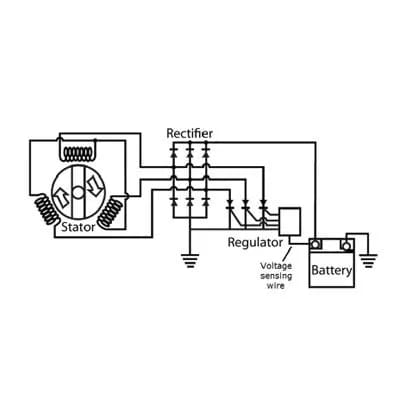
Are Motorcycle Batteries AC or DC? Unveiling the Truth
Motorcycle batteries are DC, not AC. They provide Direct Current to power the bike’s electrical systems.
Understanding this is crucial for maintenance and troubleshooting. Motorcycles, like many other vehicles, rely on batteries to start the engine and power various electronic components. These batteries are designed to deliver a steady flow of Direct Current (DC) to the motorcycle’s electrical system.
This DC power is essential for functions like ignition, lighting, and other accessories. Knowing that motorcycle batteries are DC helps owners make informed decisions about battery care and replacements. It also aids in understanding how the bike’s electrical system works, ensuring better performance and longevity for the motorcycle. Dive into this topic to learn more about why DC power is key for your motorcycle.
Motorcycle batteries are essential for a bike’s electrical system. They power the starter, lights, and other electronics. Understanding them helps ensure your bike runs smoothly. This section explores their purpose, importance, and common types.
Purpose And Importance
A motorcycle battery provides the necessary power to start your bike. It ensures that the engine starts quickly and reliably. Without a good battery, the bike may not start or run properly.
Batteries also power the lights and other accessories. This includes headlights, taillights, and turn signals. A reliable battery ensures these systems work consistently.
In summary, motorcycle batteries are crucial for starting the engine and powering electrical components. A well-maintained battery ensures a safe and enjoyable ride.
Common Types
Motorcycle batteries come in various types. Each has its own features and benefits. Here are the most common ones:
Lead-Acid Batteries: Traditional type, affordable and widely used.
Absorbed Glass Mat (AGM) Batteries: Maintenance-free, spill-proof, and long-lasting.
Lithium-Ion Batteries: Lightweight, high performance, and longer lifespan.
The table below highlights the key features of each type:
Battery Type
Features
Pros
Cons
Lead-Acid
Traditional, Affordable
Cost-effective, Reliable
Heavier, Requires Maintenance
AGM
Maintenance-free, Spill-proof
Long-lasting, Reliable
More Expensive
Lithium-Ion
Lightweight, High Performance
Longer Lifespan, Lightweight
Most Expensive
Choosing the right battery depends on your needs and budget. Each type offers different benefits and drawbacks. Consider these factors when selecting a motorcycle battery.
Credit: www.uti.edu
Basic Electrical Concepts
Understanding the basic electrical concepts is crucial for motorcycle enthusiasts. Motorcycle batteries are an essential component, and knowing how they work can save time and money. Let’s dive into the basic electrical concepts behind motorcycle batteries.
Ac Vs. Dc
Motorcycle batteries use either Alternating Current (AC) or Direct Current (DC). AC and DC describe the flow of electrical current. AC changes direction periodically, while DC flows in one direction. This fundamental difference affects how each type of current is used in motorcycles.
Key Differences
Feature
AC
DC
Flow Direction
Changes periodically
Flows in one direction
Voltage
Can be easily converted
Stable and consistent
Use in Motorcycles
Less common
More common
Motorcycles typically use DC batteries. DC provides a stable and consistent power supply. This is crucial for starting the engine and powering electrical components. AC is less common in motorcycle batteries because it is not as efficient for these purposes.
Understanding these key differences helps in choosing the right battery. Ensure your motorcycle runs smoothly and efficiently. Pay attention to these basic electrical concepts and you will have a better grasp of your motorcycle’s electrical system.
Motorcycle Battery Fundamentals
Motorcycle batteries are crucial for the bike’s electrical system. They power the starter motor, lights, and other electronics. Understanding their basics helps in proper maintenance.
Components
Motorcycle batteries have several key components. The main ones include plates, electrolyte, and separators. Plates are made of lead and come in positive and negative types. The electrolyte is a mixture of sulfuric acid and water. It helps in the chemical reaction. Separators prevent the plates from touching each other. These parts work together to store and deliver energy.
Functionality
Motorcycle batteries use direct current (DC). They convert chemical energy into electrical energy. This process happens through a reaction between the plates and the electrolyte. When you start your bike, the battery sends DC power to the starter motor. This gets the engine running. Once the engine runs, the bike’s alternator takes over. It recharges the battery, ensuring it’s ready for the next use.
Dc In Motorcycle Batteries
Motorcycle batteries play a crucial role in powering various electrical components. These batteries operate on DC (Direct Current), which is essential for motorcycles’ performance and safety. Understanding the characteristics and advantages of DC in motorcycle batteries helps riders maintain their bikes better.
Characteristics
DC in motorcycle batteries has several key characteristics:
Consistent Voltage: DC provides a stable and consistent voltage output, crucial for motorcycle electronics.
Polarity: DC has a positive and negative terminal, which must be connected correctly.
Rechargeable: Motorcycle batteries can be recharged using a suitable DC charger.
Energy Storage: These batteries store energy chemically and release it as DC.
Advantages
Using DC in motorcycle batteries offers several advantages:
Reliability: DC provides a steady power supply, ensuring reliable performance.
Compatibility: Most motorcycle electrical systems are designed to work with DC.
Safety: Properly maintained DC batteries are safe and reduce the risk of electrical faults.
Efficiency: DC batteries are efficient, providing optimal energy usage for motorcycles.
In summary, DC in motorcycle batteries ensures consistent performance, compatibility, safety, and efficiency. Understanding these aspects helps riders keep their motorcycles in top shape.
Ac In Electrical Systems
Understanding the role of AC (Alternating Current) in electrical systems helps in grasping its significance. AC is a type of electrical current where the flow of charge changes direction periodically. In homes and industries, AC is the standard for delivering electricity due to its efficiency in transmission over long distances.
Where Ac Is Used
AC is commonly used in various applications:
Household Appliances: Refrigerators, air conditioners, and microwaves use AC.
Industrial Equipment: Motors and heavy machinery rely on AC for operation.
Power Transmission: AC is preferred for transmitting electricity over long distances.
Ac Vs. Dc In Vehicles
In vehicles, both AC and DC have specific uses:
AC
DC
Used in alternators for generating electricity.
Used in batteries to store electrical energy.
Provides power for air conditioning units.
Powers lights, ignition, and electronic systems.
More efficient for larger systems.
Essential for starting the engine.
While AC is efficient for certain components, DC is crucial for powering most vehicle electronics. This division of labor ensures that each type of current is used where it performs best.
Credit: www.amazon.com
Why Motorcycle Batteries Use Dc
Motorcycle batteries use Direct Current (DC) for several important reasons. Understanding these reasons helps in maintaining and troubleshooting your motorcycle’s electrical system. DC is essential for the efficiency and compatibility of motorcycle batteries and components.
Efficiency
DC power is more efficient for motorcycles. It ensures steady power delivery. This means your motorcycle runs smoothly without interruptions. DC batteries have less energy loss. This results in better overall performance. The efficiency of DC helps extend the battery life. Longer battery life is crucial for riders.
Compatibility
Motorcycle components are designed for DC power. This includes lights, ignition systems, and other electronics. DC ensures these components work correctly. Using AC would require additional converters. This could complicate the design and increase costs. DC batteries offer a simple and reliable solution. Compatibility with DC makes maintenance easier. Riders can focus on the road rather than technical issues.
Common Misconceptions
Many people have misunderstandings about motorcycle batteries. Some think they are the same as car batteries. Others believe they work differently. Let’s explore some of these common misconceptions.
Myths
Myth 1: Motorcycle batteries are AC.
Myth 2: All motorcycle batteries are the same.
Myth 3: You can’t charge a motorcycle battery with a car charger.
These myths can confuse new riders. It’s important to know the facts.
Clarifications
Fact 1: Motorcycle batteries are DC, not AC.
Fact 2: Different motorcycles use different types of batteries.
Fact 3: You can use a car charger, but be cautious.
Motorcycle batteries are always DC (Direct Current). Unlike household appliances which use AC (Alternating Current), motorcycles rely on DC to power their systems. This is a crucial distinction.
Additionally, not all motorcycle batteries are the same. There are lead-acid, lithium-ion, and more. Each type has its own benefits and drawbacks. Knowing which one suits your bike is essential.
Charging a motorcycle battery with a car charger is possible. But it’s important to use a charger with the correct voltage and amperage settings. Overcharging can damage the battery.
Maintaining Motorcycle Batteries
Maintaining your motorcycle battery is essential for its longevity and performance. Proper care ensures your bike runs smoothly and starts reliably every time. Let’s explore some best practices and troubleshooting tips to keep your motorcycle battery in top shape.
Best Practices
Regular Inspection: Check your battery’s terminals for any corrosion. Clean them using a mixture of baking soda and water.
Charge Regularly: Use a motorcycle-specific charger to maintain optimal charge levels. Avoid using car chargers as they can damage the battery.
Keep It Cool: Store your motorcycle in a cool, dry place. Excessive heat or cold can reduce battery lifespan.
Water Levels: For lead-acid batteries, regularly check and maintain water levels. Use distilled water only.
Troubleshooting Tips
If your motorcycle battery isn’t performing well, follow these steps to diagnose the issue:
Check Connections: Ensure all connections are tight and free of corrosion.
Test Voltage: Use a multimeter to check the battery voltage. A healthy battery should read around 12.6 volts.
Inspect for Damage: Look for cracks or leaks in the battery casing. Replace the battery if you find any damage.
Load Test: Perform a load test to check the battery’s ability to hold charge under load. If it fails, consider replacing it.
Following these tips can help you maintain your motorcycle battery and keep it running smoothly. Remember, a well-maintained battery means a reliable ride.
Future Trends In Motorcycle Batteries
The future of motorcycle batteries is rapidly evolving. New innovations aim to enhance performance, sustainability, and user experience. This section will explore the upcoming trends in motorcycle batteries.
Technological Advances
Technological advances are transforming motorcycle batteries. Lithium-ion batteries are becoming more popular. They are lighter and more efficient. These batteries also charge faster. Solid-state batteries are another exciting development. They promise greater energy density and safety. Advanced Battery Management Systems (BMS) help monitor and manage battery health. This ensures longer battery life and optimal performance. Wireless charging could also become a standard feature. It adds convenience for riders. These advances make motorcycle batteries more reliable and efficient.
Sustainability
Sustainability is a key trend in motorcycle batteries. Manufacturers are focusing on eco-friendly materials. They aim to reduce the environmental impact of battery production. Recycling programs are becoming more common. This helps manage waste and recover valuable materials. There is also a push for renewable energy sources to charge batteries. Solar and wind power are great alternatives. This reduces the carbon footprint of electric motorcycles. Sustainable practices make motorcycle batteries greener and more responsible.
Credit: www.amazon.com
Frequently Asked Questions
Are Motorcycle Batteries Ac Or Dc?
Motorcycle batteries are DC. They provide direct current to power the bike’s electrical systems.
How Do Motorcycle Batteries Work?
Motorcycle batteries store chemical energy. They convert it into electrical energy, providing power for the bike’s systems.
Can You Use Ac On A Motorcycle Battery?
No, you cannot use AC. Motorcycle batteries are designed for DC, not AC.
How To Charge A Motorcycle Battery?
Use a compatible motorcycle battery charger. Connect it to the battery terminals and follow the charger instructions.
Conclusion
Motorcycle batteries are crucial for your bike’s performance. They are DC, not AC. Understanding this helps with proper maintenance and replacement. Always check your battery type before purchasing. Proper care extends battery life and ensures a smooth ride. Keep your bike in top shape with the right battery knowledge.
Stay safe and enjoy your rides!
I'm Dan, the motorcycle enthusiast behind Motorcycle Guidlines. With a deep passion for bikes and years of hands-on experience, I love helping fellow riders troubleshoot, repair, and fine-tune their machines. Whether you're a beginner or a seasoned rider, I'm here to share tips, tricks, and insights to keep your ride smooth and your engine roaring. Let's explore the world of motorcycle mechanics together!