Do Motorcycle Batteries Charge Themselves? Uncover the Truth
No, motorcycle batteries do not charge themselves. They rely on the bike’s charging system, which includes the stator, rotor, and regulator/rectifier, to keep them charged while riding.
Motorcycle batteries are crucial for starting the engine and powering electrical systems. Understanding how they charge can help maintain battery health and extend its life. While riding, the engine generates power that charges the battery. This process involves several components working together.
Knowing this can help you troubleshoot charging issues and avoid unexpected breakdowns. In this blog post, we will explore the motorcycle charging system, how it works, and what you can do to keep your battery in top shape. Stay tuned to ensure your bike runs smoothly every time you hit the road.
Motorcycle batteries are essential for the smooth operation of your bike. They power up the engine and other electrical components. Understanding how they work is crucial for any rider. This section will introduce you to the basics of motorcycle batteries.
Importance Of Batteries
Batteries provide the necessary power to start the engine. Without a functioning battery, your motorcycle will not start. They also support lights, indicators, and other electrical parts. A reliable battery ensures your bike runs smoothly.
Power to start the engine
Support electrical components
Ensure smooth bike operation
Basic Battery Functions
Motorcycle batteries convert chemical energy into electrical energy. This power is used to start the engine. Batteries also store energy for later use. They recharge while the engine runs.
Function
Description
Energy Conversion
Convert chemical energy to electrical energy
Energy Storage
Store energy for starting the engine
Recharge
Recharge while engine runs
Understanding these basic functions helps in maintaining your battery. Regular checks and proper care extend the battery’s life. This ensures your motorcycle is always ready to ride.
Types Of Motorcycle Batteries
Understanding the types of motorcycle batteries helps in choosing the right one. Each type has its own benefits and drawbacks. Let’s explore the two most common types: Lead-Acid Batteries and Lithium-Ion Batteries.
Lead-acid Batteries
Lead-acid batteries are the most common type. They are affordable and reliable. These batteries have been around for a long time. They are known for their durability and performance.
Lead-acid batteries are heavier than lithium-ion batteries. They require regular maintenance. Make sure to check the electrolyte levels and top up with distilled water as needed.
Pros
Cons
Affordable
Heavy
Reliable
Requires maintenance
Durable
Shorter lifespan
Lithium-ion Batteries
Lithium-ion batteries are newer and more advanced. They are lighter and have a longer lifespan. These batteries are also maintenance-free. They are perfect for riders who want a hassle-free experience.
Lithium-ion batteries charge faster than lead-acid batteries. They also hold their charge longer. This makes them ideal for motorcycles that are not used daily.
Pros
Cons
Lightweight
Expensive
Longer lifespan
Can be sensitive to temperature
Maintenance-free
Requires special charger
Choosing the right battery type depends on your needs. Consider factors like cost, weight, and maintenance. Both types have their own unique advantages. Make sure to pick the one that best suits your motorcycle.
Charging Mechanisms In Motorcycles
Motorcycle batteries do not charge themselves without a proper charging mechanism. Understanding how a motorcycle charges its battery helps keep the bike running smoothly. Two main components ensure the battery remains charged: the alternator and the regulator/rectifier.
Alternator Role
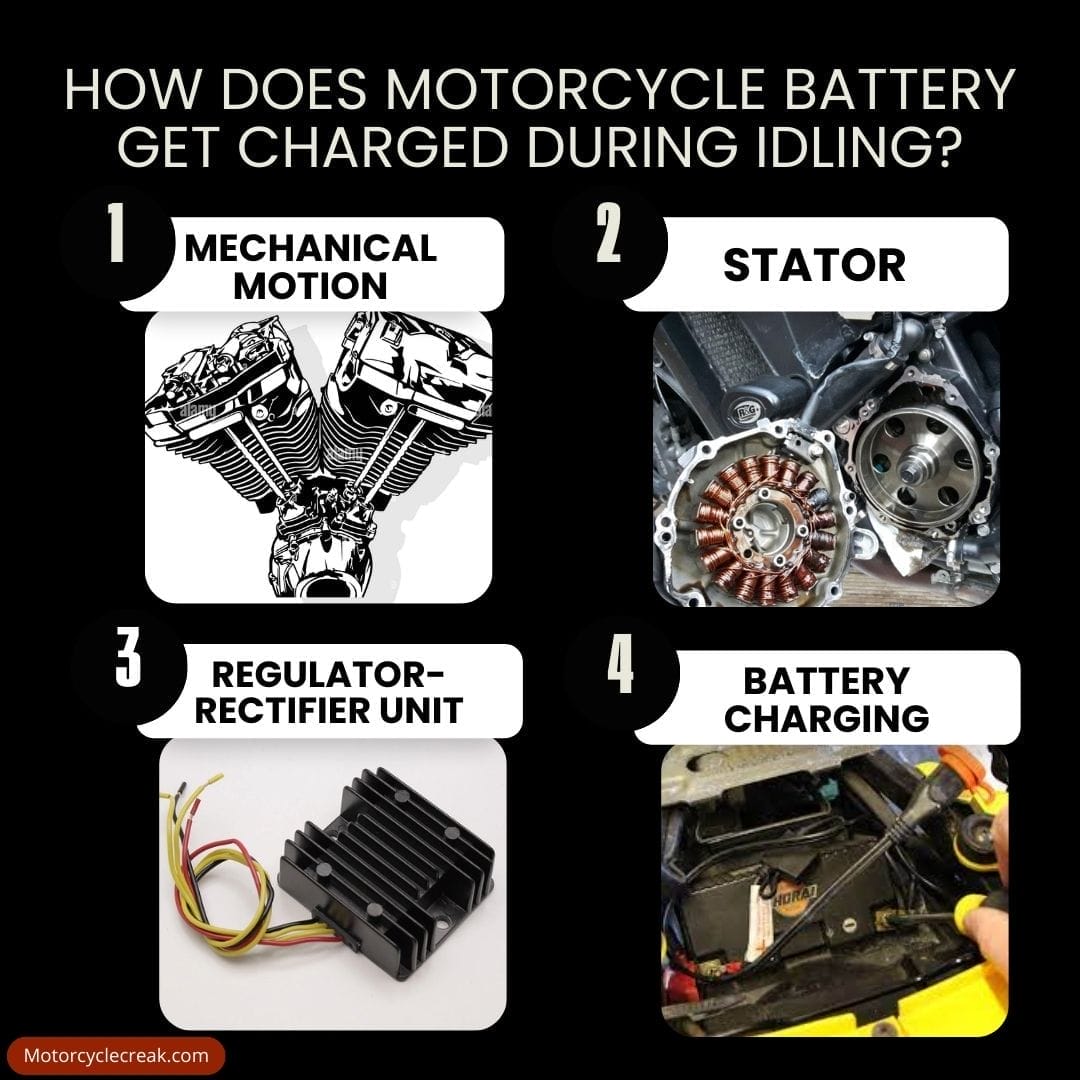
The alternator in a motorcycle is a key component for charging the battery. It converts mechanical energy from the engine into electrical energy. This electrical energy is then used to charge the battery and power electrical systems in the motorcycle.
The alternator produces AC (alternating current) power. This power is not suitable for the battery directly. It must be converted into DC (direct current) power, which is where the regulator/rectifier comes in.
Regulator/rectifier Functions
The regulator/rectifier converts AC power from the alternator into DC power. This DC power charges the battery and powers electrical systems.
The regulator part of this device ensures the voltage level stays consistent. If the voltage is too high, it can damage the battery and other electrical components. If too low, the battery won’t charge properly.
The rectifier ensures the current flows in one direction, converting AC to DC. This function is crucial for the battery’s health and the electrical systems’ stability.
In summary, both the alternator and the regulator/rectifier are vital for charging the motorcycle battery. They work together to ensure the battery is always ready to start the engine and power the bike’s electrical systems.
Credit: www.electrosport.com
Self-charging Myths
Motorcycle enthusiasts often ponder the self-charging capabilities of their bike batteries. Many believe that motorcycle batteries can charge themselves without any external input. This belief is fueled by various myths and misconceptions. Let’s debunk these myths and understand the truth behind self-charging motorcycle batteries.
Common Misconceptions
Several myths surround the idea of self-charging motorcycle batteries. Some common misconceptions include:
Motorcycle batteries automatically recharge when the engine runs.
Batteries never need external charging if the bike is used regularly.
All modern motorcycles have a built-in self-charging system.
These beliefs often lead to neglect and improper maintenance of motorcycle batteries. Understanding the truth is crucial for optimal battery performance and longevity.
Truth Behind Self-charging
Motorcycle batteries do not charge themselves. They rely on the bike’s charging system. This system includes:
Component
Function
Alternator
Generates electricity while the engine runs
Regulator/Rectifier
Converts AC to DC and regulates voltage
When the engine is on, the alternator produces electricity. The regulator/rectifier ensures the correct voltage reaches the battery, preventing overcharging. The battery stores the energy for future use.
Regular riding helps keep the battery charged. But, it is not a self-charging process. If the motorcycle is idle for long periods, the battery may discharge. External chargers or battery maintainers are often needed to keep it in good condition.
Proper understanding of these components and their functions helps in maintaining a healthy battery. Regular checks and external charging, when necessary, ensure your motorcycle battery remains reliable.
Signs Of A Failing Battery
Is your motorcycle battery showing signs of wear and tear? Recognizing the symptoms of a failing battery can save you from unexpected breakdowns. Here are some essential indicators to watch for.
Symptoms To Watch For
A failing motorcycle battery often shows several warning signs. Look for these common symptoms:
Dimming headlights: When your headlights are not as bright as usual, the battery might be weak.
Slow engine crank: If the engine takes longer to start, the battery may lack power.
Clicking sound: Hearing a clicking noise when you turn the key often indicates a battery problem.
Dashboard warning light: A battery warning light on the dashboard is a clear sign of trouble.
Corroded terminals: Check for white or blue corrosion around the battery terminals.
Testing Your Battery
Testing your motorcycle battery is simple and can confirm if it’s failing. Use a multimeter to measure the voltage. Follow these steps:
Turn off your motorcycle.
Set the multimeter to DC volts.
Place the multimeter leads on the battery terminals.
Read the voltage display. A healthy battery should show between 12.6 and 12.8 volts.
If the voltage is below 12.4 volts, the battery may be weak or failing.
Perform a load test for more accuracy. This involves simulating the starting process while measuring the voltage drop. A significant drop indicates a weak battery.
Voltage Reading
Battery Condition
12.6 – 12.8 volts
Healthy
12.4 – 12.6 volts
Weak
Below 12.4 volts
Failing
Regularly check your battery’s health. A proactive approach ensures a reliable ride every time.
Maintaining A Healthy Battery
Keeping your motorcycle battery in good condition is essential. A healthy battery ensures your motorcycle starts smoothly and performs well. Regular maintenance and proper storage can extend the life of your battery.
Regular Maintenance Tips
Regular maintenance is key to a healthy motorcycle battery. Here are some tips:
Check the battery terminals for corrosion. Clean them if needed.
Ensure the battery is securely mounted.
Top up with distilled water if your battery is not sealed.
Inspect the battery case for any cracks or leaks.
Test the battery voltage with a multimeter. It should read around 12.6 volts.
Perform these checks every few months. Regular upkeep prevents unexpected battery failures.
Proper Storage Practices
Storing your motorcycle and battery correctly is crucial. Here are some best practices:
Keep your battery in a cool, dry place.
Disconnect the battery if not using the motorcycle for a long time.
Use a battery tender to maintain charge during storage.
Avoid placing the battery on a concrete floor. Use wood or a rubber mat.
Following these storage practices helps prevent battery discharge and damage. Your battery will be ready when you need it.
Maintenance Task
Frequency
Check terminals
Every 3 months
Top up water
As needed
Inspect case
Every 6 months
Test voltage
Every 6 months
Maintaining a healthy battery requires regular checks and proper storage. These simple steps can help extend its life and ensure your motorcycle runs smoothly.
Extending Battery Life
Extending the life of your motorcycle battery is crucial. It ensures you get the most out of your investment. Proper care can prevent many common battery issues. Let’s explore some effective habits and tips.
Effective Charging Habits
Charge your motorcycle battery regularly. Even short rides can help maintain the charge. Avoid letting the battery sit for too long without use. Use a quality charger that matches your battery type. Overcharging can damage the battery, so monitor the process.
Preventing Drainage
Turn off all lights and accessories when not in use. This prevents unnecessary battery drain. Check for any electrical issues that could cause a drain. Keep the battery clean and terminals tight. A clean battery has fewer issues with drainage.
Credit: www.youtube.com
Choosing The Right Battery
Choosing the right motorcycle battery is crucial for optimal performance. The battery powers your bike’s electrical components, ensuring a smooth ride. But how do you pick the perfect one? Let’s explore the key factors and top brands to help you decide.
Factors To Consider
Battery Type: Lead-acid or lithium-ion? Each has pros and cons.
Capacity: Measured in amp-hours (Ah). Higher Ah means longer life.
Size: Ensure it fits your motorcycle’s battery compartment.
Cold Cranking Amps (CCA): Higher CCA is better for cold starts.
Maintenance: Some batteries need regular checks, others are maintenance-free.
Top Brands And Models
Brand
Model
Battery Type
Capacity (Ah)
CCA
Yuasa
YTX14-BS
Lead-acid
12
200
Shorai
LFX14L2-BS12
Lithium-ion
14
210
Odyssey
PC680
Lead-acid
16
170
Antigravity
AG-801
Lithium-ion
10
240
Credit: motorcyclecreak.com
Frequently Asked Questions
Do Motorcycle Batteries Charge While Riding?
Yes, motorcycle batteries charge while riding. The alternator generates electricity, charging the battery as you ride.
Can A Dead Motorcycle Battery Recharge Itself?
No, a dead motorcycle battery cannot recharge itself. It requires an external charger or the motorcycle’s alternator.
How Long Does It Take To Charge A Motorcycle Battery?
Charging a motorcycle battery typically takes 4-24 hours, depending on the charger and battery capacity.
Do All Motorcycles Have Charging Systems?
Yes, all motorcycles have charging systems. They consist of an alternator and a voltage regulator to charge the battery.
Conclusion
Motorcycle batteries do not charge themselves. The bike’s alternator charges them while riding. Regular maintenance ensures optimal battery performance. Check connections, clean terminals, and avoid deep discharges. Invest in a quality battery charger for extended life. Proper care saves money and prevents breakdowns.
Stay informed and keep your motorcycle running smoothly. Happy riding!
I'm Dan, the motorcycle enthusiast behind Motorcycle Guidlines. With a deep passion for bikes and years of hands-on experience, I love helping fellow riders troubleshoot, repair, and fine-tune their machines. Whether you're a beginner or a seasoned rider, I'm here to share tips, tricks, and insights to keep your ride smooth and your engine roaring. Let's explore the world of motorcycle mechanics together!