
Transporting a motorcycle behind your Jeep can be a convenient way to enjoy your bike at different destinations. Whether you’re heading out for an off-road adventure or taking your bike to a motorcycle rally, it’s essential to know how to do this safely and efficiently. But when your motorcycle weighs 522 pounds, you may find yourself wondering, “Can I haul a 522 pound bike behind a Jeep?”
In this article, we’ll explore the different factors involved in hauling a motorcycle of this weight, including Jeep towing capabilities, the right equipment, and safety measures to ensure a smooth and safe trip.
Jeep Towing Capacities and Motorcycle Weight
When considering towing a 522-pound motorcycle behind a Jeep, the first thing you need to know is whether your Jeep can handle it. Towing capacity varies across different Jeep models, and it’s crucial to understand the limitations and capabilities of your specific vehicle.
Key Jeep Models and Their Towing Capacity:
| Jeep Model | Towing Capacity |
|---|---|
| Jeep Renegade (2023) | 2,000 pounds |
| Jeep Compass (2024) | 2,000 pounds |
| Jeep Cherokee (2023) | 4,000 pounds |
| Jeep Wrangler (2024) | 5,000 pounds |
| Jeep Grand Cherokee (2024) | 6,200 pounds |
| Jeep Gladiator (2024) | 7,700 pounds |
As you can see, Jeeps like the Gladiator and Grand Cherokee have enough towing capacity to handle a 522-pound motorcycle along with the additional weight of a trailer or carrier. However, for lighter Jeeps like the Renegade, additional considerations will be necessary to ensure the total weight doesn’t exceed the towing limit.
Total Weight Calculation
-
Motorcycle Weight: 522 pounds
-
Trailer Weight: A standard single-motorcycle trailer weighs between 300 to 500 pounds.
-
Total Weight (Trailer + Motorcycle): The combined weight can range from 822 pounds to 1,022 pounds, which is well within the towing capacity of most Jeep models, especially those with a towing capacity of 3,500 pounds or more.
However, if you’re using a hitch-mounted carrier, the weight will be a bit less, typically around 572 to 622 pounds, depending on the carrier’s weight.
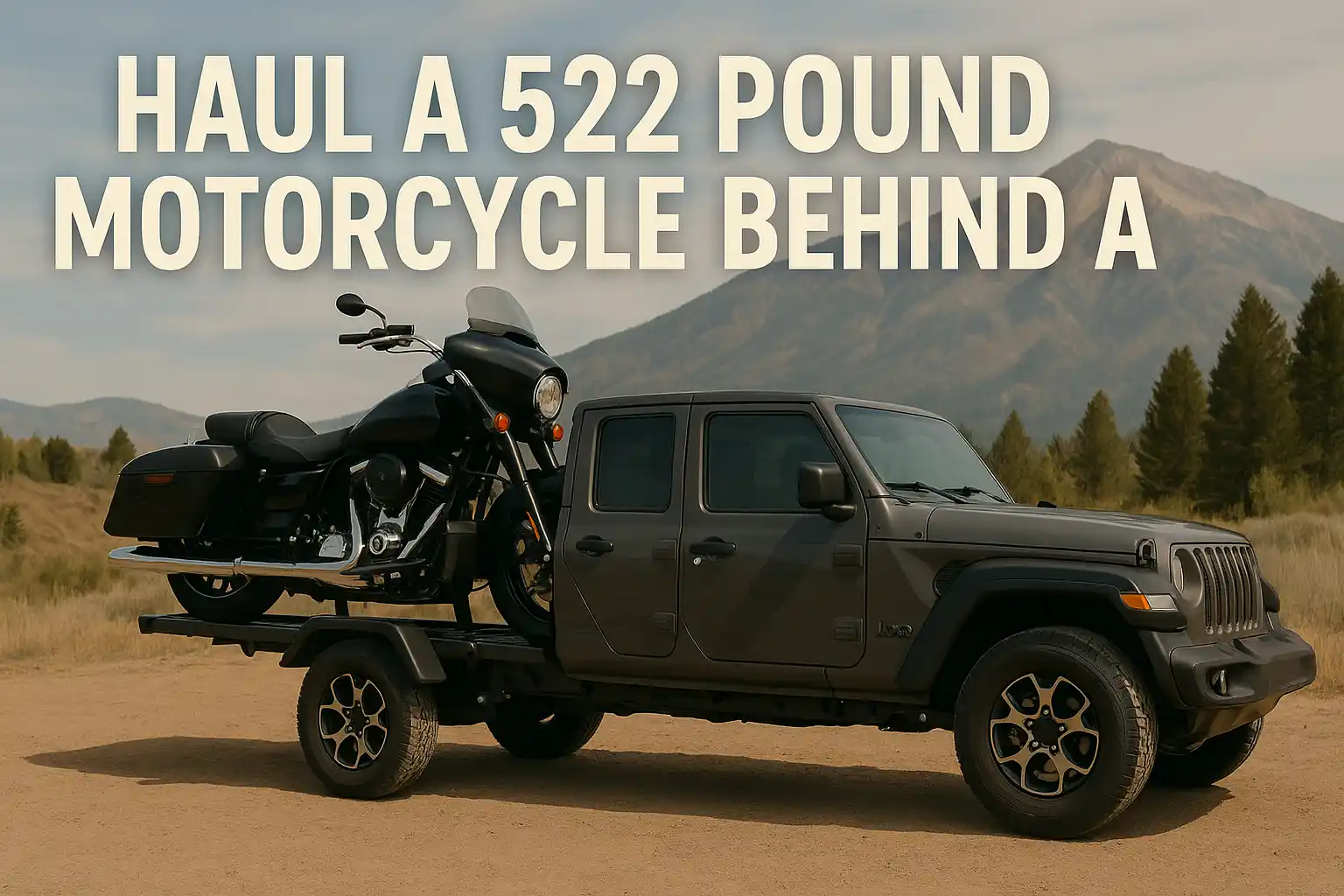
Types of Equipment to Haul a 522 Pound Motorcycle
Once you’ve determined that your Jeep can handle the load, the next decision is choosing the right equipment to tow the motorcycle. There are two main options: using a motorcycle trailer or a hitch-mounted motorcycle carrier.
1. Motorcycle Trailer
A motorcycle trailer is a great option for hauling a 522-pound motorcycle behind a Jeep. These trailers are specifically designed for transporting motorcycles safely and securely.
Advantages:
-
Stability: Trailers are generally more stable than hitch carriers, minimizing the risk of tipping or swaying during transport.
-
Ease of Loading: Most trailers have built-in ramps or tilting mechanisms, making it easier to load and unload a heavy motorcycle.
-
Capacity: Motorcycle trailers can usually accommodate one or more motorcycles, making them a flexible option if you plan to haul more than one bike in the future.
Disadvantages:
-
Size: Trailers take up more storage space and require additional room when not in use.
-
Cost: Motorcycle trailers can be more expensive than hitch-mounted carriers, especially if you opt for a high-quality or enclosed version.
2. Hitch-Mounted Motorcycle Carrier
A hitch-mounted motorcycle carrier is a more compact and cost-effective alternative to a trailer. It attaches directly to the hitch of your Jeep and provides a platform for loading and transporting the motorcycle.
Advantages:
-
Compact: Hitch carriers are smaller than trailers, making them easier to store and maneuver.
-
Affordability: They are usually less expensive than trailers, making them a more budget-friendly option.
-
Simplicity: Hitch carriers are easy to install and remove, requiring minimal effort to get your motorcycle on the road.
Disadvantages:
-
Stability Issues: Hitch carriers are less stable than trailers and may sway or affect the Jeep’s handling, especially on rough terrain or high speeds.
-
Loading Difficulty: Loading a 522-pound motorcycle onto a hitch-mounted carrier can be challenging due to the weight, particularly if you’re attempting to lift the bike on your own.
-
Weight Limitations: Many hitch-mounted carriers have weight limits around 500 pounds, so it’s important to ensure the combined weight of the carrier and motorcycle doesn’t exceed this threshold.
Impact on the Jeep’s Performance After Towing a 522 Pound Motorcycle
Towing a 522-pound motorcycle, whether via a trailer or hitch-mounted carrier, can affect your Jeep’s performance. Understanding the impact on handling, fuel consumption, and other factors is crucial for safe towing.
Factors to Consider:
-
Fuel Consumption: Towing increases the load on your Jeep’s engine, leading to higher fuel consumption. The extra weight forces the engine to work harder, especially on steep inclines or during long trips.
-
Handling and Maneuverability: The added weight of a trailer or carrier can affect the Jeep’s handling, particularly during turns, sudden stops, or when driving on uneven terrain. Trailers tend to offer better stability compared to hitch carriers, which can sway and affect maneuverability.
-
Brake Wear: Increased weight also adds strain to the braking system, causing more wear on the brake pads and rotors over time. This is especially important when towing at high speeds or on hilly terrain.
-
Suspension Strain: Your Jeep’s suspension system will also bear additional strain when towing heavy loads. Over time, this can cause wear and potential damage to suspension components if not properly maintained.
How to Minimize Performance Impact:
-
Drive Carefully: Take turns slowly, avoid sudden stops, and maintain a safe speed when towing a heavy load.
-
Check Tire Pressure: Ensure both the tires on your Jeep and the trailer are properly inflated to handle the increased weight.
-
Regular Maintenance: Make sure your Jeep’s suspension, brakes, and tires are in good condition to handle the additional stress from towing.
Alternative Ways to Haul a 522 Pound Motorcycle Without a Jeep
If you don’t have a Jeep or prefer not to tow with your vehicle, there are alternative options for hauling a 522-pound motorcycle. Let’s explore some of these solutions.
1. Pickup Truck
If you have access to a pickup truck, this is one of the easiest ways to haul a 522-pound motorcycle. Pickup trucks often have large beds and higher load capacities, making them an excellent choice for transporting motorcycles.
Steps to Transport a Motorcycle in a Pickup Truck:
-
Loading: Use a sturdy loading ramp to drive or push the motorcycle into the truck bed.
-
Securing: Use tie-down straps to secure the motorcycle, ensuring it is stable during transit. A wheel chock can also help keep the front wheel in place.
-
Check Load Capacity: Ensure the truck’s bed has enough space and weight capacity to carry the motorcycle.
2. Renting a Motorcycle Trailer
If you don’t own a motorcycle trailer, you can rent one from companies like U-Haul. These trailers are designed specifically for transporting motorcycles and come equipped with ramps, tie-down points, and wheel chocks.
Benefits of Renting:
-
Cost-Effective: Renting a trailer is generally cheaper than buying one, making it ideal for occasional trips.
-
Designed for Motorcycles: Rental trailers are designed with features that ensure safe and stable motorcycle transport.
Steps for Renting a Motorcycle Trailer:
-
Attach the Trailer: Ensure your vehicle is properly equipped with a hitch and that the trailer is securely attached.
-
Load the Motorcycle: Use the provided ramp to load the bike onto the trailer and secure it using tie-downs.
How to Safely Haul a 522 Pound Motorcycle Behind a Jeep
Now that we’ve covered the basics of towing a 522-pound motorcycle behind a Jeep, let’s focus on the best practices and safety measures you should follow to ensure the process is done efficiently and securely.
1. Properly Load the Motorcycle
Whether you’re using a motorcycle trailer or a hitch-mounted carrier, loading the bike properly is crucial for stability and safety.
Using a Motorcycle Trailer:
-
Use a Ramp: Most motorcycle trailers come with a ramp, which makes loading much easier. Ensure that the ramp is secure and positioned at the right angle to avoid tipping the motorcycle during loading.
-
Position the Motorcycle Correctly: When loading, make sure the motorcycle’s wheels are aligned with the wheel chocks. This will prevent the bike from moving during transport.
-
Secure the Bike: Use strong, heavy-duty tie-down straps to secure the motorcycle to the trailer. The straps should be attached to sturdy parts of the bike, like the frame or handlebars, to prevent any movement during the journey.
Using a Hitch-Mounted Carrier:
-
Check the Carrier’s Capacity: Make sure the hitch-mounted carrier can handle the combined weight of the carrier and motorcycle. Many carriers are rated for up to 500 pounds, which is just under the weight of a 522-pound motorcycle.
-
Use a Ramp: Most carriers come with a ramp for easy loading. Ensure that the ramp is stable and secure before loading the bike.
-
Tie Down the Bike: Once the motorcycle is loaded onto the carrier, use secure tie-down straps to keep the bike from shifting. Ensure that the straps are tight and the motorcycle is firmly anchored in place.
2. Ensure Proper Hitch and Carrier Setup
If you choose a hitch-mounted carrier, you’ll need to make sure your Jeep’s hitch and the carrier are set up correctly for safe transport.
-
Check the Hitch Class: Most hitch-mounted carriers require a Class III or Class IV hitch to safely carry heavy loads like a motorcycle. Ensure your Jeep is equipped with the correct hitch type for your carrier and motorcycle.
-
Secure the Carrier: Double-check that the carrier is securely attached to the hitch before you begin your journey. Any looseness can cause swaying, which affects both the stability of the bike and the vehicle.
-
Inspect Carrier Condition: Before loading the bike, ensure that the carrier is in good condition, free of any cracks or loose parts that could fail during transport.
3. Monitor the Load During the Journey
Once the motorcycle is loaded and secured, it’s essential to monitor the load during your drive to ensure that everything remains stable and secure.
Important Safety Tips:
-
Drive Slowly and Carefully: Towing a 522-pound motorcycle behind your Jeep can affect how the vehicle handles. Take turns slowly, avoid sharp maneuvers, and maintain a steady speed to prevent swaying.
-
Check the Load Regularly: During long trips, it’s a good idea to stop occasionally and check that the motorcycle is still properly secured. This is especially important if you’re traveling on rough terrain or high-speed roads.
-
Use Safety Chains: If you’re using a trailer, always attach safety chains to prevent the trailer from separating from the Jeep in case the hitch connection fails.
4. Maintain Your Jeep for Towing
To ensure that your Jeep can handle the additional weight of towing a motorcycle, you need to keep it in good condition.
Key Maintenance Tips:
-
Check Tire Pressure: The additional load from towing can put extra stress on your tires, so make sure both the Jeep’s tires and the trailer or carrier’s tires are properly inflated.
-
Inspect the Brakes: Towing a heavy load will affect the braking system. Ensure that your Jeep’s brakes are in excellent condition, and consider upgrading to heavy-duty brakes if necessary.
-
Ensure Proper Suspension: Towing a 522-pound motorcycle can strain your Jeep’s suspension system. Regularly inspect the suspension to ensure it’s in good working order and consider adding air suspension if your Jeep’s suspension is not up to the task.
Additional Considerations When Hauling a Motorcycle Behind a Jeep
While towing a motorcycle behind a Jeep can be an efficient way to transport it, there are a few other factors to keep in mind to ensure the journey is as smooth and safe as possible.
1. Impact on Fuel Economy
Towing a heavy load can significantly impact your Jeep’s fuel efficiency. The added weight of the motorcycle and trailer or carrier requires more power from the engine, which means you’ll be using more fuel.
-
Expect Reduced Fuel Economy: Depending on the weight of your load, fuel consumption could increase by 10-20% or more.
-
Plan for Longer Travel Times: Due to the reduced acceleration and top speed, you may need to allow extra time for your journey. Drive more slowly and steadily to minimize the impact on fuel economy.
2. Road Conditions and Terrain
When hauling a motorcycle behind your Jeep, the type of terrain you’ll be driving on is an important consideration.
-
Off-Roading: If you plan to go off-roading, make sure that both your Jeep and the motorcycle transport equipment are built for rough terrain. Some trailers and hitch carriers are more robust than others, and you may need a more durable setup if you plan to drive on rocky or uneven roads.
-
Wet or Icy Roads: When driving in adverse weather conditions, such as rain, snow, or ice, be extra cautious. The added weight and instability of towing can affect your Jeep’s handling, so reduce speed and increase following distance.
3. Legal and Safety Requirements
Depending on where you live, there may be specific regulations regarding towing motorcycles with a vehicle.
-
Towing Laws: Some states or countries have strict towing laws, including speed limits, weight limits, and the requirement for safety chains or lights on trailers. Be sure to research the laws in your area before towing.
-
Insurance: Check that your motorcycle is adequately insured during transport. Some insurance policies may cover motorcycle transport, while others may require additional coverage for the duration of the trip.
Final thoughts on Haul a 522 Pound Bike Behind a Jeep
Hauling a 522-pound motorcycle behind your Jeep is certainly feasible, but it requires careful planning, the right equipment, and a solid understanding of your Jeep’s towing capabilities. Whether you choose to use a motorcycle trailer or a hitch-mounted carrier, the key to safe and efficient transport lies in securing the bike properly, maintaining your vehicle, and driving with caution.
By following these best practices, you can ensure that your motorcycle gets to its destination safely, and that your Jeep remains in top condition throughout the journey. Whether you’re headed to a remote trail or a motorcycle event, knowing how to tow your bike effectively will give you peace of mind and a smooth, enjoyable ride.