
Jumping a dirt bike is one of the most exhilarating and rewarding aspects of riding. The thrill of launching off a ramp and flying through the air is unparalleled, but it’s also one of the most challenging skills to master. Whether you’re a beginner or an experienced rider, learning how to jump a dirt bike requires patience, practice, and attention to detail. In this guide, we will walk you through the essential steps and tips for safely and effectively jumping a dirt bike.
What is Jumping a Dirt Bike?
Jumping a dirt bike refers to the action of launching your bike off a jump or ramp and becoming airborne for a brief period. The goal is to maintain control of the bike while in the air and land safely. This skill is vital for motocross riders and anyone who enjoys tackling dirt bike tracks with ramps.
Before you jump, it’s essential to understand the key components involved in how to jump a dirt bike:
-
Ramp or Jump: The structure you launch off of, typically made of dirt or metal.
-
Throttle Control: Managing the amount of acceleration while approaching and while in the air.
-
Body Position: Your stance and posture while riding into the jump, during the jump, and on landing.
-
Landing: Ensuring a safe, controlled descent after you’ve launched.
Key Terminology to Know
Understanding the basic terminology around how to jump a dirt bike will help you grasp the concepts and techniques more easily. Here’s a list of essential terms every rider should know:
-
Lip: The edge of the jump or ramp where the bike leaves the ground.
-
Takeoff: The moment your bike leaves the lip of the jump.
-
Airtime: The duration during which your bike is airborne.
-
Landing Zone: The area where you’ll return to the ground after your jump.
-
Tabletop: A type of jump that has a flat top, reducing the risk of overshooting the landing.
-
Double: A jump with two ramps and a gap in the middle, requiring precise throttle and body control to land successfully.
Having a solid understanding of these terms will give you a clearer idea of the process as we dive deeper into how to jump a dirt bike.
Getting Started: Safety First
Before you even think about jumping, it’s crucial to prioritize safety. Here’s a checklist to ensure you’re ready to ride:
-
Gear Up Properly: Always wear the right safety gear, including a helmet, gloves, boots, goggles, and pads. Protective gear is vital for minimizing injury in case of a fall.
-
Choose the Right Bike: Ensure your dirt bike is in good condition. It should be powerful enough for the jumps you intend to attempt but not overly powerful for your skill level.
-
Know Your Limits: Jumping can be dangerous if you push yourself too hard too soon. Start slow, and build your confidence and skill over time.
The Importance of Understanding Your Terrain
Where you practice matters as much as how you practice. The type of terrain you’re riding on will affect the type of jump and technique you’ll need to use. Here are some common types of dirt bike jumps:
-
Step-Up Jumps: These are ideal for beginners because they offer a less aggressive lip and allow for smoother takeoff and landing.
-
Tabletop Jumps: These jumps have a flatter landing zone, making them safer and easier for learning.
-
Double Jumps: These jumps require you to clear a gap between two ramps, requiring precise speed and control.
Mastering the Basics: Body Position and Control
Your body position plays a significant role in how to jump a dirt bike successfully. Maintaining the right posture throughout the process will ensure that you stay in control and land safely. Here’s how to position your body during each phase of the jump:
Before the Jump: Getting Ready
Before you approach the jump, make sure you are in the correct starting position. Your body needs to be aligned with the bike, and your focus should be on maintaining balance as you approach the ramp.
-
Stand, Don’t Sit: You should always be standing while jumping. Sitting can make it harder to absorb shocks and maintain control during the landing. By standing, your legs act as natural shock absorbers.
-
Grip the Bike with Your Knees: Squeeze the bike with your knees to maintain control. This prevents you from being thrown off the bike when you leave the ramp or if you hit an unexpected bump.
-
Elbows Out: Keep your elbows slightly bent and pointed outwards. This will allow you to steer and adjust your balance mid-air.
-
Look Ahead: Always keep your eyes on the jump and the landing zone. Avoid looking down at your bike or the ground, as it can throw off your balance and judgment.
During the Jump: While in the Air
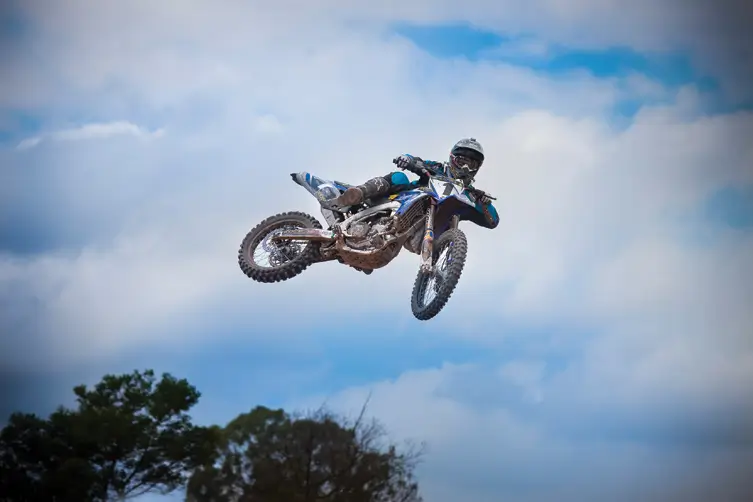
Once you’re airborne, maintaining the correct body position is essential to controlling the bike and ensuring a safe landing. Here’s what you should do:
-
Keep Your Head and Shoulders Over the Bars: Position your head and shoulders over the handlebars. This ensures the bike remains level as you fly through the air.
-
Throttle Control: Throttle control is key to how much airtime you’ll get and how you manage your landing. Don’t yank the throttle too much as you take off. Instead, use a steady and smooth application of throttle as you leave the ramp.
-
Body Balance: In the air, your body’s posture should remain upright with your knees slightly bent and your weight centered. Avoid leaning too far forward or backward, as this could result in losing control mid-flight.
Landing the Jump
Landing is often the most intimidating part of how to jump a dirt bike. But with the right technique, you can safely come back down and prepare for the next jump. Here are the steps to ensure a smooth and controlled landing:
-
Prepare for the Descent: As you near the landing zone, begin to straighten your arms and prepare to absorb the shock with your legs. This action helps in maintaining balance when you touch the ground.
-
Stay Centered: Keep your weight centered over the bike as you descend. Leaning too far forward can cause you to flip, while leaning too far back may make you lose control.
-
Throttle Management: Just before landing, you may need to adjust the throttle. A small, quick burst can help keep the bike stable if you’re descending too fast.
https://transmoto.com.au/
Step-by-Step Process: How to Jump a Dirt Bike
Now that you understand the basics of body positioning and control, let’s break down the process of how to jump a dirt bike into clear, digestible steps.
1. Approach the Jump
-
Ensure you’re riding at a comfortable speed. Start slow and gradually increase your speed as you become more confident.
-
Focus on the ramp’s lip and the landing zone, ensuring you’re lined up with both.
2. Prepare Your Body Position
-
As you approach the ramp, stand up on the bike, grip the bike with your knees, and keep your elbows out.
-
Keep your head and shoulders aligned with the handlebars.
3. Launch the Jump
-
As you reach the lip of the jump, maintain steady throttle.
-
Let your body follow the bike’s natural movement, and allow the bike to carry you upwards. Resist the urge to pull up on the handlebars; this can upset the bike’s natural trajectory.
4. In the Air
-
While in the air, maintain your body posture to keep the bike level and stable.
-
Use the throttle gently to keep your momentum and prevent nosediving or losing control.
5. Prepare for Landing
-
Start absorbing the landing with your legs, keeping your body centered.
-
Adjust the throttle to soften the impact, and prepare to steer the bike as you touch the ground.
Improving Your Skills: Progressive Training and Techniques
Once you’ve learned the basic steps for how to jump a dirt bike, it’s time to refine your skills and build confidence with more advanced techniques. As with any skill, improvement comes with practice and experience. The following tips will help you gradually progress toward more complex jumps and bigger airtime.
Practice with Small Jumps First
As a beginner, it’s essential to start with small, manageable jumps before tackling bigger ramps. Begin with step-up jumps or tabletop jumps, which offer a more forgiving landing area and less risk of overshooting.
Here are some tips for progressing through small jumps:
-
Gradually Increase Speed: Start slow to get comfortable with the bike’s behavior in the air. Once you have mastered the basics, gradually increase your speed and the size of the jumps.
-
Focus on Throttle Control: As you practice, work on maintaining steady throttle input to control the height and distance of your jumps. Over time, this will help you achieve smoother and more controlled jumps.
Master Throttle Control and Timing
One of the key factors in how to jump a dirt bike is mastering throttle control and timing. Improper throttle usage can result in nose dives or uncontrolled landings.
Here’s how to fine-tune your throttle control:
-
Smooth Throttle Application: Apply throttle steadily as you approach the jump. Avoid jerking the throttle at any point, as this can cause the bike to behave unpredictably.
-
Throttle Management in the Air: Once airborne, maintain a consistent throttle. Rolling off the throttle too early can cause you to lose height, while too much throttle could result in you overjumping and not landing properly.
-
Landings and Throttle Adjustment: When approaching the landing, gently adjust the throttle to soften your descent. This allows you to maintain control and avoid harsh landings.
Increasing Jump Size and Skill Level
As you become more comfortable with the smaller jumps, you’ll feel ready to tackle bigger ramps. The key to improving your jumping skills is incremental progression. Here’s how you can work your way up:
-
Double Jumps: After mastering single jumps, try double jumps that require clearing a gap. Double jumps demand more precision and timing, as you must adjust throttle and body position to clear both ramps without losing control.
-
Steeper Jumps: Once you’re comfortable with the basics, begin practicing with steeper jumps. These jumps require more throttle control and a keen sense of timing to ensure a safe landing.
Remember, increasing jump size should be done gradually. Don’t rush into bigger jumps before mastering the smaller ones.
Overcoming Common Jumping Mistakes
Jumping a dirt bike involves overcoming several challenges, especially when you’re still learning. Here are some common mistakes riders make and how to avoid them:
-
Jumping Too Fast or Too Slow: Riding too fast can lead to overshooting the landing, while riding too slowly can prevent you from getting enough airtime. Find the right speed for the jump to ensure you’re in control.
-
Pulling Up on the Handlebars: It’s tempting to yank on the handlebars, but doing so will upset the bike’s natural trajectory and make the jump less controlled. Instead, let the bike do the work and keep your body in position.
-
Landing Too Hard: Coming down too aggressively can lead to a rough landing and potential injury. Focus on absorbing the landing with your knees and adjusting your throttle to soften the impact.
By avoiding these mistakes and staying patient, you will improve steadily and increase your confidence.
Take a Training Class or Find a Mentor
Finally, one of the best ways to progress quickly and safely when learning how to jump a dirt bike is by seeking expert advice. Taking a motocross training class or working with an experienced rider can significantly accelerate your learning curve.
-
Get Personalized Feedback: A trainer can provide real-time feedback on your technique, helping you make adjustments and avoid bad habits.
-
Learn from a Mentor: Having a mentor who is an experienced rider can help you stay motivated and improve faster. They can also share tips and tricks that may not be immediately obvious.
Summary: How to Jump a Dirt Bike
Jumping a dirt bike is a thrilling skill that requires time, practice, and careful attention to technique. Here’s a quick summary of the key steps for how to jump a dirt bike:
-
Start Small: Begin with small jumps and work your way up to larger ramps.
-
Body Position: Stand up, grip the bike with your knees, keep your elbows out, and position your head and shoulders over the handlebars.
-
Throttle Control: Use smooth, consistent throttle to control your height and distance in the air.
-
Focus on Landing: Absorb the landing with your legs and manage the throttle to reduce the impact.
-
Practice Gradually: Build your skills slowly, increasing jump size and difficulty as you gain confidence.
Remember, safety is paramount at every step. Wear the proper gear, start with manageable jumps, and gradually increase your skill level. Whether you’re just starting out or aiming to perfect your technique, learning how to jump a dirt bike can be one of the most rewarding experiences on two wheels.
Conclusion: Mastering the Art of Jumping a Dirt Bike
Jumping a dirt bike is more than just a thrilling experience; it’s a skill that requires practice, patience, and precision. Whether you’re a beginner or an experienced rider, mastering how to jump a dirt bike involves understanding the right body position, throttle control, and the gradual progression from smaller jumps to more complex ones.
Always start with the basics, ensuring you have a solid foundation before moving on to bigger ramps and more challenging jumps. Keep your focus on safety, body control, and proper technique at all times. With time, your confidence and ability will grow, and soon you’ll be able to take on jumps with greater skill and ease.
Remember, don’t rush the process. Every successful jump, no matter how small, is a step toward becoming a better rider. Enjoy the journey, and always prioritize control and safety as you soar through the air on your dirt bike.