
In recent years, Harley-Davidson has faced a myriad of challenges that have led many to question the future of this iconic motorcycle brand. With sales plummeting globally, a string of dealership closures, and internal strife among its leadership, Harley-Davidson’s situation appears precarious.
This article will delve into the key factors contributing to the company’s struggles, including financial performance, market trends, and consumer behavior. By analyzing the latest data and insights from industry experts, we will explore that Is Harley-Davidson in Trouble? whether Harley-Davidson can recover or if it is indeed in serious trouble.
Recent Financial Performance: A Disheartening Overview
Harley-Davidson’s recent financial results have been alarming, reflecting a troubling trend in sales and revenue. In Q3 2024, the company reported a staggering 13% decline in global retail sales, with the U.S.
market experiencing a 10% drop. The most significant declines were noted in the EMEA (Europe, Middle East, and Africa) region, where sales plummeted by 23%, and the Asia Pacific region, which saw a 16% decrease.
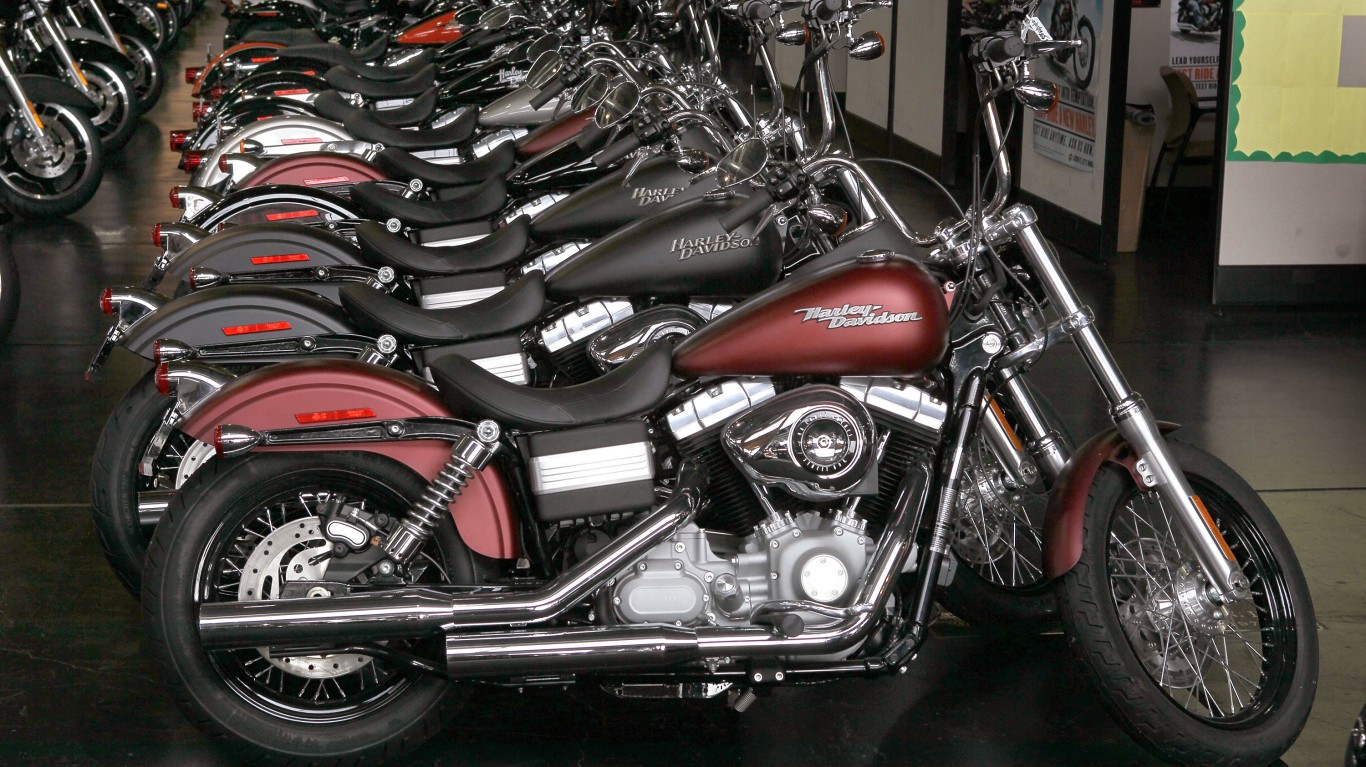
Only in Latin America did Harley-Davidson report a modest increase of 4% in sales during the same period. This downturn has left dealers with an alarming 60,000 units in inventory, raising concerns about profitability and the viability of Harley-Davidson’s pricing strategy.
Q3 2024 Financial Results
In its Q3 2024 report, Harley-Davidson disclosed substantial losses that raised eyebrows among investors and analysts alike. The company shipped approximately 27,500 motorcycles, a sharp decline of 39% compared to the 45,300 units shipped in Q3 2023.
This drop reflects not only a decrease in consumer interest but also the consequences of an oversaturated market, where production cuts have failed to align with demand.
Year-on-Year Comparisons
The year-on-year comparisons paint a grim picture. In 2023, Harley-Davidson sold around 148,000 motorcycles, which represented a 15% decline from the previous year.
This trend indicates that the brand’s appeal is diminishing, particularly among younger riders who increasingly favor more affordable or versatile options. The following table illustrates the year-on-year sales performance from 2022 to 2024.
| Year | Motorcycles Sold | Percent Change |
|---|---|---|
| 2022 | 175,000 | – |
| 2023 | 148,000 | -15% |
| 2024 (Project Year) | 125,000 (est.) | -15% |
This table clearly illustrates Harley-Davidson’s declining sales and the implications of dwindling demand. With a significant drop in units sold and a troubling forecast, the company faces a tough road ahead.
The reliance on the aging demographic of baby boomers combined with a lack of appeal to younger riders signals a critical need for strategic reevaluation.
Revenue Forecasts and Outlook
Looking ahead, Harley-Davidson has downgraded its revenue forecasts for 2024, estimating a drop of 14% to 16% compared to earlier projections. The operating income margin is also expected to fall between 7.5% and 8.5%, a stark contrast from previous expectations of over 12%.
This decline not only affects dealer profitability but also undermines investor confidence in the company’s long-term strategy. The following table summarizes the revenue outlook for 2024.
| Metric | 2024 Projection | Previous Projection |
|---|---|---|
| Revenue Change | -14% to -16% | -9% |
| Operating Income Margin | 7.5% – 8.5% | 12.6% – 13.6% |
This outlook indicates a significant downturn in expected profitability and revenue, which could lead to more drastic measures being required to stabilize the company. The combination of declining sales, increasing inventory, and lower operating margins poses a serious threat to Harley-Davidson’s financial health and market position.
The Decline of Harley Dealerships
The closure of Harley-Davidson dealerships across the United States has emerged as a crucial element in the company’s ongoing struggles. The rapid shuttering of multiple dealerships, including long-established franchises, underscores the broader challenges faced by the brand in today’s market.
As of 2024, significant closures have been noted, with many dealers citing profitability issues and inventory struggles as primary reasons for their decisions.
Notable Closures in 2024
Among the most notable closures in 2024 are well-known dealerships such as the Los Angeles Harley-Davidson in Fullerton, which closed after 110 years of operation. Other significant closures include:
- Taboo Harley-Davidson in Alexandria, Louisiana (closed October 16)
- New York City Harley-Davidson (closed September 28)
- Miracle City Harley-Davidson in Titusville, Florida (closed September)
These closures not only diminish Harley-Davidson’s presence in key markets but also impact brand loyalty among consumers who rely on local dealerships for service and support. The following table illustrates the trend of dealership closures over the past two years.
| Year | Number of Dealership Closures |
|---|---|
| 2023 | 5 |
| 2024 | 11 (projected) |
This data reflects a concerning trend for Harley-Davidson, indicating a potential erosion of its dealership network. As dealers close, the availability of Harley-Davidson motorcycles diminishes, which could further dissuade potential buyers and impact the brand’s market share.
Dealer Profitability Struggles
Harley dealers have expressed significant concerns about profitability amid declining sales and increasing inventory levels. Many dealerships are reporting that the costs associated with maintaining large inventories are becoming untenable in the current economic climate.
As dealer inventories rise, the financial strain increases, leading to a cycle where dealers are forced to discount prices to move bikes off their floors, further squeezing their profit margins.
Impact on Customer Access and Brand Loyalty
The closure of dealerships and the struggles faced by remaining ones have serious implications for customer access and brand loyalty. As fewer dealers operate, customers may find it increasingly difficult to access parts, service, and new motorcycles.
This access issue can drive potential buyers to competitors who offer more accessible options. The following table summarizes the relationship between dealership closures and customer access.
| Metric | Effect of Closures |
|---|---|
| Dealerships Closed | Increased difficulty for customers to access services and products |
| Customer Access Impact | Potential decline in brand loyalty and sales |
The impact of dealership closures extends beyond immediate sales figures; it threatens the long-term viability of the Harley-Davidson brand as a whole. The company must act swiftly to address these challenges and restore confidence among both dealers and consumers.
Market Competition and Consumer Shifts
As Harley-Davidson grapples with internal and external challenges, the competitive landscape is evolving rapidly. Increasing competition from other motorcycle brands and changing consumer preferences are reshaping the market dynamics, further complicating Harley’s recovery efforts.
Understanding these shifts is critical in assessing whether Harley-Davidson can regain its footing.
Competition with Other Motorcycle Brands
Harley-Davidson has traditionally enjoyed a strong market position in the heavyweight motorcycle segment. However, brands like Indian Motorcycles, BMW, and Honda are gaining ground.
Indian, for example, has successfully captured a younger demographic by offering modern styling and innovative technology at competitive price points. Harley’s market share has notably dropped from 30% to 27% in recent years, as competitors continue to make inroads.
The Shift in Demographics of Motorcycle Buyers
One of the most pressing issues facing Harley-Davidson is the demographic shift among motorcycle buyers. The median age of Harley riders has risen significantly, and the brand is struggling to attract younger consumers.
In 1985, the average age of a Harley owner was 27, but by 2021, that figure had soared to 50. This aging customer base poses a significant risk to the brand’s future viability, as younger riders turn to lighter, more affordable options from competing manufacturers.
The Rise of Electric Motorcycles
Electric motorcycles are emerging as a compelling alternative for many riders, particularly among younger consumers who prioritize sustainability and efficiency. Harley’s LiveWire electric motorcycle has made headlines, but sales remain modest.
For instance, in Q3 2024, Live-Wire reported a 98% increase in sales, yet only 99 units were sold, a figure that underscores the brand’s struggle to penetrate this growing market segment. The following table breaks down market share comparisons between Harley and its competitors.
| Brand | Market Share (%) |
|---|---|
| Harley-Davidson | 27% |
| Indian Motorcycle | 18% |
| Honda | 21% |
| Others | 34% |
This data highlights the competitive pressure Harley-Davidson faces in an evolving market. The inability to maintain its market share amidst increasing competition and shifting consumer preferences raises serious questions about the brand’s long-term strategy and ability to adapt.
The Impact of Tariffs and Economic Conditions
Harley-Davidson’s current challenges are further exacerbated by economic conditions and tariffs implemented during previous administrations. These external factors have added significant financial strain on the company, complicating its ability to recover from declining sales and increasing inventory levels.
Overview of Tariff Impacts
The tariffs imposed during the Trump administration have had a profound impact on Harley-Davidson’s pricing strategy and sales performance. With tariffs on American-made motorcycles reaching as high as 56%, the company is facing increased costs that are forcing it to pass on these expenses to consumers.
This has led to higher prices for motorcycles, which can deter potential buyers in an already competitive market.
Economic Conditions Affecting Consumer Spending
Current economic conditions, including high inflation and rising interest rates, have created a challenging landscape for discretionary purchases like motorcycles. Harley-Davidson’s CEO Jochen Zeitz noted that 60% of non-owners and 50% of existing owners are delaying purchases due to economic uncertainty.
This sentiment is symptomatic of a broader issue affecting the entire powersports industry.
Harley’s Response to Economic Challenges
In response to these economic challenges, Harley-Davidson has had to revise its financial outlook for 2025, indicating that tariff impacts could be between $130 million and $175 million. The company is navigating a volatile macroeconomic environment while attempting to maintain its brand identity and customer base.
The following table summarizes the projected tariff impacts and their implications for pricing.
| Year | Projected Tariff Impact ($ Million) |
|---|---|
| 2024 | 9 |
| 2025 | 130 – 175 |
This data underscores the significant financial pressures Harley-Davidson is facing due to tariffs and economic conditions. The projected increase in tariff impacts could further strain the company’s margins and hinder its recovery efforts in a challenging market.
Leadership and Corporate Struggles
The internal dynamics at Harley-Davidson are just as tumultuous as its external challenges. Leadership struggles and decisions made by the current executive team have drawn scrutiny and criticism, undermining confidence in the company’s strategic direction.
CEO Jochen Zeitz’s Tenure
Jochen Zeitz, who became CEO in 2020, initially implemented strategies aimed at making Harley-Davidson’s motorcycles more desirable by limiting production and raising prices. However, as sales continue to decline, investors are beginning to question the sustainability of this approach.
His tenure has been marked by significant challenges, including declining sales, rising inventory, and internal dissent.
Boardroom Conflicts and Investor Pushback
Zeitz’s leadership has not gone uncontested. An investor group, H Partners, which owns approximately 9% of Harley-Davidson’s shares, is seeking to oust Zeitz and other board members, claiming that the company has underperformed under current leadership.
This conflict is indicative of broader dissatisfaction among stakeholders regarding the company’s direction and decision-making processes.
Cultural Challenges within the Organization
Beyond financial and strategic issues, Harley-Davidson is facing cultural challenges that have been exacerbated by recent leadership decisions. Dissent among employees regarding the company’s diversity, equity, and inclusion initiatives has led to a perception of a disconnect between management and the workforce.
This cultural depletion, as noted by departing board member Jared Dourdeville, could have long-term implications for employee morale and productivity.
Harley’s Attempts at Diversification
In an effort to attract a younger audience and diversify its product offerings, Harley-Davidson has launched several initiatives in recent years. These efforts include the introduction of electric models and revised marketing strategies aimed at engaging younger riders.
Introduction of Electric Models
Harley-Davidson’s foray into the electric motorcycle market began with the launch of the LiveWire, an electric model designed to appeal to environmentally-conscious consumers. While LiveWire sales saw a 98% increase in Q3 2024, the actual number of units sold—just 99—demonstrates the uphill battle Harley faces in this segment.
The company’s strategy to diversify its offerings is commendable, but the execution has yet to yield significant results.
Marketing Strategies to Engage Younger Riders
To further connect with younger riders, Harley-Davidson has attempted to revamp its marketing approach. This includes a focus on lifestyle branding and social media outreach.
However, many of these efforts have been met with skepticism from loyal customers who feel that the brand is straying from its roots. As noted by fans, emotional marketing strategies may not resonate with today’s consumers, who are looking for authenticity and value in their purchases.
New Product Lines and Features
In addition to electric offerings, Harley has introduced various new models aimed at diversifying its lineup. However, consumer feedback has indicated that many of these new products are priced too high, with some models costing upwards of $35,000.
This pricing strategy has alienated potential buyers, particularly younger consumers who are less willing to invest in such costly motorcycles. The following table provides an overview of new models launched in 2024.
| Model | Base Price ($) | Target Audience |
|---|---|---|
| LiveWire | 30,000 | Eco-conscious riders |
| Street Bob | 25,000 | Younger riders |
| Pan America | 20,000 | Adventure seekers |
This table illustrates the high price points of Harley-Davidson’s new models, which may hinder their appeal among younger consumers. The company must address these challenges by evaluating its pricing strategies and understanding the needs of its evolving customer base.
FAQs on Is Harley-Davidson in Trouble?
What are the main reasons for Harley-Davidson’s declining sales?
Harley-Davidson’s declining sales can be attributed to several factors, including changing consumer demographics, an aging core customer base, increased competition from other motorcycle brands, and high production costs exacerbated by tariffs. Additionally, the company has struggled to attract younger riders, who prefer lighter, more affordable motorcycles.
How have tariffs affected Harley-Davidson’s pricing strategy?
Tariffs imposed on American-made motorcycles, particularly during the Trump administration, have significantly increased production costs for Harley-Davidson. With tariffs reaching as high as 56%, the company has been forced to raise prices to maintain margins, which may deter potential buyers and negatively impact sales.
What is Harley-Davidson doing to attract younger riders?
To attract younger riders, Harley-Davidson has launched electric models like the LiveWire and revamped its marketing strategies to focus on lifestyle branding. However, high prices and a perceived disconnect from the core values of the brand have made it challenging to engage this demographic effectively.
How many dealerships has Harley-Davidson closed recently?
Harley-Davidson has closed several dealerships in recent years, with notable closures in 2024 including the Los Angeles Harley-Davidson, Taboo Harley-Davidson in Louisiana, and the New York City Harley-Davidson location. The exact number of closures in 2024 is projected to reach 11, indicating a troubling trend for the brand.
What are the financial forecasts for Harley-Davidson in the coming years?
Financial forecasts for Harley-Davidson indicate a continuing decline, with projections for 2024 showing a decrease in revenue of 14% to 16%. Additionally, the company’s operating income margin is expected to fall significantly, prompting concerns about long-term profitability and stability.
Final thoughts: Is Harley-Davidson in Trouble?
In conclusion, Harley-Davidson’s current troubles paint a concerning picture for the future of this storied brand. With declining sales, increasing competition, and leadership struggles, the company must adapt quickly to evolving market conditions.
The path ahead is fraught with challenges, but by addressing these issues and embracing innovation, Harley-Davidson may still have a fighting chance to reclaim its place at the forefront of the motorcycle industry.