
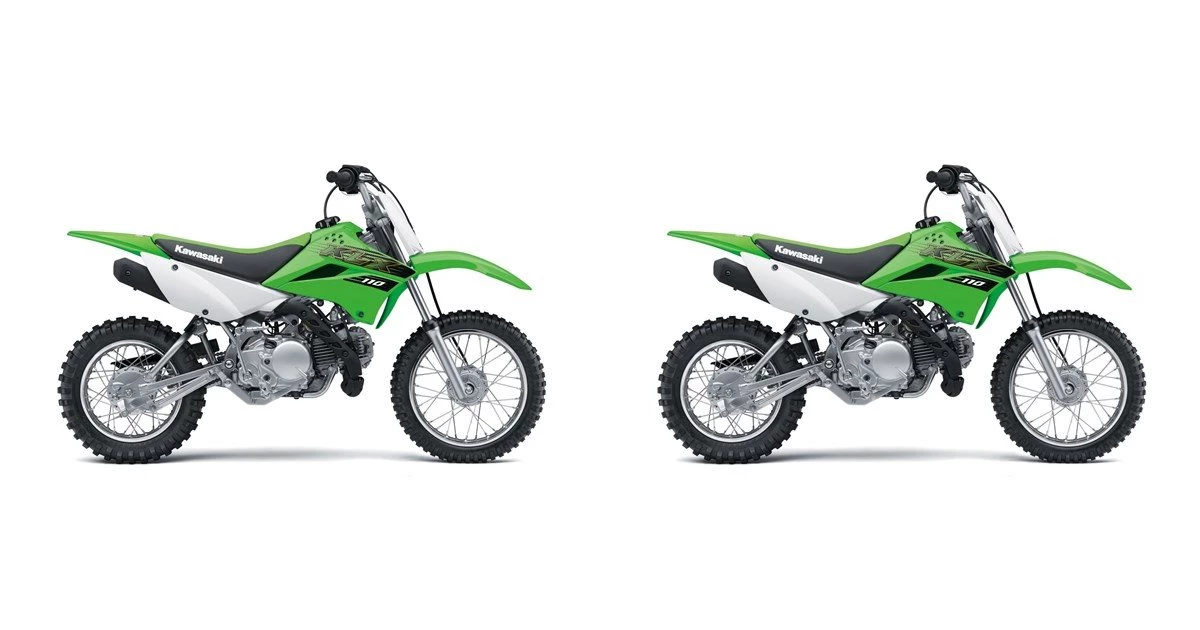
The Kawasaki KLX110 and KLX110L are two popular choices for beginners in the dirt biking world. They cater to young riders and those new to off-road biking, offering a manageable and enjoyable experience.
However, the differences in features and specifications between these two models can significantly influence a rider’s experience. The KLX110 is designed for younger, smaller riders, while the KLX110L caters to taller riders and those looking to advance their skills.
This article will explore the key differences between the KLX110 and KLX110L, focusing on aspects such as performance, design, and usability to help you make an informed decision. Whether you are a parent looking to buy your child their first dirt bike or an adult interested in a fun, compact ride, understanding the nuances between these models is essential for maximizing the riding experience.
Table of Contents
- Overview of the KLX110 and KLX110L
- Performance Comparison
- Design and Comfort Features
- Usability for Beginners
- Maintenance and Durability
- Pricing and Value for Money
- User Reviews and Experiences
- FAQs
- Conclusion
Overview of the KLX110 and KLX110L
This section provides a general overview of both models, highlighting their main features and target audiences. The KLX110 is generally seen as a beginner-friendly bike, while the KLX110L is tailored for riders who may need a little more height and power as they grow into their riding skills.
Key Specifications
| Specification | KLX110 | KLX110L |
|---|---|---|
| Engine | 112cc, air-cooled | 112cc, air-cooled |
| Horsepower | Approx. 7 HP | Approx. 7 HP |
| Torque | 6 lb-ft | 6 lb-ft |
| Seat Height | 26.8 inches (680 mm) | 28.7 inches (730 mm) |
| Weight | 168 lbs (76 kg) | 167.5 lbs (76 kg) |
This table compares key specifications between the KLX110 and KLX110L. Both bikes share the same engine and power output, making them similar in performance.
However, the KLX110L offers a taller seat height, making it better suited for taller riders. The weight of both bikes is nearly identical, ensuring that both are manageable for their intended audience.
Intended Use and Audience
The KLX110 is primarily aimed at younger riders or those just starting out in dirt biking. Its lower seat height and automatic clutch system make it easy to handle.
The KLX110L, on the other hand, is designed for slightly older or taller riders. It features a manual clutch and higher suspension travel, which can be beneficial for riders who are looking to progress in their skills.
Performance Comparison
This section discusses the performance capabilities of both bikes, focusing on their engines, power delivery, and overall handling. Understanding how each bike performs can help riders choose based on their specific needs.
Engine and Power
| Metric | KLX110 | KLX110L |
|---|---|---|
| Engine Type | Air-cooled, 4-stroke | Air-cooled, 4-stroke |
| Displacement | 112 cc | 112 cc |
| Power Output | 7 HP @ 7500 RPM | 7 HP @ 7500 RPM |
| Torque | 6 lb-ft @ 4000 RPM | 6 lb-ft @ 4000 RPM |
This performance table shows that both the KLX110 and KLX110L have the same engine specifications, providing similar power output and torque. This equality in engine performance signifies that both bikes can achieve similar speeds, making them competitive in controlled environments.
The real difference comes from the transmission type, which will be discussed later in the usability section.
Suspension and Handling
| Metric | KLX110 | KLX110L |
|---|---|---|
| Front Suspension Travel | 4.3 inches | 5.5 inches |
| Rear Suspension Travel | 4.3 inches | 5.2 inches |
| Brakes (Front) | Drum | Drum |
| Brakes (Rear) | Drum | Drum |
This table highlights the differences in suspension travel between the two models. The KLX110L has longer suspension travel, which can enhance handling and comfort on rough terrain.
This makes the KLX110L a better option for riders looking to tackle more challenging trails, while the KLX110 is more suited for beginners riding on smoother paths.
Design and Comfort Features
In this section, we will explore the design elements and ergonomics of both bikes, focusing on how they cater to different rider sizes and preferences.
Seat Height and Comfort
| Feature | KLX110 | KLX110L |
|---|---|---|
| Seat Height | 26.8 inches (680 mm) | 28.7 inches (730 mm) |
| Ground Clearance | 8.5 inches | 10.4 inches |
| Weight Distribution | Balanced | Balanced |
From the table above, it’s clear that the KLX110 offers a lower seat height, making it more accessible for younger or shorter riders. The KLX110L, while slightly taller, provides better ground clearance, which can be advantageous for off-road riding.
This difference in height and weight distribution can significantly affect the comfort level for riders based on their stature and riding style.
Weight Distribution
Weight distribution is crucial for handling and rider comfort. Both bikes are designed with a balanced weight distribution, but the KLX110L’s slightly higher weight and suspension make it better for more aggressive riding.
Riders who plan to ride on more challenging terrains may find the KLX110L’s design to be more suitable to their needs.
Usability for Beginners
This section analyzes how each bike serves beginner riders, focusing on factors like ease of operation, safety features, and the learning curve associated with each model.
Clutch and Transmission Types
| Feature | KLX110 | KLX110L |
|---|---|---|
| Clutch Type | Centrifugal (Automatic) | Manual |
| Transmission Type | 4-speed, automatic | 4-speed, manual |
This table outlines the differences in clutch and transmission types for both bikes. The KLX110’s automatic clutch makes it easier for beginners to focus on riding without worrying about shifting gears.
In contrast, the KLX110L’s manual clutch provides an opportunity for riders to learn shifting techniques, which is beneficial for those looking to advance to larger bikes in the future.
Safety Features
Both models are designed with safety in mind. The KLX110’s automatic transmission reduces the risk of stalling, which can be a common concern for new riders.
The KLX110L’s ability to learn manual clutch operation prepares riders for more powerful bikes, but it requires a bit more skill and confidence.
Maintenance and Durability
In this section, we will discuss the maintenance requirements for both models, including durability and expected lifespan. Understanding maintenance can help potential buyers gauge the long-term care of each bike.
Maintenance Needs
| Maintenance Aspect | KLX110 | KLX110L |
|---|---|---|
| Oil Change Interval | Every 10 hours | Every 10 hours |
| Air Filter Cleaning | Every 20 hours | Every 20 hours |
| Brake Inspection | Every 20 hours | Every 20 hours |
The maintenance table shows that both models share similar intervals for oil changes and filter cleaning. This uniformity means that potential owners can expect comparable upkeep for either bike, making the maintenance aspect less of a deciding factor in the purchase.
Regular maintenance will ensure that both bikes remain in good condition and perform well over time.
Reliability Factors
Both the KLX110 and KLX110L are known for their durability and reliability. They are built from high-quality materials, which contribute to their longevity.
Riders can expect these bikes to withstand the wear and tear of regular use, making them solid investments for both new and experienced riders.
Pricing and Value for Money
This section compares the pricing of both models and evaluates which offers better value based on features and performance.
Price Comparison
| Model | MSRP |
|---|---|
| KLX110 | $2,349 |
| KLX110L | $2,549 |
This pricing table presents the MSRP for both models. The KLX110 is priced lower than the KLX110L, which reflects the additional features offered by the latter, such as the manual clutch and higher suspension.
While the KLX110 is an excellent entry-level model, the KLX110L is positioned as a better option for those seeking to grow into their riding experience.
Cost of Ownership
Considering the cost of ownership, both bikes are relatively affordable to maintain. Given their durability and low maintenance needs, riders can expect to enjoy their bikes for several years without incurring significant costs.
Additionally, both models tend to retain good resale value, further enhancing their attractiveness as purchases.
 https://www.1000ps.com/
User Reviews and Experiences
This section summarizes user reviews and experiences for both the KLX110 and KLX110L, providing real-world insights into each bike’s performance and satisfaction level.
Positive Feedback
| Model | Average User Rating | Common Praise |
|---|---|---|
| KLX110 | 4.5/5 | Easy to ride, great for beginners |
| KLX110L | 4.6/5 | Better for taller riders, fun clutch |
Common Complaints
While the overall sentiment is positive, some users have reported issues with the KLX110’s low seat height for taller riders, leading to discomfort over extended rides. Similarly, some KLX110L users have mentioned the learning curve associated with the manual clutch but note that it becomes easier with practice.
Understanding these complaints helps potential buyers set realistic expectations.
FAQs
What is the main difference between the KLX110 and KLX110L?
The primary difference between the KLX110 and KLX110L lies in their design and intended audience. The KLX110 has a lower seat height (26.8 inches) and features an automatic clutch, making it easier for younger or smaller riders.
In contrast, the KLX110L has a taller seat height (28.7 inches) and a manual clutch, catering to taller riders or those looking to develop their riding skills further.
Which bike is better for beginner riders?
For absolute beginners, the KLX110 is often seen as the better option due to its automatic clutch and lower seat height, which helps new riders focus on learning without the added complexity of shifting gears. However, the KLX110L is also beginner-friendly and can be a great choice for taller riders or those who want to progress quickly in their riding skills.
How does the performance of the KLX110 compare to the KLX110L?
Performance-wise, both models are equipped with the same engine and power output, making them similar in speed and handling. The KLX110L, however, offers slightly better suspension travel, which can enhance comfort and handling on rough terrain.
This means that while the performance is fundamentally the same, the KLX110L may provide a more enjoyable experience for riders tackling more challenging trails.
What maintenance is required for each model?
Both models require similar maintenance, including oil changes every 10 hours and air filter cleaning every 20 hours. Regular brake inspections are also recommended.
Given their durable construction, both models are designed to withstand the rigors of off-road riding, making them relatively easy to maintain for owners.
Are there any common issues reported by users for these bikes?
Some users have reported that the KLX110 can feel cramped for taller riders, while others have experienced a learning curve when transitioning to the KLX110L’s manual clutch. However, overall, both bikes are well-received with minimal complaints, indicating their reliability and effectiveness as beginner bikes.
Conclusion
In conclusion, both the Kawasaki KLX110 and KLX110L offer unique advantages tailored to different riders. The KLX110 is ideal for younger, smaller riders who are just starting out, while the KLX110L provides additional features for taller riders or those looking to advance their skills.
By understanding the key differences in performance, design, and usability, potential buyers can make an informed choice that best suits their needs and riding experience.