
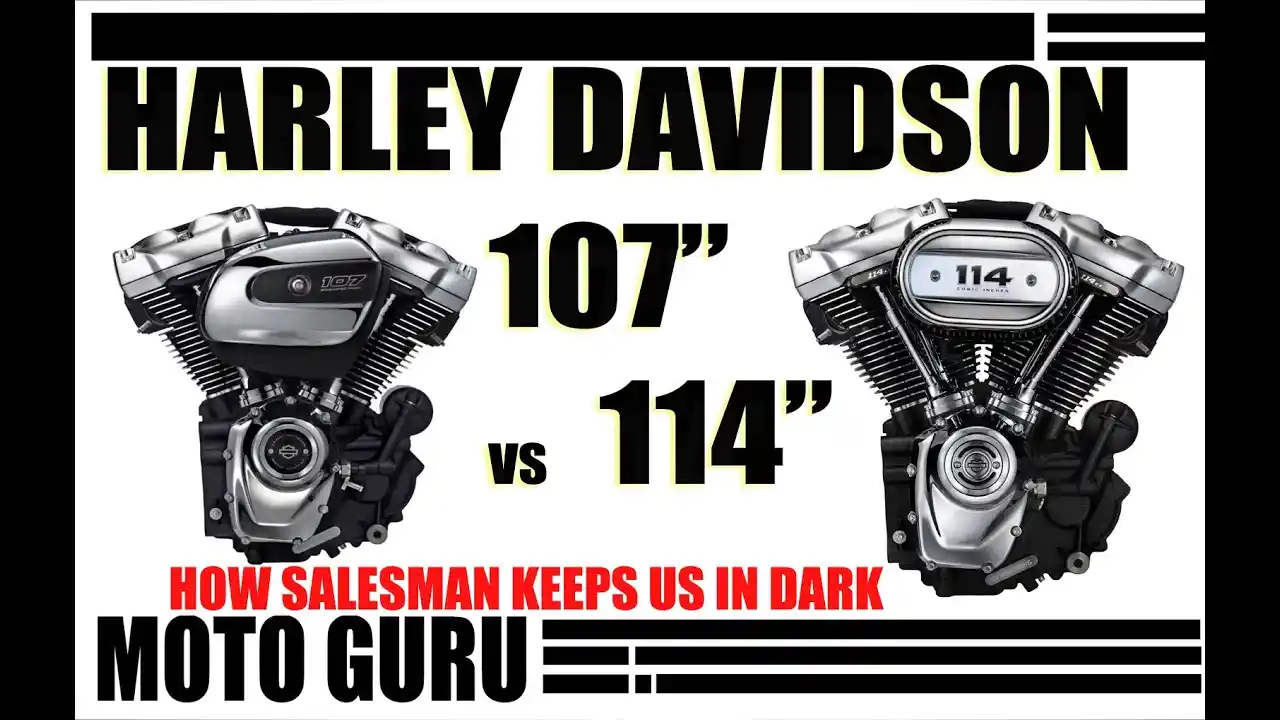
In this article, we will explore the differences between the Harley-Davidson Milwaukee 107 vs 114 engines, two popular choices among motorcycle enthusiasts. Introduced in 2016, the Milwaukee-Eight engine series marked a significant advancement over its predecessor, the Twin Cam.
This guide aims to help prospective buyers or current riders understand which option might best suit their needs, preferences, and riding styles. Whether you prioritize torque, horsepower, or overall riding experience, this article will provide valuable insights into the Milwaukee 107 and 114 engines.
Overview of the Milwaukee-Eight Engine
The Milwaukee-Eight engine is Harley-Davidson’s ninth generation of “big twin” engines, which was introduced in 2016. The engine series includes both the 107 and 114 cubic inch variants, marking a significant upgrade over the Twin Cam engine.
The Milwaukee-Eight is designed with four valves per cylinder, totaling eight valves, and features a return to a single camshaft configuration. This new design improves both performance and efficiency, offering a more powerful ride while maintaining the classic Harley feel.
Historical Context
Before the Milwaukee-Eight, Harley-Davidson’s Twin Cam engines had been the mainstay for nearly two decades, offering good performance but suffering from certain limitations such as heat management and vibration. The Milwaukee-Eight engines were developed in response to rider feedback, with a focus on enhancing power, reducing heat, and improving comfort.
Introduction of the Milwaukee-Eight
The Milwaukee-Eight was launched to provide a more robust and reliable engine option for Harley’s touring and trike models. In 2016, the Milwaukee-Eight 107 was introduced, followed by the 114, which offers even greater power and torque.
These engines have become standard across various Harley-Davidson models, making them a staple in the motorcycle community.
Transition from Twin Cam
The transition from the Twin Cam to the Milwaukee-Eight represents a major shift in Harley-Davidson’s engine technology. The Milwaukee-Eight engines are more efficient, produce less heat, and have significantly reduced vibration.
Riders have noted improvements in acceleration and overall ride quality, making the Milwaukee-Eight a popular choice among enthusiasts.
| Feature | Milwaukee-Eight | Twin Cam |
|---|---|---|
| Introduction Year | 2016 | 1999 |
| Valves per Cylinder | 4 | 2 |
| Torque Increase | 10% | N/A |
| Vibration Reduction | 75% | N/A |
The table above highlights key improvements that the Milwaukee-Eight engines have over the previous Twin Cam model. The introduction of four valves per cylinder allows for better airflow, leading to increased performance.
The 10% increase in torque enhances the overall riding experience, making acceleration feel stronger and more responsive. Furthermore, the significant reduction in vibration contributes to a more comfortable ride, especially on long-distance journeys.
These advancements reflect Harley-Davidson’s commitment to evolving its engine technology to meet modern rider expectations.
Technical Specifications Comparison
When comparing the Milwaukee 107 and 114 engines, understanding their specifications is crucial. This section will delve into key performance metrics such as horsepower, torque, displacement, and compression ratios.
Horsepower and Torque
The Milwaukee-Eight 107 engine produces approximately 87 horsepower and 111 ft-lb of torque. In contrast, the Milwaukee-Eight 114 engine steps it up with 100 horsepower and 124 ft-lb of torque.
This difference in power output is significant for riders looking for enhanced performance and acceleration.
Displacement and Engine Size
The Milwaukee 107 has a displacement of 1,745 cc (107 cubic inches), while the Milwaukee 114 boasts a larger displacement of 1,868 cc (114 cubic inches). The increased engine size in the 114 not only provides more power but also contributes to its ability to sustain higher speeds and carry heavier loads comfortably.
Compression Ratios
The compression ratio is a critical factor affecting engine performance. The Milwaukee 107 has a compression ratio of 9.7:1, while the Milwaukee 114 has a higher compression ratio of 10.5:1.
This higher ratio in the 114 allows for more efficient combustion, resulting in increased power output.
| Specification | Milwaukee-Eight 107 | Milwaukee-Eight 114 |
|---|---|---|
| Horsepower | 87 HP | 100 HP |
| Torque | 111 ft-lb | 124 ft-lb |
| Displacement | 1,745 cc | 1,868 cc |
| Compression Ratio | 9.7:1 | 10.5:1 |
The comparison table above clearly illustrates the performance metrics of both the Milwaukee-Eight 107 and 114 engines. The 114 engine outperforms the 107 in every category, showcasing its superior horsepower and torque ratings.
The increased displacement and higher compression ratio of the 114 further enhance its performance capabilities. Riders who prioritize power and acceleration will find the Milwaukee 114 to be the more suitable option, while those seeking a balance between performance and comfort may prefer the 107.
Performance and Riding Experience
The performance characteristics of the Milwaukee 107 and 114 engines significantly impact the overall riding experience. In this section, we will examine acceleration, rider comfort, and long-distance touring capabilities.
Acceleration Differences
Riders have reported noticeable differences in acceleration between the two engines. The Milwaukee 107 engine, while capable, does not deliver the same punch as the 114, especially under load or during highway passing maneuvers.
The Milwaukee 114’s additional torque and horsepower provide a more robust acceleration feel, making it an ideal choice for riders who enjoy spirited riding or frequent highway travel.
Rider Comfort and Handling
Rider comfort and handling are essential aspects of any motorcycle. Both engines benefit from Harley-Davidson’s advancements in vibration reduction and engine management technology.
However, the Milwaukee 114 offers a more refined experience, with less vibration and a smoother power delivery. Riders have noted that the 114 feels more stable at higher speeds, enhancing overall confidence while riding.
Long-Distance Touring Capability
Both engines are designed for touring, but the Milwaukee 114 shines in this area due to its increased power and torque. Riders embarking on long journeys will appreciate the 114’s ability to maintain speed, even when fully loaded with luggage and a passenger.
The Milwaukee 107, while still competent, may struggle slightly under the same conditions, making the 114 the preferred choice for serious touring enthusiasts.
| Performance Metric | Milwaukee-Eight 107 | Milwaukee-Eight 114 |
|---|---|---|
| 0-60 mph Time | Approximately 4.5 seconds | Approximately 4.2 seconds |
| Rider Comfort Rating | 8/10 | 9/10 |
| Long-Distance Touring Capability | Good | Excellent |
The performance metrics table highlights the differences in acceleration and comfort between the Milwaukee 107 and 114 engines. The 114’s quicker 0-60 mph time showcases its superior acceleration capabilities, while the rider comfort ratings indicate a more enjoyable experience on long rides.
The 114’s excellent touring capability makes it a favorite among adventure-seeking riders, while the 107 still provides a solid option for those who prioritize comfort and a relaxed riding experience.
Fuel Efficiency and Economy
Fuel efficiency is a crucial consideration for riders, particularly those who undertake long journeys. This section will compare the fuel consumption rates, efficiency features, and the impact of engine size on fuel economy for both engines.
Fuel Consumption Rates
The Milwaukee 107 engine is known for its impressive fuel efficiency, achieving approximately 45-50 miles per gallon (MPG) under normal riding conditions. In contrast, the Milwaukee 114 engine, due to its larger displacement and increased power output, typically achieves around 40-45 MPG.
While the 114 consumes more fuel, it compensates with enhanced performance, making it a trade-off that many riders are willing to accept.
Efficiency Features
Both engines incorporate advanced fuel injection systems that optimize fuel delivery for improved efficiency. The Milwaukee Eight engines also feature precision cooling technology, which helps maintain optimal operating temperatures, thus enhancing fuel economy.
These features work together to ensure that riders can enjoy their motorcycles without constantly worrying about fuel stops, particularly on long trips.
Impact of Engine Size on Fuel Economy
The size difference between the Milwaukee 107 and 114 engines naturally impacts fuel economy. The 107’s smaller displacement allows for better fuel efficiency, making it a more economical choice for daily commuting or casual rides.
However, for riders who prioritize power and performance, the Milwaukee 114 provides a compelling reason to accept a slight decrease in fuel efficiency for a more exhilarating ride.
| Fuel Efficiency Metric | Milwaukee-Eight 107 | Milwaukee-Eight 114 |
|---|---|---|
| Fuel Consumption (MPG) | 45-50 MPG | 40-45 MPG |
| Fuel Tank Capacity | 5 gallons | 5 gallons |
The fuel efficiency table provides a clear comparison between the Milwaukee 107 and 114 engines regarding fuel consumption and tank capacity. The 107’s superior MPG figures highlight its efficiency, making it an excellent option for daily riders or those concerned about fuel costs.
However, the 114’s fuel consumption is still competitive given its power output, and both engines share the same fuel tank capacity, ensuring that riders can enjoy extended trips without frequent refueling.
Engine Heat Management and Cooling Systems
Effective heat management is vital for engine longevity and rider comfort. This section examines the cooling technologies used in both engines, their heat dissipation features, and how these systems improve rider comfort during long rides.
Cooling Technologies
Both the Milwaukee 107 and 114 engines utilize a combination of air-cooling and oil-cooling systems. The Milwaukee 114 features advanced Twin-Cooled technology, which enhances cooling around the exhaust valves, reducing heat buildup and improving overall performance.
This technology allows for more efficient heat management, a crucial factor for riders who often engage in long-distance touring.
Heat Dissipation Features
The Milwaukee-Eight engines are designed with improved heat dissipation capabilities compared to their predecessor, the Twin Cam. Harley-Davidson has implemented several features to manage engine heat effectively, including repositioned exhaust pipes that allow for better airflow and cooling.
This design results in a more comfortable ride by minimizing heat transfer to the rider, especially during hot weather or extended rides.
Rider Comfort Improvements
The reduction of engine heat significantly enhances rider comfort, especially for those who spend long hours on their motorcycles. Riders of the Milwaukee 114, in particular, have reported noticeable improvements in comfort due to its advanced cooling features.
The engine’s design minimizes the discomfort often associated with high temperatures, allowing for a more enjoyable riding experience.
| Cooling Feature | Milwaukee-Eight 107 | Milwaukee-Eight 114 |
|---|---|---|
| Cooling System Type | Air and Oil-Cooled | Air and Oil-Cooled with Twin-Cooled Technology |
| Heat Reduction | Standard | Enhanced |
The cooling systems table highlights the advancements in heat management technology between the Milwaukee 107 and 114 engines. The inclusion of Twin-Cooled technology in the 114 provides a significant advantage regarding heat dissipation and rider comfort.
Riders can expect a more pleasant experience, particularly during long rides, as the engine effectively manages temperature, reducing fatigue and discomfort associated with excessive heat.
Maintenance and Reliability
Understanding the maintenance requirements and reliability of the Milwaukee 107 and 114 engines is essential for prospective buyers. This section will cover maintenance intervals, known engine issues, and long-term ownership experiences shared by riders.
Maintenance Intervals
Both the Milwaukee 107 and 114 engines are designed to offer reliable performance with minimal maintenance. Harley-Davidson recommends regular oil changes and routine inspections every 5,000 miles.
Riders who frequently engage in heavy riding or long-distance touring should consider more frequent maintenance to ensure optimal engine performance and longevity.
Known Engine Issues
While both engines are generally reliable, some issues have been reported by riders. The Milwaukee 114, particularly in earlier models, experienced oil pump issues that could lead to oil sumping.
This problem can result in reduced lubrication and potential engine damage if not addressed promptly. Owners are encouraged to ensure their engine has the updated oil pump for improved reliability.
Long-Term Ownership Experiences
Riders who have owned motorcycles equipped with the Milwaukee 107 and 114 engines report high satisfaction levels. Many highlight the engines’ smooth performance, reduced vibrations, and overall reliability.
Long-term owners often note that with proper maintenance, both engines can deliver thousands of trouble-free miles, making them a worthwhile investment for motorcycle enthusiasts.
| Maintenance Aspect | Milwaukee-Eight 107 | Milwaukee-Eight 114 |
|---|---|---|
| Recommended Oil Change Interval | 5,000 miles | 5,000 miles |
| Common Issues | None Significant | Oil Pump Issues (Early Models) |
The maintenance table provides insights into the upkeep required for both the Milwaukee 107 and 114 engines. Both engines share the same recommended oil change interval, ensuring that owners have a straightforward maintenance schedule.
While the 107 has not reported significant issues, the 114’s early oil pump problems serve as a reminder for prospective buyers to consider the model year and maintenance history when purchasing a used motorcycle.
Price Comparison and Value
Price is a crucial factor for many riders when considering which engine to choose. This section will analyze the cost differences between models equipped with the 107 and 114 engines and assess their overall value for money.
Base Prices of Models
Generally, models equipped with the Milwaukee 114 engine come at a premium compared to those with the 107. The price difference can range from approximately $1,500 to $2,200, depending on the model and features included.
Riders need to weigh the performance benefits of the 114 against the additional cost.
Cost of Upgrades and Customization
Both engines are compatible with Harley-Davidson’s extensive range of performance upgrades and customizations. However, the Milwaukee 114, with its higher performance potential, may offer better value for riders looking to enhance their motorcycles further.
Riders can expect to invest in upgrades that improve handling, power, and comfort, regardless of the engine chosen.
Resale Values
Resale values tend to favor the Milwaukee 114, as it is often seen as the more desirable engine among buyers. The additional power and torque, combined with the enhanced riding experience, make the 114 a sought-after option in the used motorcycle market.
Riders considering long-term ownership should factor in potential resale value when making their decision.
| Price Aspect | Milwaukee-Eight 107 | Milwaukee-Eight 114 |
|---|---|---|
| Base Price Range | $22,000 – $24,000 | $24,500 – $26,200 |
| Average Resale Value | Approximately 75% of original price | Approximately 85% of original price |
The pricing table clearly outlines the cost differences between the Milwaukee 107 and 114 engines. The higher base price of the 114 reflects its enhanced power and performance, which many riders find justifies the investment.
Additionally, the better resale value of the 114 makes it an attractive choice for those considering long-term ownership or upgrades, ensuring they maximize their motorcycle’s value.
Rider Testimonials and Community Feedback
Understanding real-world experiences from riders can provide valuable insights into the Milwaukee 107 and 114 engines. This section highlights testimonials from the community, focusing on both positive and negative feedback.
Positive Experiences
Many riders appreciate the smooth and powerful performance of the Milwaukee 114 engine, particularly during long-distance rides. Riders have noted that the extra torque makes passing on highways effortless, allowing for a more enjoyable riding experience.
Additionally, the reduced vibrations and heat management have contributed to a more comfortable ride, even on extended journeys.
Negative Feedback
Some riders of the Milwaukee 107 report that while the engine is reliable and comfortable, it may lack the power needed for aggressive riding or heavy loads. The acceleration can feel less robust compared to the 114, particularly when fully loaded.
Riders seeking a more spirited performance often find themselves yearning for the additional power offered by the 114.
Community Insights
Overall, the Harley-Davidson community has embraced both engines, with many riders expressing satisfaction with their choice. Forums and reviews often highlight the performance attributes of the 114, while the 107 is praised for its comfort and reliability.
Riders frequently recommend test riding both options to determine which engine aligns best with their riding style and preferences.
| Feedback Category | Milwaukee-Eight 107 | Milwaukee-Eight 114 |
|---|---|---|
| Performance | Reliable, Comfortable | Powerful, Smooth |
| Rider Comfort | High | Very High |
The rider feedback table encapsulates the sentiments expressed by the Harley-Davidson community regarding both engines. While the Milwaukee 107 is appreciated for its reliability and comfort, the 114 is frequently lauded for its powerful performance and smooth handling.
These insights reinforce the importance of personal preference, as different riders will prioritize various aspects of their riding experience.
Conclusion: Milwaukee 107 vs 114
Choosing between the Milwaukee 107 and 114 engines ultimately depends on individual preferences and riding styles. The Milwaukee 107 is an excellent choice for casual riders seeking a smooth, comfortable ride, while the Milwaukee 114 appeals to those desiring more power and torque.
By understanding the specifications and experiences shared by other riders, prospective buyers can make an informed decision that aligns with their biking aspirations and budget.
For the Casual Rider
If you primarily enjoy leisurely rides and value comfort over speed, the Milwaukee 107 may be the perfect fit for you. Its reliable performance and lower running costs make it an appealing option for those who prefer a relaxed riding style.
For Performance Enthusiasts
For riders who prioritize acceleration and power, the Milwaukee 114 stands out as the better choice. Its enhanced torque and horsepower provide a thrilling riding experience that is sure to satisfy those who enjoy pushing their motorcycles to the limit.
Long-Distance Tourers
If you plan on undertaking long journeys, the Milwaukee 114 offers superior performance and comfort, making it ideal for touring. Its ability to maintain speed and handle heavier loads makes it a favorite among serious touring riders.
FAQ: Milwaukee 107 vs 114
What are the main differences between the Milwaukee 107 and 114 engines?
The primary differences between the Milwaukee 107 and 114 engines are in their displacement, horsepower, and torque. The 107 has a displacement of 1,745 cc, producing 87 horsepower and 111 ft-lb of torque.
In contrast, the 114 has a larger displacement of 1,868 cc, delivering 100 horsepower and 124 ft-lb of torque. These differences result in the 114 offering enhanced performance and acceleration compared to the 107.
How does the performance of the Milwaukee 114 compare to the 107?
The Milwaukee 114 engine outperforms the 107 in terms of horsepower and torque, providing a more responsive and powerful riding experience. Riders have reported quicker acceleration and better handling at higher speeds with the 114, making it a preferred option for those who prioritize performance.
What are common issues faced by Milwaukee 107 and 114 engines?
While both engines are generally reliable, some common issues have been reported. The Milwaukee 114, particularly in earlier models, experienced oil pump issues leading to oil sumping, which can affect lubrication.
The Milwaukee 107 has fewer reported issues, but riders should remain vigilant about routine maintenance to ensure optimal performance.
How do fuel efficiency ratings compare between the two engines?
The Milwaukee 107 engine is known for better fuel efficiency, achieving approximately 45-50 MPG, while the Milwaukee 114 typically achieves around 40-45 MPG. The difference in fuel consumption is primarily due to the larger displacement of the 114, which offers more power at the cost of slightly lower fuel efficiency.
Which engine is better for long-distance touring?
The Milwaukee 114 engine is generally considered better for long-distance touring due to its increased power and torque. Riders often find that the 114 can maintain speeds more comfortably, even when fully loaded with passengers and gear.
The advanced cooling features also contribute to a more enjoyable riding experience on long trips.
In conclusion, both the Milwaukee 107 and 114 engines offer unique benefits, making them suitable for different types of riders. Understanding their specifications and performance capabilities will help prospective buyers make an informed choice.